



A year ago, India was bouncing back from a recession caused by Covid-19 with a spring in its step. The country had overtaken China as the most populous country, and its leaders were declaring India the world’s fastest-growing major economy.
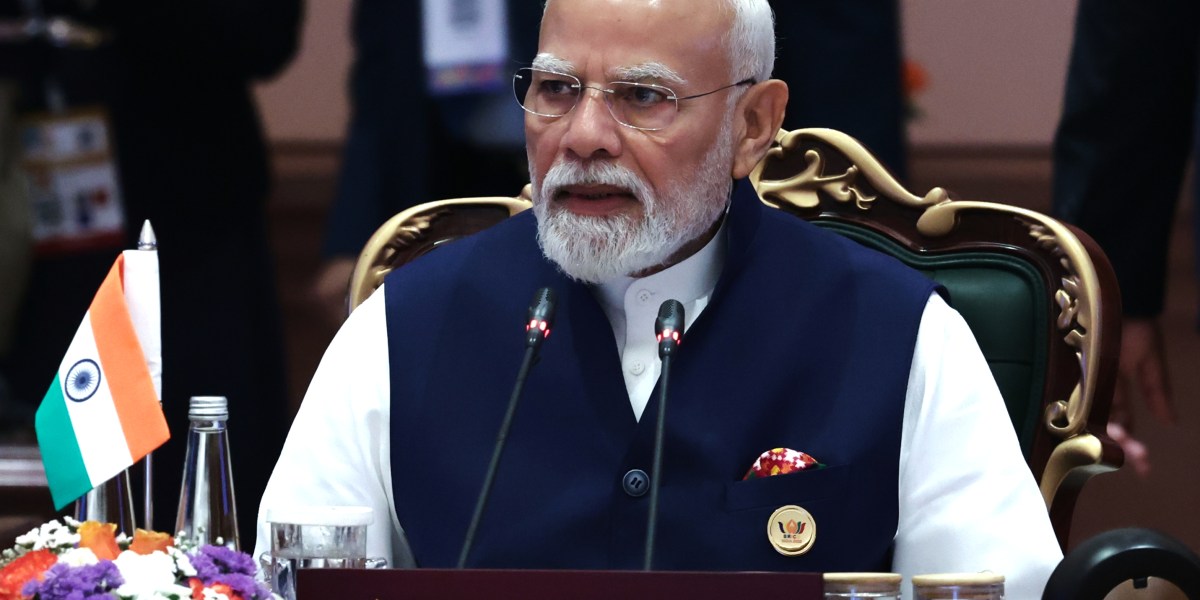
This was music to the ears of foreign investors, and to India’s prime minister, Narendra Modi, who at every opportunity boasted about his country’s inevitable rise. Home to 1.4 billion people, an invigorated India could become an economic workhorse to power the rest of the world, which is stumbling through the fog of trade wars, China’s troubles and Russia’s invasion of Ukraine.
India displaced Britain in 2022 as the world’s fifth-biggest economy, and by next year it is expected to push aside Germany in fourth spot. But India has lost a step, revealing its vulnerabilities even as it moves up the global rankings.
The stock market, which soared for years, has just erased the past six months of gains. The currency, the rupee, is falling fast against the dollar, making homegrown earnings look smaller on the global stage. India’s new middle class, whose wealth surged like never before after the pandemic, is wondering where it went wrong. Mr. Modi will have to adjust his promises.
November brought the first nasty shock, when national statistics revealed that the economy’s annual growth had slowed to 5.4 percent over the summer. Last fiscal year, which ran from April through March, was clocked at 8.2 percent growth, enough to double the economy’s size in a decade. The revised outlook for the current fiscal year is 6.4 percent.
“It’s a reversion to trend,” according to Rathin Roy, a professor at the Kautilya School of Public Policy in Hyderabad. There was a brief period, 20 years ago, when India seemed poised to break into double-digit growth. But, Mr. Roy argued, that growth depended on banks pumping out loans to businesses at an unsustainable rate.
Ever since the government withdrew vast amounts of cash from circulation in 2016 in a vain effort to rein in underground commerce, Mr. Roy said, the economy has never recovered even its 8 percent pace. It only looked better, he said, because “you had the Covid dip, as happened in many economies. India’s economy didn’t get back in absolute size until last year,” later than most other countries.
The reasons behind the slowdown are up for debate. One effect is undeniable: Overseas investors have been heading for the exits.
“Foreign investment has taken the call that the Indian stock market is overvalued,” Mr. Roy said. “It’s quite logical that they would get out of pesky emerging economies and put their money where they can make more,” like on Wall Street, he added.
Investors who bought a broad mix of Indian stocks early in 2020 watched their worth triple by last September, as major market indexes hit record highs.
The number of Indians buying stocks grew even more rapidly, which helped drive up prices. Ahead of the Parliamentary election in June, Mr. Modi’s right-hand man, Amit Shah, predicted that India’s new investor class would help sweep their party to victory. During Mr. Modi’s first two terms, the number of Indians holding investment accounts went from 22 million to 150 million, according to a study by Motilal Oswal, a brokerage house.
“These 130,000,000 people will be earning something, no?” Mr. Shah reasoned to The Indian Express, a newspaper. The new investors were clearly spending. In particular, the luxury and other high-end sectors were doing well: cars more than motorcycles, high-end electronics more than household basics.
But that prosperity, concentrated among the top 10 percent, left the other 90 percent wanting more. Mr. Modi’s party lost its majority in Parliament, though it retained control of the government. Expanded welfare payments, like the free wheat and rice the government distributed to 800 million people, helped.
Despite such programs, the Modi government has been fiscally conservative and keeps a watchful eye on inflation. It has focused spending on big-ticket infrastructure items, such as bridges and highways, that are supposed to entice private enterprise into making investments of their own.
Indian businesses still have to contend with excessive red tape, political interference and other familiar difficulties. The Modi government has tried to reduce those burdens, but in recent years it has focused on increasing economic supply.
India’s government bet big on building new airports, for example. But the airlines that were set to serve them are pulling out. Vacationers who would have flown to beachy places like Sindhudurg, between Mumbai and Goa, are not buying enough tickets to keep a terminal there open.
Arvind Subramanian, an economist at the Peterson Institute for International Economics in Washington, traces the lack of demand back to the broader state of employment.
“Jobs are not being created, so people don’t have incomes and wages are depressed,” he said. There aren’t enough stockholders to make up the difference. The national minimum wage, which many workers in the informal economy are never paid, is just $2 a day.
Mr. Subramanian, who was the country’s chief economic adviser during Mr. Modi’s first term, said the government has gone “stale, and bereft” of ideas for tackling such problems. “Ideas for long-term growth and boosting employment — that is what we’re missing now,” he said.
He thinks the rupee’s fall is only natural, and should have happened sooner. Until recently, the central bank was spending billions of dollars to prop up the value of the national currency.
The psychological effect of a weakening rupee can be painful, but the cost of keeping it at a fixed rate of exchange to the dollar was “extremely damaging for the national economy,” he said.
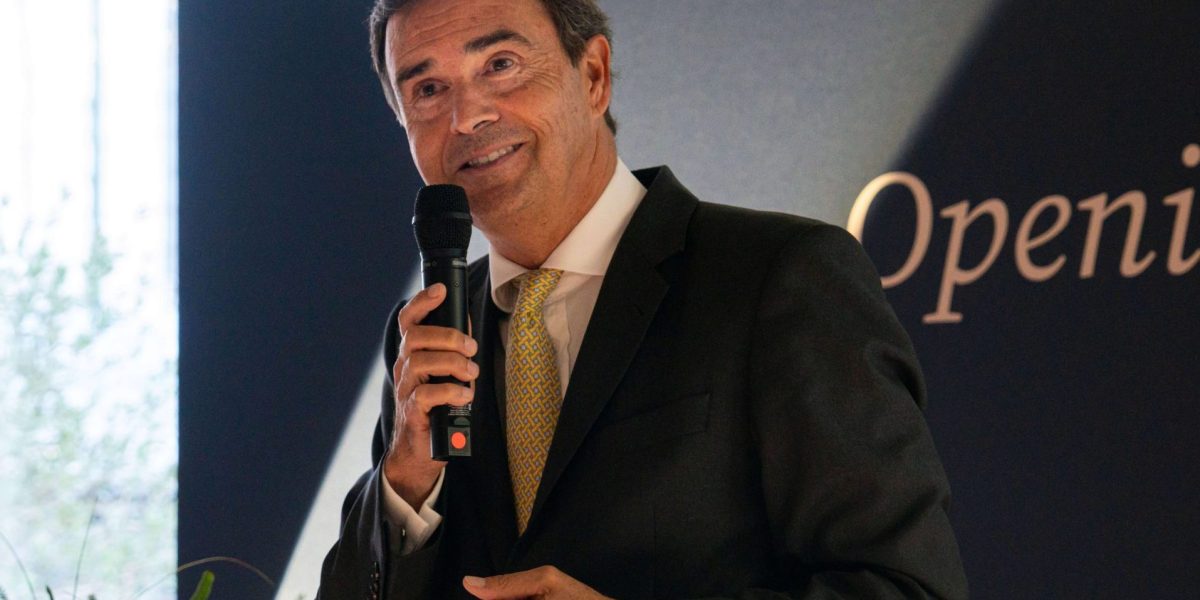
No one is happy to see growth slowing. The government’s current chief economic adviser, V. Ananta Nageswaran, told a news briefing in November that the bad news could be a blip. “The global environment remains challenging,” he said, with a strong dollar and suspense over the possibility of sudden policy moves in the United States and China.
A year ago, the hope was that India’s own economic engine could push it through the global headwinds. The missing ingredients, then as now, start with too many people having too little money in hand.
“There simply isn’t enough demand,” said Mr. Roy, the professor in Hyderabad. “The idea that you can expect supply to create its own demand has its limits,” he said.
“Regular people,” Mr. Roy said, those between the top 10 percent seeing big stock market gains and the bottom 50 percent struggling to get by, still “don’t earn enough to buy the basics.” About 100 million of these regular people qualify for free grain.
The government is expected to release a budget for the new fiscal year on Feb. 1. Mr. Nageswaran, the current economic adviser, has stirred hope that it may include tax cuts, putting more money in the hands of consumers.
“This idea that India needs tax cuts, it has the causation exactly wrong and reversed,” said the former economic adviser, Mr. Subramanian. “Consumption is weak because incomes are weak.”
Last month, Mr. Nageswaran told Assocham, a group of business leaders, that employers need to pay their workers more, noting that wages were stagnant. “Not paying workers enough will end up being self-destructive or harmful for the corporate sector itself,” he warned.