



The AI world is always abuzz with something new. In the last 2 months, we’ve seen a slew of industry-shattering headlines, from Stargate to DeepSeek’s DeepSeek R1 to Amazon’s Alexa+ and more. Perhaps the biggest gist right now, however, is that Apple — the U.S. tech behemoth with a market cap of approximately $3.71 trillion — plans to “spend $500 billion and hire 20,000 people in the United States over the next four years and open a factory in Texas to make the machines that power the company’s push into artificial intelligence.”
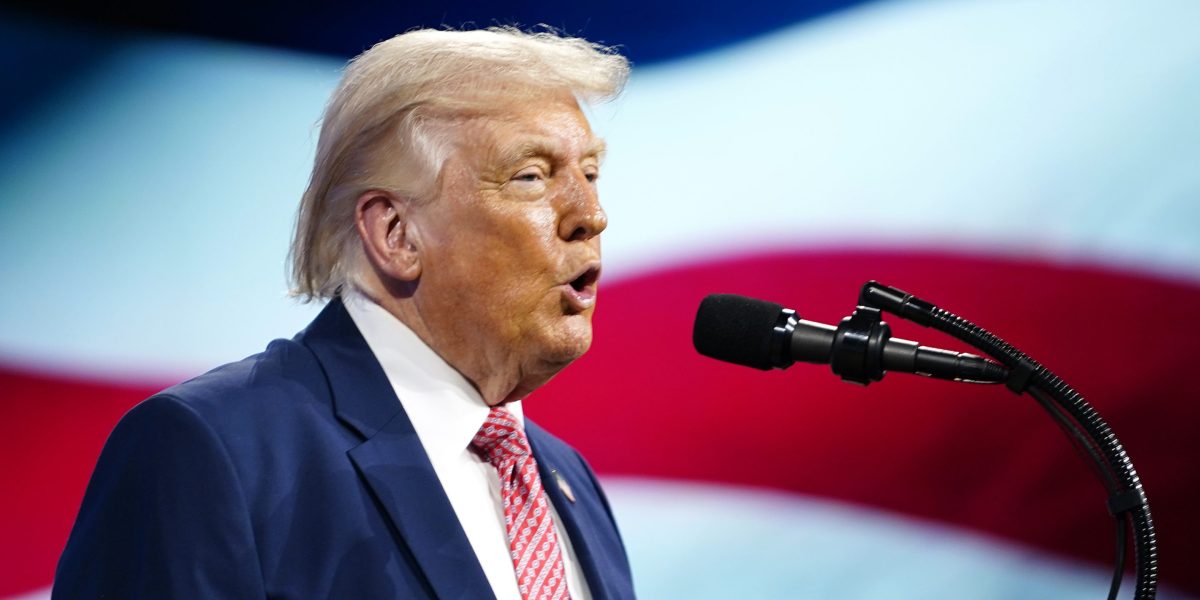
The announcement came hot on the heels of President Donald Trump’s 10% tariff on all imports from China, directly impacting Apple’s supply chain, as a substantial portion of its products are manufactured there. It’s not the first time Apple has made such gigantic investment promises, especially in recent memory. So, what’s the deal with this new “deal” and what does it really mean for the industry?
Apple’s History Of Undelivered Promises
When I asked Andy Thurai, VP and principal analyst at Constellation Research, what he thought about Apple’s latest announcement to invest all that money in the United States, he said “Apple is known to navigate the political scenes smartly but never follow through with it.” That’s not what you’d expect to hear, especially when you consider the sheer size of this multibillion dollar investment — but Thurai’s answer is steeped in history.
For example, he said, right after former U.S. President Joe Biden’s inauguration in 2021, Apple pledged to spend $430 billion and add 20,000 jobs over five years and that never materialized. “They also pledged during Trump’s first term that they would directly contribute to the U.S. economy in the order of $350 billion over the next five years and create 20,000 jobs, which they didn’t follow through either,” Thurai added.
While Thurai’s claims may come under scrutiny and even get questioned, Apple has indeed not publicly disclosed the full extent of its $350 billion pledge’s fulfillment — although some reports indicate that the company has significantly expanded its U.S. operations since it first made the pledge in 2018. With regard to its $430 billion investment commitment in 2021, which was to be spent over five years and also targeted the creation of 20,000 jobs, the tech giant reportedly paused some projects under this initiative, such as the planned campus in North Carolina, in 2024.
This time, though, Thurai thinks the promise feels more real because “they promised to build the AI servers to power their AI service Apple Intelligence in the Houston area.” He noted, however, that while it is possible Apple could do that, it also entered a strong partnership with OpenAI to deliver Apple Intelligence — “so it’s not sure if they would really build this.”
Geopolitical Pressures And The AI Supply Chain
Beyond Apple’s headline-grabbing investment figure, this move could actually have a far-reaching impact on the AI supply chain, particularly in the semiconductor industry. The AI boom has already placed a huge burden on global chip manufacturing, with companies scrambling to secure the high-performance GPUs and processors needed to power AI workloads.
And that raises Thurai’s skepticism about Apple’s ability to actually shift the supply chain meaningfully in the short term. “Many of Apple’s product supply chain components come from China, India, Vietnam and others. The semiconductor industry also relies largely on Taiwan, China, Korea and Japan. While shifting domestic won’t happen quickly, companies will start to evaluate their pros and cons,” he said. “But I still don’t expect a major shift given their supply chain, processes and facilities are all set up and working as expected in third-world countries. It will be a major undertaking to change that, and I don’t expect that to happen soon.”
Andreas Becker, cofounder of Geyzeer, shares a similar perspective, but he noted that the long-term trajectory for AI competitiveness will require a rethink of domestic chip production. “The global competition for AI leadership extends beyond improving algorithms; it fundamentally relies on secure, reliable, and high-performance hardware,” he told me. “While advancements in AI software often make headlines, the critical foundation of every success story is the chip. If supply chains falter, even the most advanced AI models can come to a halt.”
Becker believes relocating chip and server manufacturing to the U.S. is more than an economic move — it’s a national security imperative. “A single disruption in an offshore facility — due to geopolitical tensions, trade disputes, or pandemics — can stifle innovation across various industries, including renewable energy, healthcare, and finance. The time to build a strong and resilient technological backbone within the U.S. is now.”
Apple, of course, is no stranger to geopolitical pressures. The company has long relied on Chinese manufacturing and supply chains, but as U.S.-China tensions escalate, moving at least some AI-related production to the U.S. could be a hedge against future disruption. But whether this move would create a long-term impact or only result in some temporary readjustments remains to be seen.
Regulatory And Political Implications
There are also regulatory and national security implications from Apple’s new AI push and it’s easy to see why. As AI continues to reshape global industries, governments around the world are becoming increasingly interested in data sovereignty, infrastructure security and the concentration of AI capabilities within a few dominant players.
Dr. Codrina Lauth, an impact AI advocate and future-resilient infrastructure expert at Lauth Transmedia, sees Apple’s investment as part of a broader trend. “It is a natural development that we see in the U.S. and elsewhere as well, especially if you look at the data centers map,” she said. “Apple and other big giants will need to invest in AI facilities for data centers. The developments on high performance computing AI are moving forward at a fast rate. The problem remains in ensuring the industrial land, energy infrastructure and permission rights for such projects.”
The Biden administration ramped up efforts to boost domestic AI infrastructure, including through the CHIPS and Science Act, which aims to incentivize semiconductor manufacturing in the U.S. Apple’s move, while driven by its own business interests, could provide additional momentum for government-led AI initiatives. The Trump administration has also been very bullish on the same front, with the $500 billion Stargate initiative aimed at building data centers, bolstering the country’s AI infrastructure and ensuring that the U.S. continues to be the global leader in AI.
However, Thurai doubts Apple’s investment alone will significantly change the global regulatory landscape for AI. “I doubt Apple’s investment would specifically change anything,” he said. “The current administration is all about reducing friction — especially in governance, compliance, regulation, data privacy and security — and more about innovation growth. The U.S. and UK were the only countries that refused to sign the Paris AI agreement, according to The Guardian. That should tell you something.”
Still, the sheer scale of Apple’s investment — whether or not it fully materializes — could influence how policymakers approach AI infrastructure, national security and labor incentives in the tech industry.
Will Other Tech Giants Follow?
While Lauth expects that other companies like NVIDIA, Microsoft, and Google will follow Apple’s example, Thurai, on the other hand, remains cautious about whether this will trigger a big shift — although he admits that many companies have already poured a lot of money into building AI and will continue to do so.
“Many companies have already pledged a lot of money to build AI data centers in the U.S., including Meta, Microsoft, OpenAI, Oracle, Softbank and AWS, to name a few. While the U.S. has attracted a majority of the data center-based investments, the cost of production and labor is still high. If future administrations continue to force incentives for them to build in the U.S., this wave can continue. Otherwise, it will shift,” he said.
For Becker, though, this move is very strategic. “Historically, the United States has been a leader in research and innovation, but recent supply chain disruptions have highlighted its reliance on foreign manufacturing. By expanding AI chip production domestically, the U.S. can maintain its autonomy and cultivate the workforce of the future — engineers, data scientists, and technologists who will continue to advance the field.”
If Apple follows through with its plans, other tech giants may be forced to reevaluate their own AI infrastructure strategies. The global AI race is shifting, and U.S. companies have a strong incentive to reduce their dependence on foreign suppliers. However, the balance between cost-efficiency and national security remains delicate, and whether Apple’s AI investment reshapes the industry — or simply becomes another unrealized pledge — will depend on execution.
Wait And See
As I noted earlier, Apple has made similar promises in the past, only to quietly shift its priorities when the political and economic landscape changed. Yet, unlike previous announcements, this pledge comes at a critical moment for the AI industry.
With mounting pressure to localize AI supply chains, intensifying geopolitical tensions and a rapidly evolving regulatory landscape, Apple’s move — if followed through — could change the trajectory of the AI industry for good.
At the very least, it could position AI infrastructure as a central battleground in the global tech race. Whether this investment materializes as an industry-shaping move or another strategic maneuver — with The Verge even calling this move “a response to President Trump’s tariffs” — remains to be seen. But it’s now clearer than ever before that the AI war is no longer just about algorithms, but about control over the entire ecosystem — from data to chips to supply chains — and Apple’s latest move, without a question, is a significant chess piece in that game.
But as history has shown, big tech’s commitments don’t always translate into impactful results. So, it’s hard to tell what’s exactly going to happen next — but let’s wait and see.


