



In April, I warned in these pages that companies letting AI absorb entry-level work were quietly accumulating a talent debt they didn’t yet see. Since then, new evidence is putting the problem in plainer sight.
Microsoft’s 2026 Work Trend Index surveyed 20,000 workers across ten countries and found that the most valuable human skills in an AI workplace aren’t technical. They’re the ability to think critically and judge AI’s outputs. Only 16 percent of workers have developed the judgment to move fluidly between directing AI and doing the work themselves. Microsoft calls them “Frontier Professionals.” The detail that stuck with me is that those workers deliberately do some tasks without AI, specifically to keep their own thinking sharp.
They are onto something. Gartner predicts that through 2026, the atrophy of critical-thinking skills will push half of all global organizations to require “AI-free” skills assessments. A RAND Corporation study published this spring found that most students using AI for homework are worried it is hurting their ability to think independently. Employers and students are arriving at the same conclusion from opposite ends: the more capable AI becomes, the more valuable human judgment becomes.
AI is collapsing a distinction we’ve long taken for granted. The skills that make someone valuable at work are increasingly the same ones that make someone an effective citizen.
So here is the question underneath all of it. Are we building an educational system that produces critical-thinking skills at scale and develops the best possible future workforce?
I don’t think so. But here’s how to do it.
Two visions, one uncomfortable truth
Most colleges and universities are racing toward what I’d call the efficiency model of AI: cheaper credentials, faster output, and more targeted job training. The instinct is understandable. A recent Pew Research Center survey found that 70 percent of Americans now believe higher education is headed in the wrong direction. Institutions need to prove their relevance quickly, and AI looks like the answer.
The trouble is that efficiency on its own isn’t enough to set students up for success in life and work. Higher education innovator Paul LeBlanc has spent his career working to extend real opportunity for upward mobility to hundreds of thousands of students that a slow-moving, change-averse sector had failed to do. Since building the largest non-profit university in the country, Southern New Hampshire University, Leblanc has turned his attention to the education system of the future. Now, in a forthcoming book “Reclaiming Purpose: The University in an AI World” he argues that the future of learning is not about keeping up with machines. It is about using them to become more distinctly human. He describes this as a shift toward what he calls a “care economy,” one in which the capacities hardest to automate, relationship, judgment, discernment, move from the margins of how we prepare people for work and life to the center of it. We ask AI to do less of that work for us, not more.
That is the second vision for AI in education. Instead of simply making learning faster or cheaper, AI can free up time and attention so students can go deeper into developing the skills that are hardest to automate: building relationships, collaborating, reasoning through hard ethical questions, and exercising judgment. Not instead of preparing for the workforce, but as the way to prepare for it.
Those two visions are not competing. They point to the same place. The skills employers now say they need most, judgment, critical thinking, and the ability to interrogate an answer rather than just accept it, are the same skills a democracy runs on. A postsecondary system that shortchanges one will shortchange the other.
What the productivity data doesn’t tell you
The Morgan Stanley research on AI and productivity that Fortune recently covered highlighted something striking. In industries with heavy AI exposure, output per worker rose sharply while employment remained relatively steady. Workers were being augmented, not replaced.
But those numbers tell only part of the story. The biggest gains are concentrated among the people who know how to direct AI, not simply use it. That raises a question those numbers can’t answer: how many of those whose output jumped are people who learned to do their jobs in school, and through which institutions?
Community colleges enroll roughly 40 percent of all undergraduates in the United States. Add HBCUs and regional state universities and you are looking at the institutions that educate most of the future American workforce: first-generation students, working adults, people from families where college already feels like a stretch. These are not the schools dominating the national conversation about AI readiness. They are the ones that will decide whether the economic gains from AI get shared broadly or concentrated among those who are already ahead.
Some of them are moving fast to get into the AI game. Community colleges are launching applied AI programs with local employers. HBCUs are building pipelines through partnerships with Google, NVIDIA, and IBM. States such as Illinois are advancing legislation to let community colleges grant bachelor’s degrees in high-demand fields. The momentum is real, and I don’t want to discount it.
But most of what’s being built is aimed at AI competency, the checklist version of readiness: learning to prompt, summarize, and run analyses in generative tools. Those skills matter, but they are not enough on their own. The deeper work of building durable judgment is harder to fund precisely because it is harder to measure. It doesn’t yield a clean credential or an easily quantifiable outcome, so it loses out to the competency programming that does.
Where business leaders come in
The companies that come out ahead won’t be the ones that simply deploy AI fastest. They’ll be the ones that invested in the people around it, the workers who can direct AI, catch its mistakes, and own what it produces. Building that workforce means investing in the institutions where most of our future employees are sitting right now. It means showing up for community colleges and HBCUs in the policy rooms where they rarely have a seat. It means funding mentored, structured learning that builds judgment as part of the job rather than as a prerequisite for it. And it means being willing to say out loud that AI literacy without critical thinking is not a workforce strategy. It is a short-term fix that comes due later, with interest.
The efficiency vision isn’t wrong. Affordable, relevant credentials matter enormously, especially for students who can’t afford to bet wrong on their education. But a system built only for outputs will turn out workers who can operate AI without quite being able to steer it, and citizens who can take in information without being able to weigh it. Those two failures feed each other, and the bill eventually lands on every business in the country.
I’ll put it as plainly as I can: neither the economic vision nor the civic one survives without the other. The business leaders who understand that, and put real resources behind it, will end up with something sturdier than a talent pipeline. They’ll have helped build the conditions the whole economy depends on.
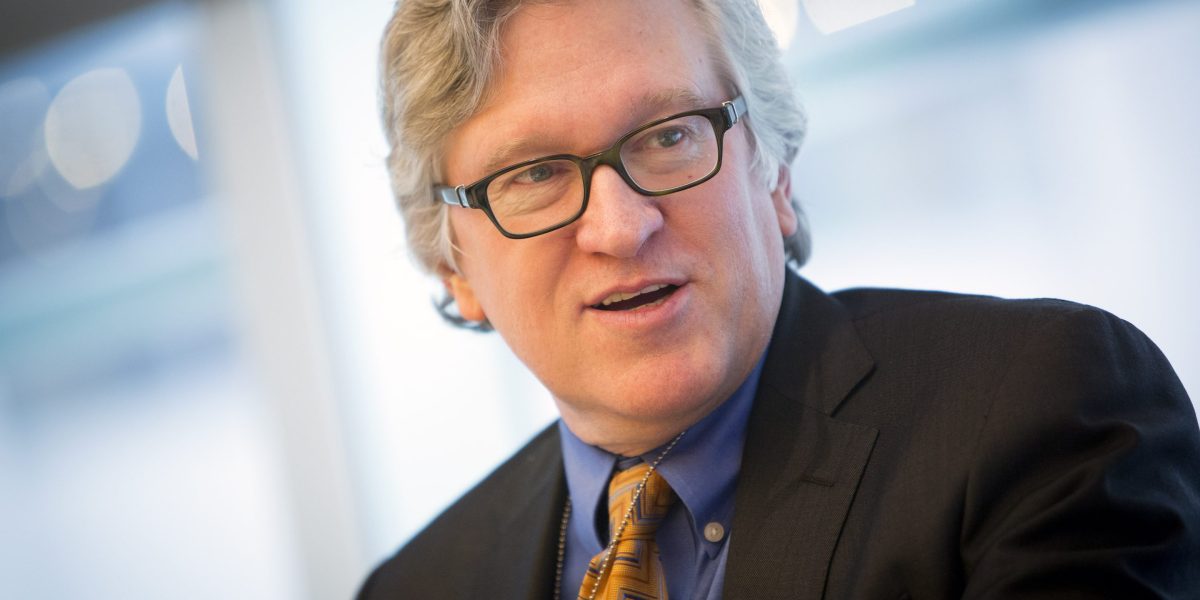
Jeff Raikes is the co-founder of the Raikes Foundation, which works to ensure every young person in America has an opportunity to thrive. He is the former CEO of the Bill & Melinda Gates Foundation and former President of Microsoft’s Business Division.
The opinions expressed in Fortune.com commentary pieces are solely the views of their authors and do not necessarily reflect the opinions and beliefs of Fortune.