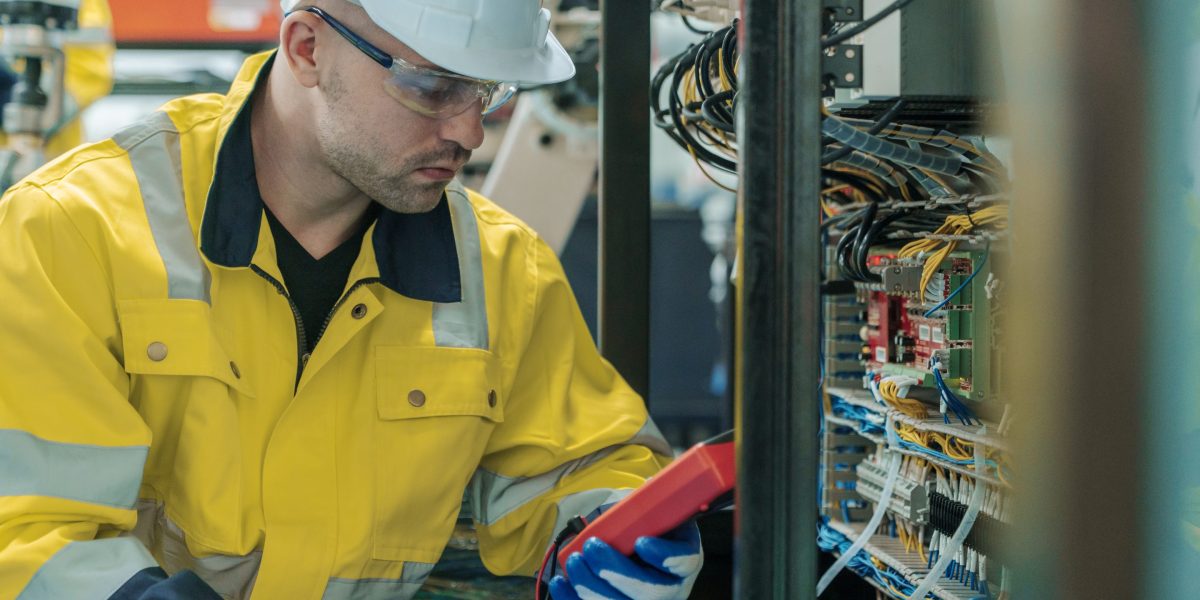


Good morning. Most leaders I talk to acknowledge that AI could create a talent and job crisis, at least in the short term. The question is how to minimize the pain and maximize opportunities for prosperity. We’re seeing plenty of headlines about AI-imposed layoffs, a dearth of entry-level jobs, and a demographic and immigration crisis. Ford CEO Jim Farley talks about a shortage of electricians. (BlackRock could help.)
But there’s also excitement about reskilling, reimagining roles, and the resilience of the U.S. economy. How to manage the AI transition dominated discussions at a gathering to celebrate the “Best of American Business” this week hosted by Just Capital, a nonprofit founded in 2014 by hedge fund manager Paul Tudor Jones II to catalyze private-sector leadership around major societal challenges.
The conversations were conducted under the Chatham House rule, meaning I can share their takeaways without direct attribution and give you some data on how consumers are thinking about AI.
“We need a Manhattan Project around labor.” That’s what one CEO told me is needed to manage the AI transition. Faced with the specter of Nazi Germany getting a nuclear bomb in WWII, the U.S. led a massive allied effort to get there first. Now, the race is against China, adding pressure to move at a rate that could destabilize society if too many people are left behind. This leader argued that the public and private sectors have to work together on solutions. The speed and scale of AI transformation is accelerating at a time when the country is deeply divided about education, entitlements, and the role of government.
Consumers like AI, to a point. Just Capital released a new poll of 2,012 Americans that shows that consumers’ optimism about the benefits of AI in health, education, and engineering outweigh their concerns about workforce disruption and environmental impact. But they want companies to protect their personal data, keep humans in charge, and prevent harm, deception, or manipulation. The most trusted institution to do that, according to the 2026 Edelman Trust Barometer, is not government or philanthropy but rather business. People trust their employers when they don’t trust much else. But they’re also angry. As CEO Richard Edelman said in Davos, there’s “a sense that time is running out.”
Beware the backlash. The people driving the development of AI have yet to inspire much faith when it comes to prioritizing the public good. Some are preaching nirvana or being blunt about impending job loss while appearing to be oblivious to the fact that most people don’t want a world without work. Add in rising CEO pay and greater income gaps at a time when consumers are also dealing with higher gas prices and less affordable homes. The transformative power and productivity gains from AI are becoming undeniable. But prosperity is not sustainable if people don’t have prospects to benefit from it. That’s a business problem everyone has to solve.
Contact CEO Daily via Diane Brady at [email protected].
Top leadership news
Public favor wobbles for the Waltons in Walmart’s hometown
The billionaire Walton family, heirs to the Walmart fortune, have invested heavily into the town of Bentonville, Ark. where the late Sam Walton established Walmart’s headquarters. But their outsized influence over the town is beginning to test some residents’ goodwill.
Moody’s: Oil price increases put added strain on “primary driver of U.S. economic growth”
A new report from Moody’s Analytics says the war with Iran—and its impact on oil prices—is “testing the resilience” of household spending, the main driver of U.S. economic growth. The firm emphasized that the added strain is compounding the financial pressures American households are already facing.
AI vs. middle managers
Block CEO Jack Dorsey and Sequoia advisor Roelof Botha argue in a new essay that one overlooked consequence of AI adoption could be the elimination of middle management. Dorsey’s company laid off 40% of its workforce just over a month ago.
The markets
Most major markets in the U.S., Europe, and Hong Kong are closed Friday for the holiday weekend. S&P 500 futures are down 0.31% this morning. The last session closed up 0.11%. The STOXX Europe 600 closed down 0.18% yesterday. The U.K.’s FTSE 100 closed up 0.69% yesterday. Japan’s Nikkei 225 was up 1.26% today. China’s CSI 300 was down 0.85% today. Hong Kong’s Hang Seng was down 0.70% yesterday. South Korea’s KOSPI was up 2.74% today. India’s NIFTY 50 is up 0.15% today. Bitcoin is nearly flat, hovering around $67K.
Around the watercooler
I knew about North Korean hackers—they still tricked me and got into my computer by Ben Weiss
Trump wants to add nearly $7 trillion to the $39 trillion national debt with his new military budget, watchdog warns by Nick Lichtenberg
Ford CEO Jim Farley says America is sleepwalking past its ‘essential economy’ crisis. Goldman Sachs just showed how big it really is by Nick Lichtenberg
Paul Krugman smacks down Trump speech with argument that $4 gas is ‘less than half’ of the Hormuz hit. Here’s what he’s talking about by Jake Angelo
Mercor, a $10 billion AI startup that works with companies including OpenAI and Anthropic, confirms major data breach by Beatrice Nolan
CEO Daily was curated and edited by Joey Abrams and Lydia Belanger.