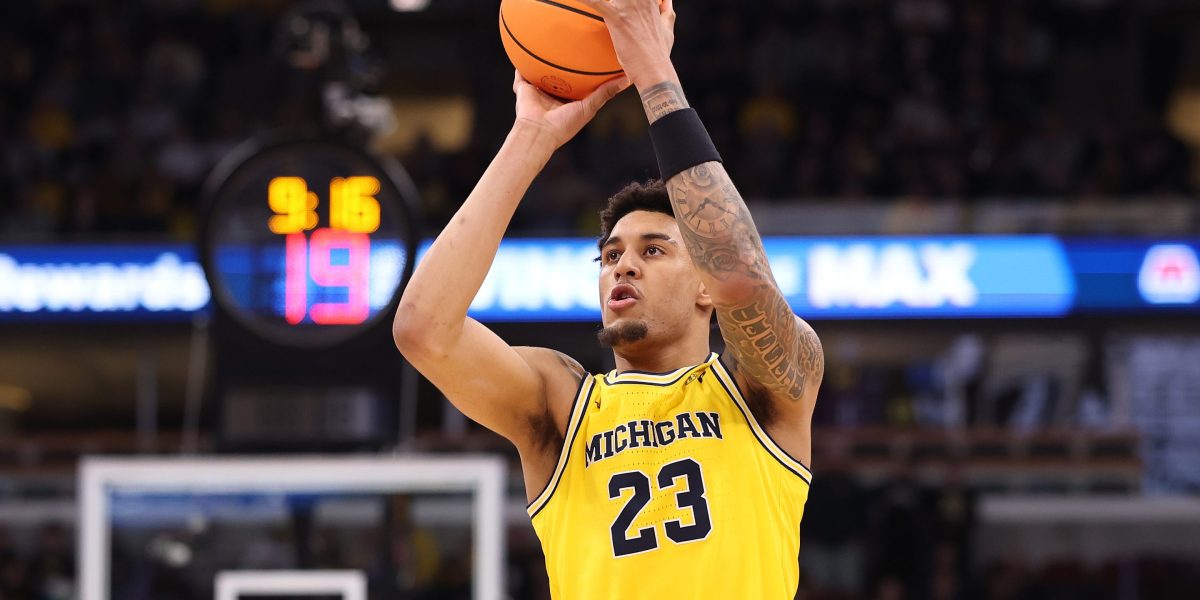





As the 2025 Men’s and Women’s NCAA Final Four wraps up the season, it marks a moment to reflect on the effects of conference realignment. Shifts in conference structures have led to travel that has stretched teams and fans across the country. These changes are not only reshaping the landscape of college sports, they are contributing to a mounting climate crisis, creating long-term consequences that go beyond the disruption of traditional rivalries and empty seats in arenas.
The Conference Realignment Ripple Effect
As the NCAA grapples with name, image, and likeness policies, transfer portal dynamics, and mounting mental health concerns, the 2024/25 season also brought with it major conference realignments. The prominent athletic programs of Oregon and UCLA joined the Big Ten, and Cal and Stanford moved to the Atlantic Coast Conference. These changes, motivated largely by financial incentives and media rights deals in football, have brought about consequences for athlete well-being, travelling fans and environmental sustainability.
While football was the driving force behind the reshuffle, basketball and other sports have arguably been more affected by increased travel. Conference realignment has impacted college basketball “in a worse way than it did football, forcing fans to either travel distances outside of their region to support the team or watch at home, leading to empty areas for big-time games,” reported Brock Vierra for Sports Illustrated.
The Scale of Increased Travel
While travelling is a violation on the basketball court, it’s a necessity off it. Conference realignments have resulted in increased travel for nearly every school in the four major conferences in 2024-25, according to Wall Street Journal analysis.
The 10 schools that left the Pac-12 had the largest uptick, travelling between 47% and 222% further than the 2023-24 season. The Oregon Ducks men’s basketball team reportedly travelled 26,700 miles this season, up from 7,327 miles in the 2023-24 season. Similarly, Stanford and Cal women’s basketball teams each traveled over 23,000 miles in their inaugural ACC season.
Outside of basketball, the 18 Big Ten football teams racked up an estimated 158,000 miles of travel during the 2024 season, roughly the equivalent of circling the Earth six times. The Stanford women’s volleyball team will travel more than 33,700 miles by the end of the 2024-25 season, three times more than during their final Pac-12 season. Gymnastics also report a similar overall picture of increased travel across the conference.
Impact on Travelling Athletes, Staff and Fans
The physical and mental strain associated with higher instances of cross-country travel poses challenges for athlete recovery and sleep patterns. Frequent travel across multiple time zones disrupts circadian rhythms and increases the risk of injuries due to inadequate rest and recovery. These concerns led Cal men’s basketball coach, Mark Madsen, to bring NASA in to share recovery insights.
The Big Ten bylaws require teams to have at least two days between games, so more time away from campus is sometimes needed to comply with scheduling rules. Class time is increasingly missed and online classes are needed.
“Increased travel means more stress on your physical health and academic career,” says NYU varsity women’s basketball player and 2024 and 2025 NCAA National Champion, Belle Pellecchia. “Student athlete mental health is more of a problem than we are recognising. Support might be better now than it used to be, but it’s still not considered enough.”
It’s not just the student athletes that are impacted, says Jonathan Casper, associate professor and sport management program coordinator at North Carolina State University. But also “the often-overlooked athletic administration staff, trainers, and graduate assistants who travel with the teams. These individuals are expected to perform their duties despite jet lag, extended travel, and lost time.”
USC men’s basketball coach Eric Musselman shared his thoughts on his team’s fifth trip to Eastern or Central time zones this season. “I’m so exhausted,” he told reporters. “My wife summed it up best this morning that she’s never seen me so sick throughout the course of a college basketball season.” UCLA men’s basketball coach, Mick Cronin, has been outspoken about the impacts of travel too.
Fans are also feeling the toll, facing longer trips and higher costs to see their teams play. Casper believes there might be an initial honeymoon period for those travelling to away games at new locations, but excitement could be “tempered by the realities of long flights, little free time to explore, and the toll of crossing multiple time zones.”
Escalating Environmental Toll And Climate Impacts
The increased carbon emissions associated with more frequent travel, over longer distances, raises a red flag for the environment. Calculating definitive figures for the increase in carbon emissions from travel this season is difficult, with many variables and lack of data on teams, let alone fans. For football however, researchers have found that team travel emissions in the 2024 season were estimated to have doubled compared to 2023.
Increased travel driving up carbon emissions sits in opposition to leading experts advising that we actually need “rapid, deep, and immediate” cuts in greenhouse gas emissions, to avert the most severe consequences of climate change. 2024 was the hottest year on record, and we are going to be poorer, and sicker in a warming climate.
Bad weather and natural disasters have disrupted sports schedules for decades, but scientific consensus shows that climate change, driven by human activities, is now causing more frequent and intense extreme weather events.
This is increasingly disrupting college sports, including those that take place indoors. A historic snowstorm hit Louisiana in January 2025, and five men’s and women’s basketball games were postponed due to “hazardous travel conditions.” Around the same time, wildfires were burning in Los Angeles, leading Northwestern women’s basketball to forfeit games to USC and UCLA, due to their decision not to travel. “While we acknowledge that bylaws and rules are in place for a reason and we will abide by them, it does not diminish this team’s sound reasoning for not participating during this natural disaster,” said athletic director Mark Jackson.
What Could The Future Look Like?
“There are a lot of kinks to be ironed out,” says Jessica Murfree, assistant professor at the University of North Carolina at Chapel Hill. “Performance, revenue and other elements will be cited, but our environment is the puppet master behind it all.”
The success of college sports depends on athlete performance, both in terms of physical conditioning and games actually taking place. Both are impacted by our environment. The uptick in travel associated with conference realignment is contributing to the climate crisis, while the climate crisis is making college sports more challenging. “Moving forward, college sports programs will need to proactively plan for extreme weather events and have contingency plans in place, especially for outdoor sports,” says Jonathan Casper.
In spite of these college athletes facing more travel and tougher conditions, “the expectations on them to perform will continue to go up,” says Jessica Murfree. “We wouldn’t have this massive conference realignment and new TV deals if there wasn’t a return on the investment.”
Optimizing fixture schedules to reduce travel miles could have “tremendous benefits” says Brian McCullough, associate professor at University of Michigan, including cost savings, performance recovery and athlete wellbeing. “These optimizations can also help reduce environmental impacts of the expanded conferences.”
Optimized schedules that reduce carbon emissions could involve matches between teams with shorter travel distances, and if longer travel is required and student timetables allow, adding additional matches with teams along the way. “I would love to bunch it up,” Cal men’s basketball coach, Mark Madsen has said. “Let’s get four games in one trip. Let’s get three games in a trip.” He also suggested early tip times on Saturday to allow easier return travel.
As the NCAA and its member institutions look to the future, the path forward for college sports must consider more than just growth, revenue and viewership. The consequences of conference realignment are already evident in the physical and mental toll on athletes and staff, and escalating carbon emissions amidst a worsening climate crisis. Financial sustainability might be at the forefront of minds, but if college athletics are to remain socially and environmentally viable in the long term, the NCAA must address climate resilience and travel impacts.