





How quickly can we change ocean chemistry without damaging marine ecosystems and its associated ecosystem services?
The world’s oceans are in worse health than realised, according to an international collaboration of oceanographers, ecologists and marine biologists. They recently published a report that finds parts of the world’s oceans have undergone increased acidification that has already surpassed what is now known as a ‘planetary boundary’. Planetary boundaries were first proposed in 2009 (ref) and were defined as the amount of harm the planet can sustain due to global warming, pollution, habitat destruction and other destructive human activities, before damaging consequences occur – such as the development of devastating new weather systems.
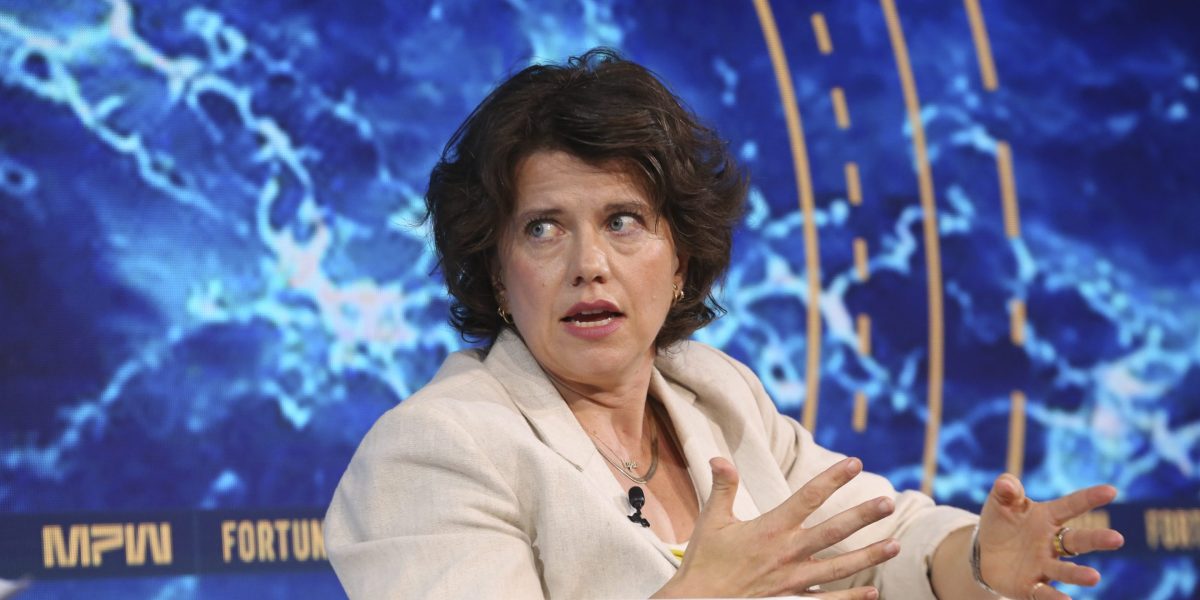
“The planetary boundaries were established to indicate when we move outside of what we (as humans) have known to be ‘safe’: i.e. the stable period of time that humans have evolved that has allowed us to develop the societies that we now operate in the Holocene era prior to the industrial revolution,” said the study’s lead author, biological oceanographer Helen Findlay, a professor at Plymouth Marine Laboratory. Professor Findlay uses a combination of experimental, observational, and modelling tools to investigate the effects of climate change and ocean acidification (OA) on marine ecosystems, and applies this knowledge to maintain a healthy, sustainable ocean, with a particular focus on the Arctic.
“The OA planetary boundary considers more of an environmental perspective, given how much the Ocean provides us (in a goods and services sense),” Professor Findlay explained in email.
Of the nine planetary boundaries identified, six are thought to have already been surpassed. Now, according to research by Professor Findlay and collaborators, a seventh planetary boundary was also exceeded – five years ago.
“It’s worrying because we are already impacting the system in ways that we either know are bad, or in ways that we don’t yet fully understand the implications of. But we do know they are difficult to reverse.”
A planetary boundary is not a tipping point because, unlike a tipping point, it is possible to reverse the damages we’ve caused by, in this situation, stopping emission of greenhouse gases into the atmosphere.
“How quickly can we change the ocean chemistry (i.e. ocean acidification) without it impacting marine ecosystems and its associated ecosystem services?” Professor Findlay asked rhetorically.
The ocean acts like a carbon sponge, absorbing roughly 25% of atmospheric CO2. Absorbed CO2 reacts with water molecules to form carbonic acid. This acid lowers the pH of seawater and reduces the concentration of carbonate ions available to marine creatures, particularly to a variety of “calcifying” organisms such as oysters, clams, mussels, sea urchins, shallow water corals, deep sea corals, certain species of plankton, and tiny sea snails known as pteropods (Figure 1). All these calcifying species, and more, then struggle to maintain their protective shells, leading to weaker shells, slower growth, reduced reproduction and decreased survival rates.
Professor Findlay and collaborators analyzed both new and historical physical and chemical measurements collected from ice cores, combined with computer models and prior studies of marine life. This gave the scientists an overall assessment of the past 150 years.
The new analysis provides a global assessment of the saturation state of a form of the mineral aragonite. Aragonite is a form of calcium carbonate that marine organisms use to build their shells and skeletons. The aragonite saturation state in seawater, represented by ΩArag, is a measure of how easily aragonite dissolves in seawater, and is used to track ocean acidification. When pH – and thus, ΩArag – drops below safe levels, shell-y marine creatures struggle to maintain their protective structures.
In their study, Professor Findlay and collaborators discovered that by the year 2000, global ocean conditions had already crossed a revised, more limited boundary for acidification. That boundary is crossed when the amount of calcium carbonate in seawater hits a 20% reduction relative to levels present before the Industrial Revolution.
Professor Findlay and collaborators found that as of 2020, over 40% of the surface of the ocean had passed the OA boundary.
According to the study, the largest documented change in surface waters has been in polar regions, whilst the largest change in deeper waters has been in the sub-polar regions and along the west coast of North America from Canada to Mexico (red areas; Figure 2).
These changes in seawater chemistry are not only measurable in the ocean’s surface waters. The deeper in the ocean that Professor Findlay and collaborators looked, the more worrying the findings were. For example, at 200 metres below the surface, 60% of global waters had breached the “safe” limit for acidification.
“Most ocean life doesn’t just live at the surface,” Professor Findlay said. “The waters below are home to many more different types of plants and animals. Since these deeper waters are changing so much, the impacts of ocean acidification could be far worse than we thought.”
Although the ocean has experienced these pH levels before, it was long ago, in the deep past.
“Paleo-records suggest that we have not seen the rate of change for nearly 55 million years,” Professor Findlay said. “The rate is important as it determines how quickly the ocean, its ecosystems and organisms, have to respond to change. During past events, there was a loss of diversity (mass extinctions), but many organisms also become smaller (which we’ve seen happen in lab experiments), which they do to preserve energy. There are also records showing calcified plankton being replaced by diatom (silicious) counterparts.”
These periods are generally associated with warming and extinction events. These findings have huge implications for important underwater ecosystems such as tropical and even deep-sea coral reefs that provide essential habitats and nursery grounds for the young of many marine species. Further, it indicates big changes are coming in marine biodiversity.
What’s different about this particular assessment?
“[O]ur study looked in more detail, as well as accounted for uncertainties, and came up with a more robust way of looking at the boundary,” Professor Findlay replied in email. “In particular we use regional assessments, which show that the polar regions are vulnerable, but we also see change happening below the surface of the ocean. These nuances matter when it comes to action and management.”
Only a rapid global reduction in CO₂ emissions, Professor Findlay and collaborators warn, can stabilize OA trends. Without it, nearly 100% of the global ocean surface will exceed safe acidity levels by 2100 under mid- to high-emissions scenarios.
“It’s really important that we have a global understanding of OA so that we can tackle the issue at an international level. But it’s also important that our science informs regional and national actors, so that management organisations can implement the required action.”
Source:
Helen S. Findlay, Richard A. Feely, Li-Qing Jiang, Greg Pelletier, and Nina Bednaršek (2025). Ocean Acidification: Another Planetary Boundary Crossed, Global Change Biology 31(6):e70238 | doi:10.1111/gcb.70238
© Copyright by GrrlScientist | hosted by Forbes | LinkTr.ee
Socials: Bluesky | CounterSocial | LinkedIn | Mastodon Science | MeWe | Spoutible | SubStack | Threads | Tumblr | Twitter


