



After weeks of bluster and escalation, President Trump blinked. Then he blinked again. And again.
He backed off his threat to fire the Federal Reserve chairman. His Treasury secretary, acutely aware that the S&P 500 was down 10 percent since Mr. Trump was inaugurated, signaled he was looking for an offramp to avoid an intensifying trade war with China.
And now Mr. Trump has acknowledged that the 145 percent tariffs on Chinese goods that he announced just two weeks ago are not sustainable. He was prompted in part by the warnings of senior executives from Target and Walmart and other large American retailers that consumers would see price surges and empty shelves for some imported goods within a few weeks.
Mr. Trump’s encounter with reality amounted to a vivid case study in the political and economic costs of striking the hardest of hard lines. He entered this trade war imagining a simpler era in which imposing punishing tariffs would force companies around the world to build factories in the United States.
He ends the month discovering that the world of modern supply chains is far more complex than he bargained for, and that it is far from clear his “beautiful” tariffs will have the effects he predicted.
This is not, of course, the explanation of the events of the past few days that the White House is putting out. Mr. Trump’s aides insist that his maximalist demands have been an act of strategic brilliance, forcing 90 countries to line up to deal with the president. It may take months, they acknowledge, to see the concessions that will result. But bending the global trade system to American will, they say, takes time.
“Have some patience and you will see,” the president’s press secretary, Karoline Leavitt, told reporters on Wednesday.
Mr. Trump himself insisted to reporters at the White House that everything was going according to plan.
“We have a lot of action going on,” he said, repeating his now-familiar line that “we’re not going to be a laughingstock that got taken advantage of by virtually every country in the world.” He suggested again that the United States needed to return to the halcyon era from 1870 to 1913 — the year the country began to impose income taxes — when tariffs funded the government and “we had more money than anybody.”
And he repeated his prediction that “now we’re going to be making money with everyone, and everyone’s going to be happy.”
But happy did not seem to be the vibe around the White House in recent days.
It started with Mr. Trump’s declaration that the “termination” of the Fed chair, Jerome H. Powell, whom he appointed in 2017, “cannot come fast enough.” His most senior economic adviser, Kevin Hassett, went further, saying the administration was looking at the legal options to remove him.
Mr. Trump’s complaint is that Mr. Powell will not cut interest rates, for fear of stoking inflation. But the president was clearly concerned about the warnings from economists that the country could be headed to recession — one of his own making, one that his critics are already trying to label the Trump Slump even before it happens.
The tone of his comments seemed to suggest that if recession does come, the blame will fall on Mr. Powell.
But once Mr. Trump declared “if I want him out, he’ll be out of there real fast, believe me,” another market sell-off began. It made little difference that he doesn’t have the power to dismiss the Fed chair, as Mr. Powell has noted in recent days. The mere threat of it seemed to accelerate the sense that the United States has become the biggest source of market instability in the world.
Then, on Tuesday, Mr. Trump changed his tune. “I have no intention of firing him,” Mr. Trump said of Mr. Powell. That didn’t stop him from continuing his critique of Mr. Powell as “Mr. Late” with rate cuts, but it was enough to reverse the market sell-off.
The next walk-back came with China.
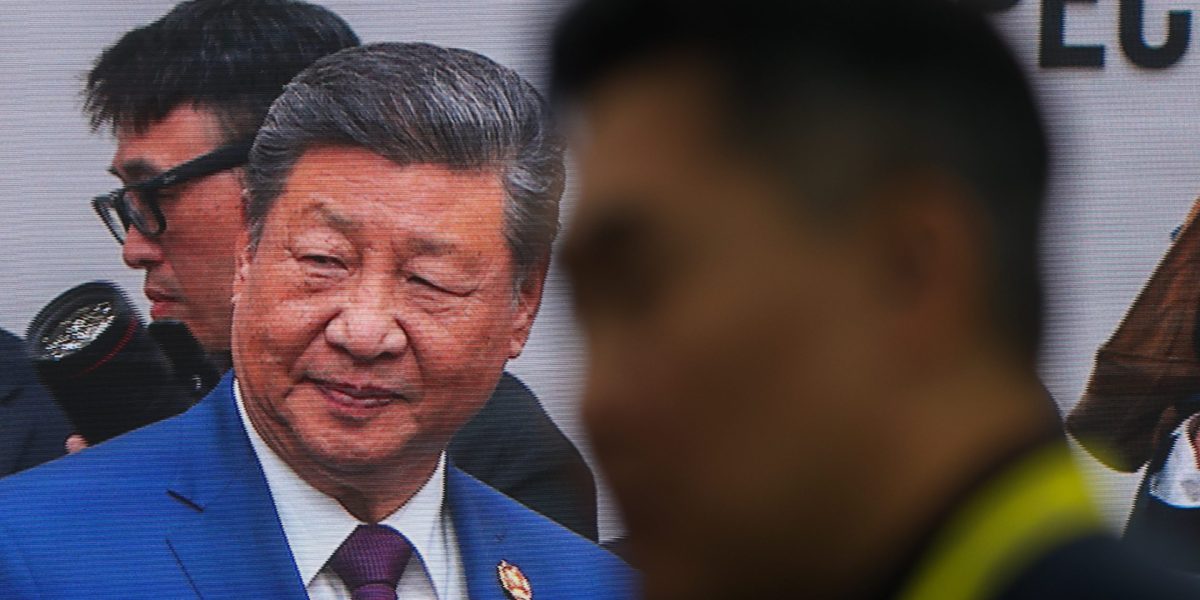
The White House kept hinting that the Chinese were beginning to negotiate, seeking a way to end the tariffs. In fact, the strategy that Beijing appeared to be following was to wait for Mr. Trump to feel the pain of his own actions. The expected phone call from President Xi Jinping never came. And Mr. Trump didn’t want to be the first to call, either — a sign of desperation.
For weeks, Treasury Secretary Scott Bessent seemed in obvious pain as he tried to justify the application of tariffs that, by many measures, outstrip those imposed by the Smoot-Hawley Act in 1930. (It is a historical comparison that no one in the White House wants to touch — other than to declare it a false analogy — because the cycles of retaliation triggered by that act of Congress worsened the Great Depression.)
“No one thinks the current status quo is sustainable” at those tariff rates, Mr. Trump told investors at a closed-door meeting on Tuesday in Washington, where his comments immediately leaked. He said he was looking for a de-escalation with Beijing, which “should give the world, the markets, a sign of relief.” But he admitted that any negotiation with China was going to be slow and painful, “a slog.”
In private, some Trump officials concede that they did not accurately predict China’s reaction. Mr. Trump seemed to expect China to be among the first to come begging for relief, given the size of its exports to the United States.
“Back in 2017, the first time Trump imposed tariffs on China, Beijing was caught by relative surprise,” Nicholas Mulder, an economic historian at Cornell University, said on Wednesday. “But they have been preparing for further escalation for many years,” he said. Now, “they have much more tolerance for economic pain, and a greater ability to weather this ratcheting up.”
By late Tuesday Mr. Trump was publicly mulling lowering the Chinese tariffs, saying “145 percent is very high, and it won’t be that high, not going to be that high.” He added, “It got up to there,” as if the number had floated to that height by itself.
On Wednesday, Ms. Leavitt said Mr. Trump would not lower the tariffs until the United States and China negotiated a new trade agreement — another mixed message out of the White House on the state of negotiations.
“Let me be clear: There will be no unilateral reduction in tariffs against China,” Ms. Leavitt said on Fox News.
Other powers are clearly watching the Chinese approach and taking notes. Mr. Xi’s closest ally, President Vladimir V. Putin of Russia, is engaged in his own high-stakes negotiation with the United States, over Ukraine. Iran is in the midst of talks about its nuclear program. They are looking for signs of weakness, or little indications of what could test Mr. Trump’s nerves.
Elizabeth Economy, who has written extensively about Chinese trade policy and served in the Commerce Department during the Biden administration, said the Trump team appeared to have ignored three fundamentals about China: the depth of the Chinese retaliatory tool kit, the extent of China’s economic leverage over the United States, and the ability of Mr. Xi to make the United States the scapegoat for China’s economic ills.
“This game of chicken has done nothing but enable Xi Jinping to boost his standing in and outside China, while the United States appears uninformed and unmoored,” she said.