

The results of the Democratic primary delivered a blow to the progressive wing of the party, but also to Polymarket and Kalshi—popular prediction market platforms that had gained a near-infallible reputation after accurately forecasting the outcome of every state in the 2024 presidential election.
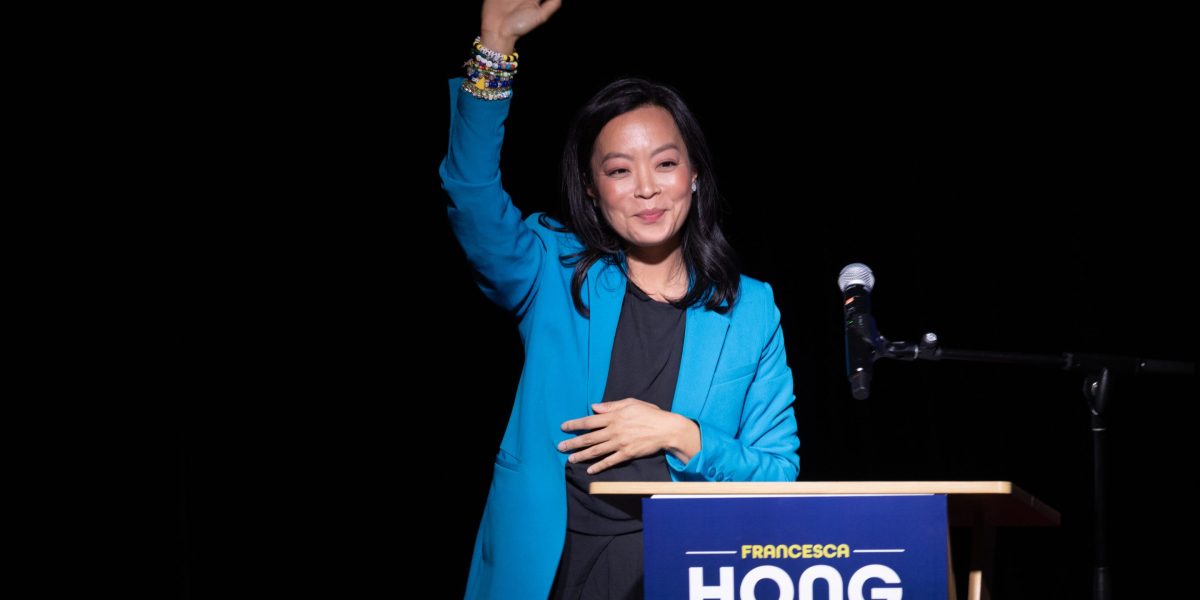
Polymarket and Kalshi event contracts on the outcome of the Wisconsin governor’s primary aligned with the sentiments of traditional polling firms, which had predicted an easy win for progressive candidate Francesca Hong. Both platforms gave Francesca Hong roughly a 95% chance of winning, but when the votes were counted, her rival, David Crowley, prevailed by less than half a percentage point.
The surprise loss led Polymarket to delete one of its more boastful posts on X, which said Hong had a 96% chance of winning the primary, despite Hong’s lack of endorsements from prominent Democratic socialists such as Bernie Sanders and Alexandria Ocasio-Cortez.
They deleted this tweet. pic.twitter.com/BoavMCpSn1
— Christopher Hale (@ChristopherHale) August 12, 2026
In response to criticism of the market’s accuracy, Kalshi’s founders argued that the outcome did not, on its own, invalidate the forecast. In a social media post, Kalshi CEO Tarek Mansour said the 95% probability assigned to Hong still implied that the underdog had roughly a one-in-20 chance of winning—a low-probability outcome, but one the market had explicitly allowed for. “5% is not 0%,” wrote Kalshi founder Luana Lopes Lara.
The misstep comes as prediction markets are increasingly seen as a complement to traditional polls and surveys for forecasting elections and other real-world events. Their credibility surged in the final stretch of the 2024 presidential campaign and in the aftermath of Election Day, when Polymarket and Kalshi were widely credited with giving Donald Trump an edge in a race that many conventional polls portrayed as a tossup. Their influence has since extended to mainstream media, with CNN naming Kalshi its official prediction-markets partner and Dow Jones planning to incorporate Polymarket data across The Wall Street Journal, Barron’s and MarketWatch.
Yet Crowley’s victory this week was not the first time prediction markets had mispriced an election, though the probabilities in those cases left more room for an upset. In June, Kalshi and Polymarket gave reality-TV personality Spencer Pratt about a 75% chance of advancing from Los Angeles’s nonpartisan mayoral primary to the general election. He instead finished third. The month before, Kalshi gave Rep. Thomas Massie a similar chance of winning the Republican primary in Kentucky’s 4th Congressional District. Massie lost to Trump-backed challenger Ed Gallrein.
For some, however, this week’s result was a reminder that prediction markets are not foolproof substitutes for polls. They are forecasting tools, not crystal balls. Statistician and political forecaster Nate Silver made that point in a recent social media post. “I think prediction markets are cool. But people should stop treating them as magic, and I don’t think they’re a good substitute for polls, or belong in models,” he said.