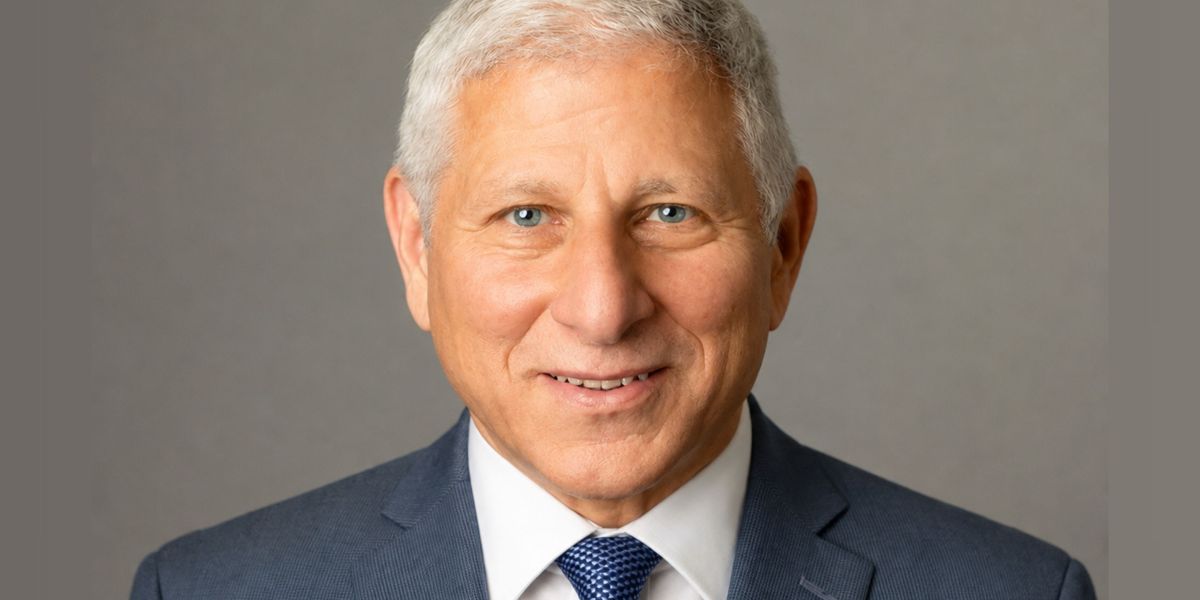




Treasury Secretary Scott Bessent isn’t short of investors keen to rap his knuckles—and his friend and mentor, Stan Druckenmiller, was at the front of the queue.
Bessent has been chastised by many for his recent attempt to manage prices in the bond market. As 30-year Treasury yields rose toward a near-20-year high last month, the Treasury announced a multi-billion-dollar buyback scheme on long-dated Treasuries, which reduced supply and pushed yields down. With long-dated yields used as a benchmark for borrowing costs across the economy, conditions should have loosened (in theory) for everything from mortgage and government interest rates to business loans.
The timing seemed convenient to skeptics: The U.S. national debt just hit $40 trillion, with interest payments by the Treasury expected to exceed $2 trillion in the fiscal year 2026. Reducing the yield on bonds would bring down the government’s borrowing costs.
The action seemed all the more noteable as, just weeks before, Bessent announced an intervention to buy up the Japanese yen—the currency of the nation that holds the greatest value in American debt. One interpretation of the move was that it prevented Japan from selling its hoard of U.S. bonds to support its own currency—a move that would have raised yields on U.S. debt, making it more expensive for the government to repay.
Investors began questioning whether Bessent may be trying to shape the very markets that dictate the terms of government borrowing. Rather than “artificially suppressing” yields via “price management,” a “credible fiscal package” out of DC would have had more impact on yields, as famed investor Druckenmiller noted in a Wall Street Journal op-ed.
But Bessent, a self-professed economic historian, a Druckenmiller student, and a notable yen shortseller, knows all of this. Indeed, the Treasury Secretary never stated the buyback scheme was a price-setting exercise—the basis on which some now deem it a failure.
Economists Fortune spoke to suggested that the timing and tone of Bessent’s communication is what has caught the attention of Wall Street, and—potentially—led investors to draw unintended conclusions.
But Bessent may also have revealed to markets more than he calculated: The pain threshold at which the administration is willing to react. In an environment where Bessent is urging investors to look through the “noise,” his actions speak louder than words.
An exercise in responsibility
As the saying goes, the simplest explanation is often correct—and Wharton Professor Christina Parajon Skinner suggests precisely that. Bessent’s scheme is about efficiency, she tells Fortune, or “market plumbing.”
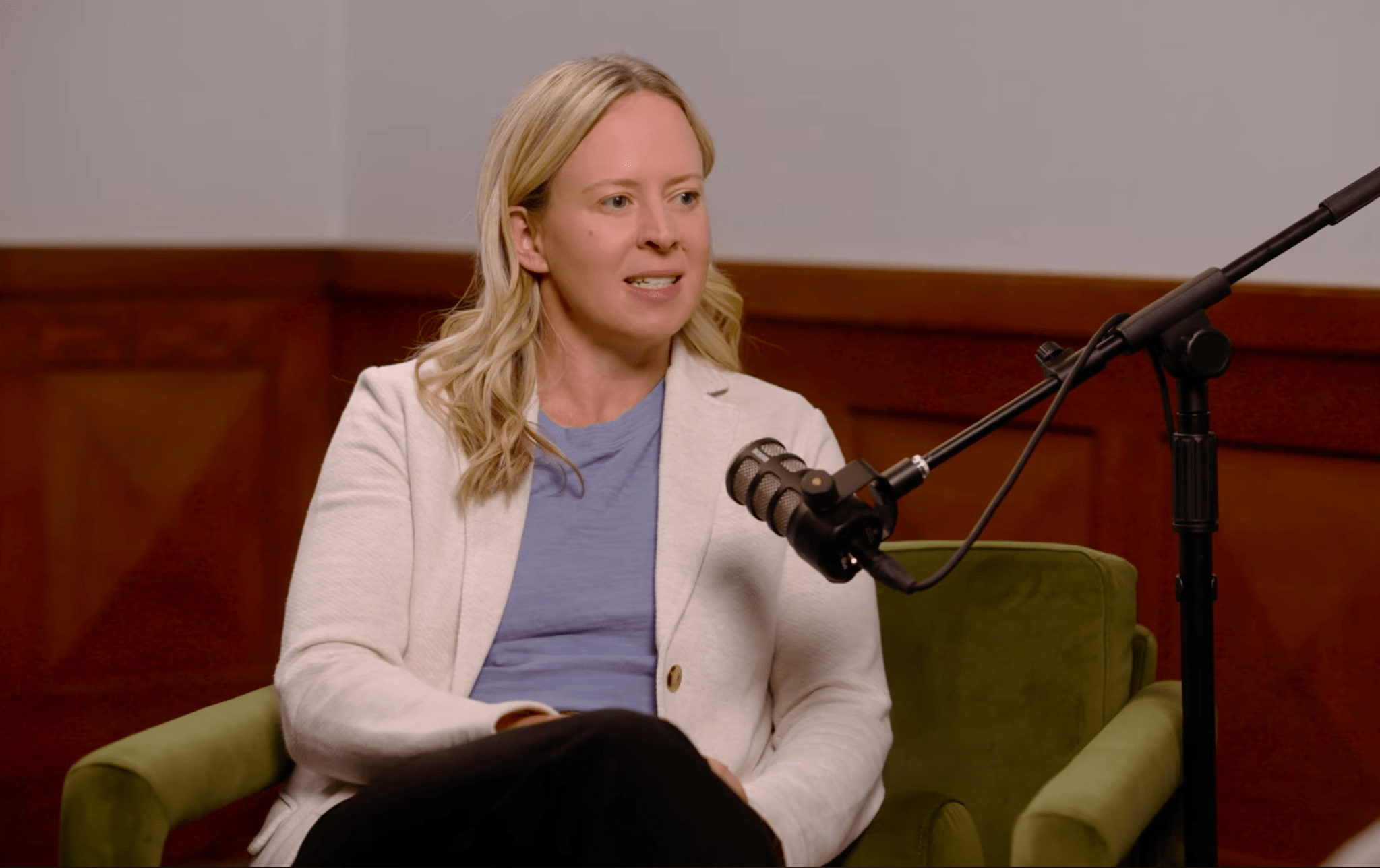
Prof. Skinner served at the Treasury under Bessent from July 2025 until August. While the Ivy League academic didn’t work on the buyback scheme, she said: “From the outside looking in, this very clearly does look like liquidity management, a market functioning exercise, which I don’t at all perceive to have been anything remotely close to a failure.”
The scheme is nothing new, she points out, as regular Treasury repurchasing operations were introduced in May 2024—the change has been in the size of the operation, up from $2 billion per action to $4 billion.
“The Treasury has never been a passive buyer of government debt,” Prof. Skinner said. “If you’re inside Treasury thinking about the market, we see that our bond market is generally working very well, we know what the Treasury market is, but we know that there can be some bumps in the long run that disrupt market functioning,” such as the 10-year going over 5%. “In the last administration, [this] is … precisely one of the reasons why this buyback facility was created, to provide liquidity.”
Yields shifting higher, combined with a confluence of events around national debt and yen intervention, means it’s “easy to put together a story that this was motivated by something else,” Prof. Skinner said. But she believes it would be an “error” to overextend the notion of market efficiency into a question of setting equilibrium prices in the bond market.
“The Treasury Secretary’s responsibility for the debt market is to ensure it’s functioning, to ensure that the government can borrow in the most efficient market possible, and to think about the tools that were already created for him,” she adds. “It would be actually disappointing and surprising if [Bessent] just sat on his hands and said, ‘OK, we’re going to let this shock not be absorbed, even though we have the capacity to help the market be more efficient during this period of time.’”
A policy twist
Macquarie’s global FX and rates strategist, Thierry Wizman, also doesn’t see a fiscal management question mark hanging over Bessent’s bond plan. Like Prof. Skinner, he is interested in Bessent’s justification of “liquidity,” but sees something different between the lines.
“When I see people debating what someone meant, I typically tend to go to the horse’s mouth,” Wizman tells Fortune. “He’s speaking about liquidity, and the question is how do you interpret that, especially since he didn’t talk about … the deficit [or] a yield target. The Treasury Department is always manipulating the Treasury market; that’s nothing new.”
But Wizman does spy a motivation in the global market, one of high issuance of government debt not only in the U.S., but also out of fellow developed economies: “If there’s a pressing need to allow AI infrastructure to get built out and financed, you certainly wouldn’t want all of that government debt issuance to crowd out the corporate issuance, and therefore we need to make space.” Reducing yields on government debt might also reduce the cost of the corporate debt that competes with it, making AI funding cheaper to obtain.
One might argue that if Bessent wanted to funnel funds toward AI, thereby supporting the capital expenditure that is driving U.S. economic growth at present, he would have signaled it. Bessent’s tone has changed in the past couple of months: He has been sharp with critics of the bond scheme, telling former White House strategist Steve Bannon on a podcast last week: “If some of the Bloomberg Terminal bros are unhappy with what I’m doing, well, that’s too bad.”
Wizman argued that it’s not the Treasury Secretary’s job to promote one sector over another, but points out that Bessent’s boss—President Trump—has been doing precisely that.
“It’s implicit by what the president is saying that they want to run the economy hot for AI, and then it’s the job of the Treasury to execute on that broader intention … the president sets overarching policy, especially industrial policy,” Wizman said. “So [Bessent] said he wants to create liquidity, that implies there’s not enough liquidity—then the question is, why is there not enough liquidity?”
It seems that AI investment is doing just fine without any help—Goldman Sachs estimates global AI investment will exceed $1 trillion in 2026—but the proof will be in the data, Wizman suggests: “You’re gonna have to wait until the end of the year to see if everyone got financed, you’re gonna have to wait until next year to see if the productivity gains from AI will in fact help grow and disinflate the economy” (which on its own right would bring yields down) “there’s a lot of things you need to wait for before you can judge this.”
Giving the game away
While the motivation and intended consequence of the Treasury’s buyback scheme is up for debate, the fact that the mighty department intervened has taught the market a new lesson: The conditions under which it feels compelled to act.
Elevated bond yields aren’t contained to the U.S.; 10-year yields have also been tracking higher in the U.K., Japan, and France, and the fundamentals suggest that government borrowing and inflation expectations will keep them high.
With these risk factors prevailing, the buyback operation may have set something of a precedent for reaction functions, suggests Columbia Business School’s Yiming Ma. She told Fortune: “This kind of communication sometimes works in the short term because it signals commitment to the market that a big buyer is going to step in in times of need. But sometimes it also can backfire because the market will look at this and say, ‘Well, the fact that you need to come out and say and do these things implies that this market has already lost the confidence of investors.’”
“I think that’s why it’s such a slippery slope for the U.S. Treasury to do this, because the U.S. dollar has been the global safe asset for a very long time, one that people tend to buy in bad times, who do not need these kinds of interventions that are much more reminiscent of more developing or emerging market economies whose currencies whose funding conditions are much more uncertain.”
The intervention is also something of a Pandora’s box, Prof. Ma suggests, because if markets now expect Treasury to step in when yields get too high, and it doesn’t, then confidence will fall dramatically: “Everyone wants to have investors believe that everything is great. Now, whether communication helps, and to what extent it helps, or whether communication hurts, I think that’s a very slippery slope.”