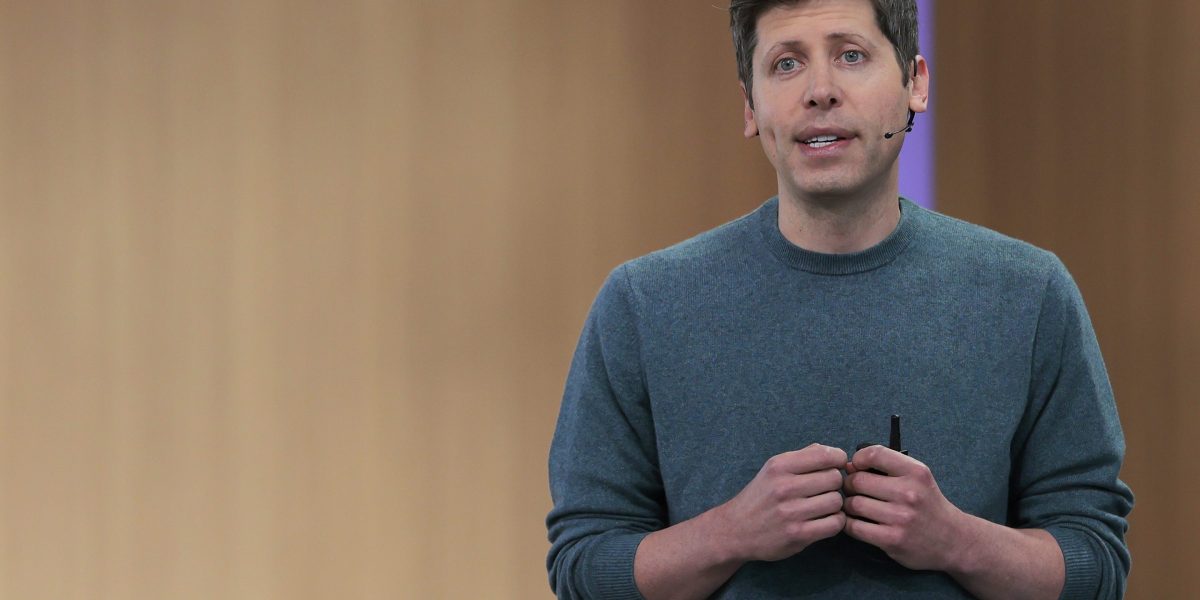




Romina Boccia, the director of budget and entitlement policy at the libertarian Cato Institute and coauthor of Reimagining Social Security, and Teresa Ghilarducci, a labor economist at the New School for Social Research and a senior research fellow at Arizona State University, spent an hour on NPR’s Open to Debate on the subject, “Should We Phase Out Social Security?” Boccia argued yes. Ghilarducci argued no.
Then I asked them a different question: Who is going to make the biggest tradeoff in repairing the system? The disagreement mostly evaporated.
“It’s going to be those Americans who have the greatest capacity to absorb either benefit reductions or higher taxes that are going to bear the brunt of the cost of reforming the system,” Boccia said. Ghilarducci agreed on the target, if not the method: “The way to get money for Social Security…is going to be at the top.”
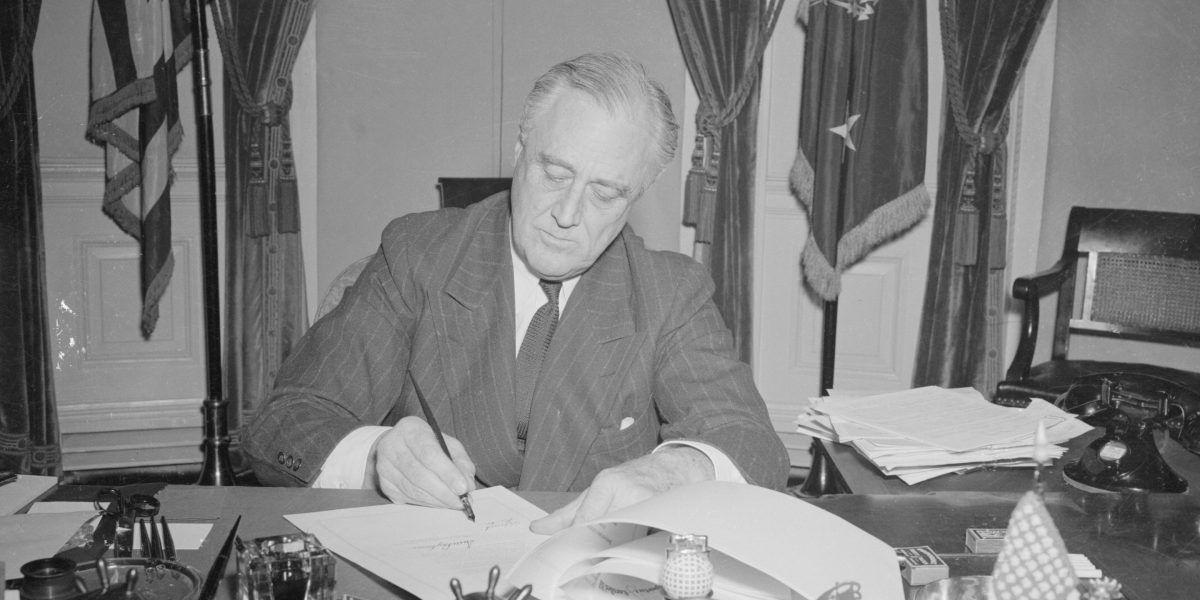
Everyone agreed, furthermore, that Social Security in its current state will be phased out one way or another. The program’s trust fund is set to become insolvent by 2032 under current policy, so changes have to be made, and soon. The takeaway is clear: The wealthy are going to pay for this, but the real dispute is whether “paying” means smaller checks or bigger tax bills. It’s a fight that’s older than either of them, dating back to the very creation of Social Security itself during the Great Depression as part of Franklin D. Roosevelt’s New Deal. The continuing debate over Social Security’s future reveals much about how America never fully made peace with the implications of that social contract.
Two visions of Social Security
Boccia’s argument was that Social Security has become an expensive wage-replacement system that sends its largest benefits to people most capable of providing for themselves. Workers and employers contribute 12.4% of wages through the payroll tax, she noted, but those contributions are not saved in individual accounts; they immediately finance current benefits. In her telling, that leaves younger workers with less money to buy homes, raise children, build savings, or invest in their own retirement—while a system ostensibly designed to prevent poverty still leaves some older Americans poor.
Her alternative is to narrow, rather than abolish, the program: replace the current earnings-related benefit with a predictable, flat benefit that protects people from poverty in retirement, while allowing middle- and higher-income workers to save and invest more on their own. Boccia argued that would make the system more transparent, less costly, and less burdensome for younger workers, in part because affluent retirees would no longer receive such large Social Security checks.
Ghilarducci rejected that diagnosis as mistaking the program’s central achievement for its flaw. Social Security is not simply retirement income, she argued; it is a family-insurance program that pays benefits not only to retirees but also to disabled workers, survivors, and children. Its benefits are indexed to inflation and last for life—protections she said the American do-it-yourself retirement system has failed to replicate.
Kent Smetters, faculty director of the Penn Wharton Budget Model, made the practical case to me in an interview before the debate, where I appeared in cameo role with a question for the debaters. The hardest thing for private markets to provide, he said, is “an inflation-adjusted annuity” that protects a retiree for an entire lifetime. Social Security, by contrast, offers “a true inflation-indexed annuity.” Private products are more commonly nominal, or provide a fixed annual increase that may fail to match actual inflation, he said. At 2% inflation, Smetters noted, wealth loses about 40% of its purchasing power over 25 years.
Ghilarducci argued that the private system has already had decades to prove itself. Employer pensions have withered, 401(k) participation remains incomplete, and many workers approaching retirement have too little in savings to make a reduced public benefit workable. Turning Social Security into a narrower anti-poverty program, she said, would cut the middle class loose from the most dependable part of its retirement security. Her alternative would maintain the earnings-related benefit while raising more revenue from higher earners, particularly by extending payroll taxes beyond the current earnings cap.
Boccia’s answer is that the costs of the present system are also real — and imposed heavily on younger workers. Smetters acknowledged the macroeconomic premise: a more privatized system could “substantially grow the economy,” he said, by increasing private saving and capital. But, he cautioned, that would does not erase the transition cost. “Somebody has to pay,” he said. “There’s no free lunch.” Future generations may benefit from an economy with more capital and higher wages, he said, but people alive during the transition would bear the burden for decades.
The disagreement, then, is not over whether government should prevent destitution in old age. Both accepted that premise. It is over whether Social Security should remain a broad social-insurance program that helps workers preserve something like their standard of living in retirement, or become a more limited poverty floor that leaves workers with more income to direct themselves. Once framed that way, the looming question is not merely whether the program will change, it is which group will bear the cost of changing it. And it is about the composition of wealth in America.
A design flaw, or a design feature?
That fight is not new. Smetters explained to me that Social Security was never simply a pension when Roosevelt’s administration built it in 1935. It was also “redistribution,” he said, though the architects of the program were not sure straightforward welfare redistribution would survive constitutional scrutiny.
So they designed a program that partly redistributed income while presenting itself as an earned pension. Its progressive benefit formula gives lower-wage workers a greater replacement rate than higher-wage workers, making redistribution a feature of the design. The payroll tax gave the program the visual logic of an annuity: People contributed while they worked, then collected when they retired. But the arrangement also helped build a coalition far broader than a conventional welfare program could have commanded.
Smetters pointed to a 1972 debate between Milton Friedman and Wilbur Cohen, the former secretary of Health, Education, and Welfare, as the clearest expression of this tension. Friedman wanted a smaller program aimed at poverty relief and financed through more progressive general revenues. Cohen defended a larger, pension-style program financed by the flatter payroll tax. His logic was political as much as economic: People defend a benefit that feels earned. “Any program that focuses on the poor will become a poor program,” Cohen said, according to Smetters. Friedman, Smetters said, conceded the point.
Boccia and Ghilarducci essentially restaged that fight. Boccia’s case is Friedman’s: Strip away the pension framing and Social Security is a regressive tax funding overly broad benefits, so make it smaller and more targeted. Ghilarducci’s case is Cohen’s: Turn Social Security into a program only for the poor, and it will lose the broad constituency that makes it both politically durable and adequate. The practical question, then as now, is whether universalism is an expensive disguise for redistribution or the only way redistribution can endure.
The public already picked a side
Ghilarducci cited an AARP/National Academy of Social Insurance survey in which 85% of respondents—90% of Democrats, 75% of Republicans—said they’d support maintaining or raising benefits even if it meant higher taxes. A 73% majority, including 60% of Republicans, backed taxing income above $400,000 specifically, while more respondents opposed raising the retirement age than favored it.
That tracks with actual movement in Congress: Ghilarducci pointed to Ohio Republican Sen. Bernie Moreno teaming up with Sen. Elizabeth Warren to push for lifting the payroll tax cap, and House Appropriations Committee Chair Tom Cole, also a Republican, signaling openness to tax hikes to fund Social Security.
Ghilarducci’s closing argument connected the debate to something concrete: 2025 tax legislation that cut taxes for the wealthiest Americans. “Congress made a choice in 2025 when they chose tax cuts for the very wealthiest part of America,” she said, “and we could make those choices in reverse.” Boccia went the other way—that cutting benefits, not raising taxes, is what grows the economy enough to leave everyone better off, even if current retirees feel the pinch first.
Neither of them disputes that the pinch is coming soon, or that it lands on the same people regardless of which side wins the argument on paper. The debate was billed as a question about whether Social Security disappears. It doesn’t answer that. What it actually settles is which Americans get asked to close the gap first—the same question Roosevelt’s team spent decades trying to obscure by building a program that didn’t look like what it partly was.
Generative AI was used for research assistance and/or transcription of this article. The reporter independently reported and verified the factual claims in this article, and a human editor reviewed it before publication.