



Gaming is the mega-sector few talk about. With a global market value of $386 billion this year, it dwarfs the size of film and music combined. As many as 350,000 people work in the industry directly, according to market research firm Gitnux. As with all other parts of the business world, talk of artificial intelligence is intense and inconclusive.
Microsoft is one of the Big Daddies. Call of Duty, World of Warcraft, and Minecraft live within the Xbox gaming empire, catapulted to leading global status by the acquisition of Activision Blizzard for $69 billion in 2023. Tencent, from China, and Sony, from Japan, vie with Microsoft for supremacy at the top of the gaming leaderboard.
With such a successful stable, Microsoft is keen that advertisers engage with gaming platforms, and it has set up a business division—Xbox Media Solutions—to drive profitable deals. The first game it lists on its “global portfolio of fan-favorite franchises” has nothing to do with battlefield simulations in future universes or worlds created by an endless supply of rubble, bricks, and tree trunks. The first game it highlights relies on people matching different types of sweets in a row and has a name that is part pro wrestling, part confectionery store: Candy Crush Saga.
Candy Crush was launched in 2012 with 65 “levels” of candy-matching to complete. Few would have predicted that, 14 years later, it would still be making $1 billion in annual revenue and have a fan base of over 150 million users playing it more than once a month, according to Business of Apps, which covers the sector. The number of levels now exceeds 20,000, and spinoff games include Soda Saga and Jelly Saga. Given its rabid fandom, the $5.9 billion Activision paid in 2016 for King, the company that launched the game, now looks like a steal.
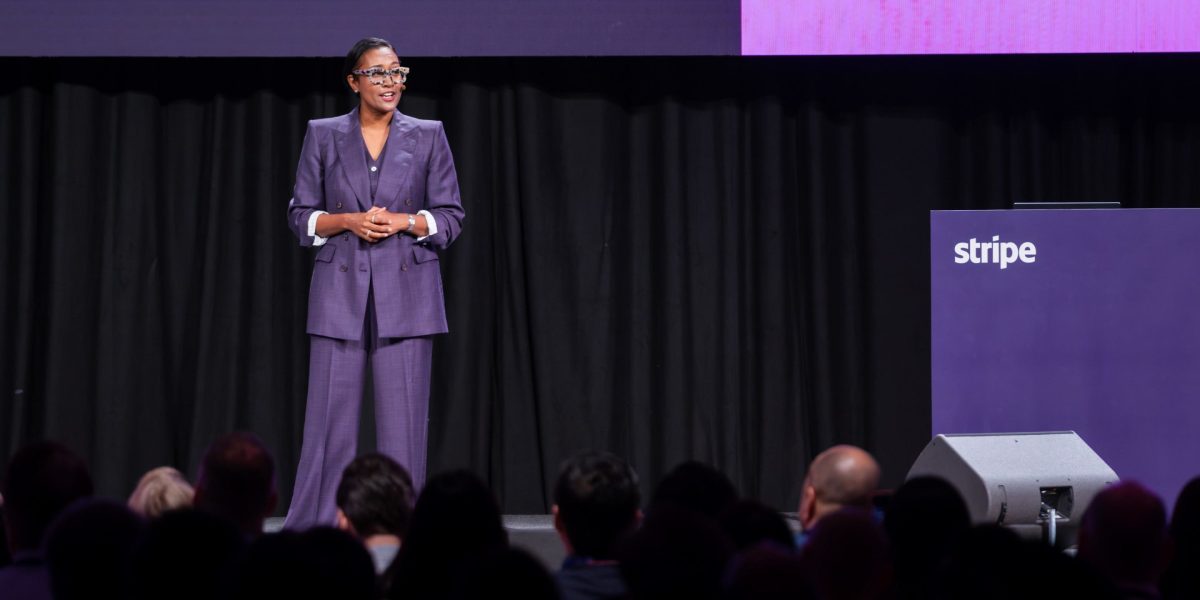
What’s next for a game so successful that when writer of catchy tunes Meghan Trainor wanted an exclusive launch platform for the video of her new single “Made You Look,” she chose Candy Crush? For the answer to that, it is worth turning to Paula Ingvar, the game’s general manager, based at the company’s HQ in Stockholm. She does not lack ambition.
“Our challenge is that we want the game to be here forever,” Ingvar, who has been with the gaming firm for 11 years, tells me. Could Candy Crush be a digital version of Monopoly—the board game invented more than a century ago that is now a video and arcade phenomenon? That is certainly a significant ask in a world where a new competitor is a few lines of code away. (Matching sweets on a grid is not that complicated an idea.)
“How do we keep it interesting?” Ingvar continues. “How do we keep our audiences engaged and keep it fresh?”
It is a question asked by any number of established brands in the brutally competitive world of digital retail, where your users have a hundred different options laid out before them every day.
“Attention is the scarce commodity in the world,” Ingvar says. “So, for us, it’s about two vectors. One, the experience needs to be fun. Retention starts with joy. We want, no matter the circumstances, that when you’re playing Candy Crush you are in a better mood after you have played a round or two.
“We want people to play Candy for the rest of their lives. And that means that Candy needs to fit into their lives, not the opposite. The sustainable strategy here is to not demand too much, not to pressure too much, because then we’re just going to exhaust people. They’re going to grow tired.”
Candy Crush is a “casual game,” a genre less involved than “resource management” games, which immerse you in fabricated worlds. It can be played on the commute home for three minutes.
“Retention starts with joy. We want, that when you’re playing Candy Crush you are in a better mood after you have played”
Paula Ingvar, General Manager, Candy Crush
The firm has also been careful with updates, ensuring that the game can still be played on older mobile devices. “We want everyone who could possibly want to play Candy to be able to do so,” Ingvar says. “We maintain Candy on a wide range of devices to allow for that inclusion. We have also consciously built for offline mode. It’s one of the few games today you can play completely offline. All of that is the same endeavor, to just make sure we’re not creating hurdles for people to play and are inviting them to our world. Every day, this is a conscious choice, because sometimes there is a cost to these choices.”
As Ralph Mupita, chief executive of MTN, the largest mobile network provider on the African continent, told me at the Mobile World Congress in March, Western tech leaders can tend to forget that many millions of people still operate on 4G and 5G devices, if they have experienced the digital world at all.
Ingvar knows the whiff of disruption is in the air. Agentic AI is now able to code new games at speeds that human game creators cannot match. Could a jobs apocalypse be coming? Is it the end of human-made gaming, and can we now rely on AI to do all the work?
AI has its uses, Ingvar concedes: “We have systems of bots that help us play through the progression [new game features] in 20 or 30 minutes. The alternative would be to release straight to players, and that is what we did in the past, sometimes at the expense of the player experience.”
But there is something about “human-made” games that still has great value, she says.
“We are not budging on the fact that level design and game design is a craft, and we need people and experts and artists to be close to the experience that they’re crafting,” Ingvar says. “We really struggle to see right now that AI would add any player value if we put it between the people who make the game and the players, or outsource part of the game creation to agentic AI. That’s not what we’re gunning for here.
“You can tell when you’re playing a level that there is human thought behind it, and that you know you’re ultimately trying to beat the game maker when you’re playing a level—outsmart them. Game makers throw challenges at players, and players beat them. It’s that constant tension, that constant battle, and that is part of the fun.”
Sweet Sweet Cash
Candy Crush has been a surprisingly consistent bet in an increasingly lucrative market.
$386 Billion
Value of the global gaming market in 2026
$1 Billion
Annual revenues of Candy Crush
$5.9 Billion
How much activision paid for Candy Crush–Owner King
Many predict that Ingvar’s position will not hold, that she is one of a final generation of technology leaders who will ultimately be obliged (through the brute realities of cost if nothing else) to give up on human-made gaming. But many predicted that Candy Crush would not survive for 14 years, and Ingvar is convinced her teams will once again prove the doubters wrong.
“We’re sometimes met with skepticism or even cynicism, and some people have been assuming for years that our levels are not built by humans,” she says. “They are surprised to hear that the 21,000-plus levels of the game are, in fact, all handmade and crafted by level designers. I think we’re met with a little bit of prejudice there. How is it even possible? But it is. That’s the way we go about things, and that’s how we keep players engaged year after year. We just have to trust the taste of our players in the end.
“We’re quickly going to disprove that we are AI slop, because there is that kind of attention to detail, that minutiae, and you can tell that someone has been paying attention when building this experience for you.”
Ingvar is that unusual thing—a female leader in tech and gaming. According to the World Bank, women make up around one-third of the global technology workforce. In the U.S., the figure is less than 30%. In the U.K., women make up 21% of the sector, experience higher attrition rates (a government report in 2025 said one in three women was considering leaving the sector), and face attitudes that wouldn’t have been out of place in the 1970s (20% of men in tech think women are less suited to being successful, according to the Fawcett Society, a think tank).
“With diverse teams you make better decisions, and you are a better reflection of your customer base,” Ingvar says, pointing out that there are some signals of progress. “I recognize the change just from looking back at my career. Early on, I was very often the single woman in the room—the first time around the big table—and female leadership was underrepresented.
“But I have seen a very positive change, and I’m happy to say from my perspective in King I think we’re doing a good job. There’s always more to do. I’m not trying to tell you that I’m happy and content, but I see that this can be done if leaders pay attention and have good hiring strategies and that diversity is always on the agenda. It’s not going to change automatically by osmosis. That’s not how it happens.
“If we don’t do different, it’s not going to be different. It’s very important that leaders pay attention to diversity inside of their teams. You want true diversity. You want gender, you want nationality, you want experience, you want age—all of that is important.”
Part of Candy Crush’s success comes from its loyal fan base of both female and male players (62% of the game’s players are women). At the time of its acquisition by Activision 10 years ago, David Glance, a software academic at the University of Western Australia, noted that women gamers were a cohort often ignored by the industry, in spite of the fact they make up somewhere between 45% and 48% of the group as a whole.
“Activision, best known for its first-person shooter games like Call of Duty, may be banking on King Digital to bring it into the world of mobile gaming, and probably more importantly, provide access to an extremely large female audience,” Glance wrote for The Conversation.
These days, that majority-female audience is a source of vital income. Candy Crush, like many mobile games, operates on a “freemium” model, meaning it is free to play, but superfans can pay for extra features. Although men spend more on gaming across the board, one survey from January of this year, conducted by data and market intelligence firm Ampere Analysis, showed women were far more likely to make in-app purchases, where Candy Crush makes around 95% of its income. Catering to this underserved audience is clearly paying dividends.
Diverse thinking brings results, with McKinsey reporting that there is a “39% increased likelihood of outperformance for those in the top quartile of ethnic and gender representation versus the bottom quartile.”
Despite such evidence, Ingvar is aware that the atmospherics on diversity have shifted. In America many companies—some under political pressure—have rolled back diversity policies. Every attack on “woke madness” is shared widely on social media, where trending posts against equality of treatment and opportunity are increasingly common.
“I still feel hopeful even though, right now, the signs are actually pointing in the opposite direction, if we look at the world,” Ingvar says. “I like to think of it as an oscillation around a mean that is consistently going up. But I would agree there is a temporary regression, and the trend of the last five years is a public discourse that has worried me. New terms have been invented—like ‘tradwife’—and among the Gen Zs there is something brewing that I think we need to bring out to the sunlight and have a real debate about.”
The world of gaming is like dog years compared with human years. At 14 years old, Candy Crush is a grizzled veteran, a heritage brand up against a thousand young upstarts. Keeping it simple, retaining the Candy Crush DNA of “fun in short bursts,” and keeping it human are Ingvar’s guiding principles.
“I think it’s important for me to convey to our team that we win by being sustainable,” she says. “We’re not trying to milk the current circumstances. We’re still building for the future, and we’re standing on the shoulders of our predecessors. We’re not running a museum, but we pay tribute to the good work that has happened.”
The world is chaotic and noisy, and her approach demands patience, of which supply is limited. The year 2032 will see Candy Crush’s 20th birthday. Ingvar hopes that by then 150 million people a month will still be coming to a game based on matching three or more sweets in a row.
This article appears in the June/July 2026 issue of Fortune with the headline “Sugar Rush: Meet Paula Ingvar, the woman keeping Candy Crush alive—against the odds and the AI hype.”