



Most companies think they have an AI adoption problem. They don’t. They have an unlearning problem, according to Deloitte vice chair China Widener.
“If I said to you, ‘Everything you know about making spaghetti, I need you to let go of,’ you would look at me like I was stupid,” she said. “We aren’t talking about things that didn’t work. We are asking people to let go of things they have done every day for five or 10 or 20 years that worked, and we’re asking them to stop.”
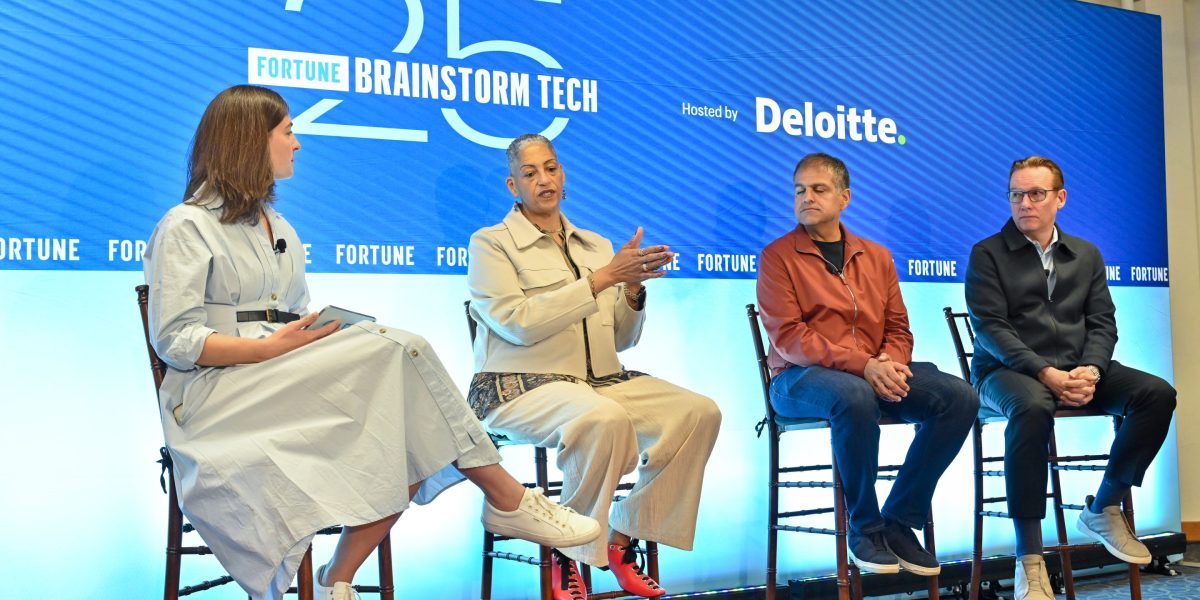
For AI adoption to succeed, employees must unlearn, relearn, and learn simultaneously, Widener told me at the Fortune Brainstorm Tech conference last week. That’s easier said than done, especially when organizations are devoting far more resources to AI tools than to helping employees adapt to them.
Widener cited a Deloitte study showing that executives spend 93% of their AI budget on technology and only 7% on workforce adoption.
Eric Vaughan, CEO of enterprise-software company IgniteTech, sees the problem differently. He argued that the issue isn’t the tech spend or a skills gap—it’s employee resistance.
Vaughan said he laid off roughly 80% of his employees because they refused to embrace AI despite a year of training. “We took 20% of our entire payroll for one day a week for an entire quarter to get people to learn AI and still found people that said, ‘I’m not going to do it,’” he shared at the conference. “So we had to replace them, and if I were to do it over again, I would have started with that first.”
Whether the obstacle is unlearning or outright resistance, both leaders agree on one point: AI adoption is ultimately a cultural challenge.
“If your team isn’t in sync with you, or doesn’t believe in the mission,” said Vaughan, “I don’t think any amount of training or skills or strategy is going to fix that problem.”
Kristin Stoller
Editorial Director, Fortune Live Media
[email protected]
Around the Table
A round-up of the most important HR headlines.
Recruiters are leaning into “backdoor” references to counter AI hiring slop. Wall Street Journal
Anthopic’s CEO boasts only one direct report, at a time where other leaders are growing who they manage. Bloomberg
Employers are rewriting job postings with language meant to attract women. Financial Times
Watercooler
Everything you need to know from Fortune.
Generation grumbles. A Gen Z hiring manager says boomer bosses are right about her generation’s attitude problem after one problematic interview. —Orianna Rosa Royle
Trade investment. Meta commits $115 million to solve the skilled-trades shortage with a training program and guaranteed job upon completion. —Jacqueline Munis
Candidate qualities. The architect behind Claude Code says these are the three things Anthropic looks for in a good hire. —Emma Burleigh