


Close Menu
Alpha Leaders
  • Home
  • News
  • Leadership
  • Entrepreneurs
  • Business
  • Living
  • Innovation
  • More
    • Money & Finance
    • Web Stories
    • Global
    • Press Release
What's On
What Warehouse Robots Taught Me About Reliability

What Warehouse Robots Taught Me About Reliability

15 September 2026
Exclusive: Expa and Coinbase Ventures-backed Fin.com emerges from stealth with  million seed round to build out global stablecoin infrastructure

Exclusive: Expa and Coinbase Ventures-backed Fin.com emerges from stealth with $20 million seed round to build out global stablecoin infrastructure

15 September 2026
A tale of two economies: Why IKEA’s strategy is the antidote to the middle-class margin collapse

A tale of two economies: Why IKEA’s strategy is the antidote to the middle-class margin collapse

15 September 2026
Facebook X (Twitter) Instagram
Alpha Leaders
newsletter
  • Home
  • News
  • Leadership
  • Entrepreneurs
  • Business
  • Living
  • Innovation
  • More
    • Money & Finance
    • Web Stories
    • Global
    • Press Release
Alpha Leaders
Home » Trump, $39 trillion national debt, rosy growth assumptions and the question of ‘a sustainable path’
News

Trump, $39 trillion national debt, rosy growth assumptions and the question of ‘a sustainable path’

Press RoomBy Press Room7 April 20265 Mins Read
Facebook Twitter Copy Link Pinterest LinkedIn Tumblr Email WhatsApp
Trump,  trillion national debt, rosy growth assumptions and the question of ‘a sustainable path’

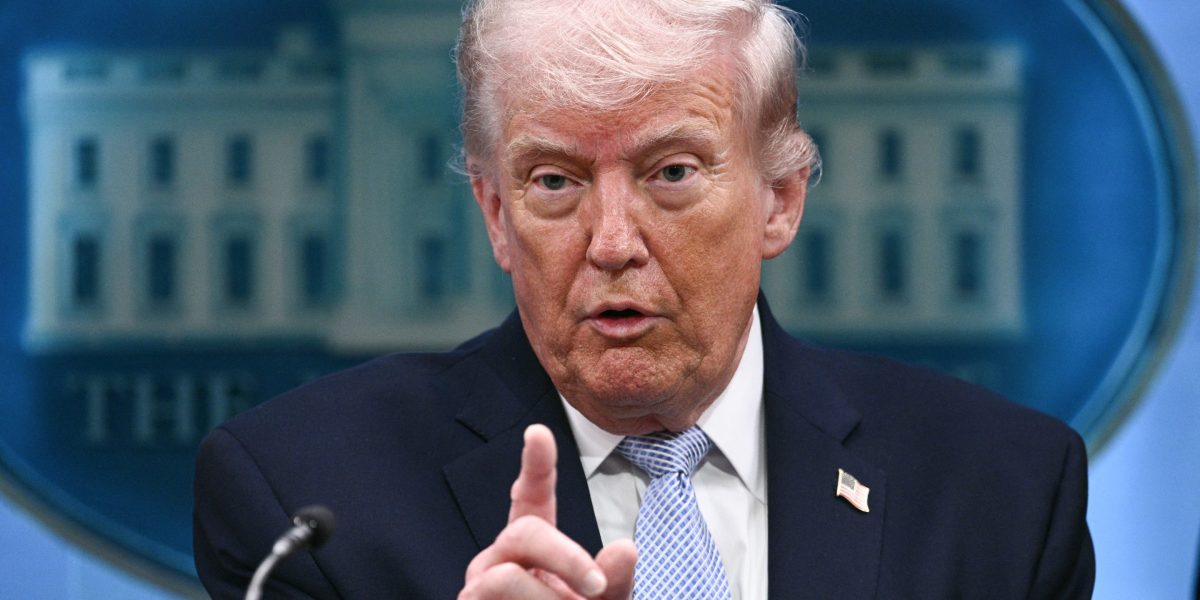
President Trump’s fiscal year 2027 budget is built on a single, load-bearing bet: that the U.S. economy can grow at 3% annually for the next decade. The White House says that growth will flood federal coffers with new tax revenue and eventually bend the national debt, now sitting at over $39 trillion, onto a downward path. It is an optimistic vision. It is also, Federal Reserve Chair Jerome Powell suggested last month, the kind of optimism that has repeatedly failed to reckon with what he called an “unsustainable” fiscal trajectory that “will not end well.”

A leading budget economist explained to Fortune why the sustainability picture isn’t getting better, even if you accept the White House’s growth numbers at face value.

The Growth Assumption Driving Everything

Kent Smetters, faculty director of the Penn Wharton Budget Model, ran the numbers on what an extra percentage point of real GDP growth—the gap between OMB’s 3.0% projection and the lower percentage seen by CBO, the Federal Reserve, and PWBM itself—actually delivers to the federal balance sheet. The answer, on first glance, is impressive: roughly $2.5 trillion in additional federal revenue and $1.5 trillion in reduced deficits over 10 years.

But Smetters didn’t stop at the headline figure. “Because interest rates and growth tend to track each other in the shorter run, government payments on debt could also increase by $750 billion,” he told Fortune. In other words, faster growth drives up borrowing costs—and at over $39 trillion in outstanding debt, even a modest rate uptick would compound into the hundreds of billions. The $1.5 trillion deficit gain and the $750 billion interest cost would hit simultaneously, leaving a true net fiscal benefit of roughly $750 billion—less than half the number the administration’s framing implies. Smetters said the administration is essentially pairing the “more aggressive growth rate being assumed by OMB” without the higher interest rates and spending that would naturally follow.

Zooming out historically, Smetters said the idea of cutting costs by a certain percent per year basically comes down to “one president saying that they are hoping that the next president will do it. And the next president comes in and hopes that the next president will do it.” Significant bipartisan reform is the only time you typically see such big changes, he added, absent a windfall that comes from sheer luck, such as the surprise one-time revenue recorded during the Clinton administration, resulting in a budget surplus.

In testimony to Congress in 1998, then-Fed Chair Alan Greenspan remarked on the surprise surplus, attributing it to “the taxes paid on huge realized capital gains and other incomes related to stock market advances, coupled with taxes on markedly higher corporate profits, [which] have joined with restraint on spending to produce a unified budget surplus for the first time in nearly three decades.”

Smetters said a more sustainable fix to get finances on a sustainable path would be something like the 1986 Tax Reform Act. “Today we need the Tax Reform Act times two.”

These calculations come before another offset that Smetters flagged: Social Security initial benefits are tied to wage growth, which rises with GDP, and healthcare costs track economic output. A faster-growing economy, he noted, is also a more expensive one to govern. This also doesn’t touch on the costs of the ongoing war in Iran, which Smetters previously estimated as costing as much as $210 billion, although he allowed there was more risk to the upside in case of a long conflict.

Watchdogs Are Skeptical

The Smetters analysis lands against a backdrop that Powell made explicit last month. The Fed chair, in remarks that rippled across financial markets, described the national debt trajectory as unsustainable and warned it would not end well—a typically blunt assessment from the central banker, on the question of the debt. His concern wasn’t abstract: it was precisely the dynamic Smetters is now quantifying. When you carry $39 trillion in debt, the relationship between growth, rates, and interest payments stops being theoretical and starts being arithmetic.

The White House’s own projections show the debt-to-GDP ratio peaking at 103% in 2029 before declining—a trajectory that depends almost entirely on the 3% growth assumption holding for a full decade. The Congressional Budget Office, projecting 1.8% growth, sees no such decline.

The Committee for a Responsible Federal Budget (CRFB) reached a similarly skeptical conclusion. CRFB estimated that if you replace OMB’s growth assumptions with CBO’s more conservative projections—and account for the Supreme Court ruling striking down IEEPA-based tariffs—the national debt would reach 120% of GDP by 2036, compared to the administration’s projected 94%. “Unfortunately, this budget provides little guidance on how policymakers should put the national debt on a sustainable path,” the CRFB concluded.

None of this has diminished the ambition of the budget’s spending side. The centerpiece is a $1.5 trillion defense funding request for FY 2027, combining a $251 billion increase in base defense discretionary spending with $350 billion in new reconciliation resources. To partially offset those costs, the budget proposes cutting non-defense discretionary spending by 10% in FY 2027, followed by a “two-penny plan” reducing those accounts by 2% annually thereafter—a path CRFB estimates would trim $2.5 trillion in non-defense spending over 10 years.

Whether the growth bet pays off or not, the interest rate math embedded in it may be the number Congress pays closest attention to. At $39 trillion in debt, even a quarter-point move in borrowing costs adds tens of billions to the annual tab. A full percentage point of unexpected rate pressure—the kind that could plausibly accompany a genuine growth surge—is a risk that no budget model can fully insure against.


Donald Trump national debt White House
Share. Facebook Twitter Pinterest LinkedIn Tumblr Email Copy Link

Related Articles

Exclusive: Expa and Coinbase Ventures-backed Fin.com emerges from stealth with  million seed round to build out global stablecoin infrastructure

Exclusive: Expa and Coinbase Ventures-backed Fin.com emerges from stealth with $20 million seed round to build out global stablecoin infrastructure

15 September 2026
A tale of two economies: Why IKEA’s strategy is the antidote to the middle-class margin collapse

A tale of two economies: Why IKEA’s strategy is the antidote to the middle-class margin collapse

15 September 2026
China may have a green energy overcapacity problem. Experts think AI can help solve it

China may have a green energy overcapacity problem. Experts think AI can help solve it

15 September 2026
Court filings: DOGE cancelled 9,000 grant to replace museum HVAC after ChatGPT flagged it as DEI

Court filings: DOGE cancelled $349,000 grant to replace museum HVAC after ChatGPT flagged it as DEI

15 September 2026
Dell’s latest reinvention is here — and it reveals the AI boom happening ‘on-premise.’ The markets missed it 

Dell’s latest reinvention is here — and it reveals the AI boom happening ‘on-premise.’ The markets missed it 

15 September 2026
Meet the venture capital using 500,000 Pokémon and trading cards as a hedge against a debt crisis

Meet the venture capital using 500,000 Pokémon and trading cards as a hedge against a debt crisis

15 September 2026
Don't Miss
Trump’s Tariffs Will Make AI Data Centers More Expensive

Trump’s Tariffs Will Make AI Data Centers More Expensive

By Press Room4 April 2025

Donald Trump’s administration has gone all-in on AI: A day after his inauguration, the newly-elected…

Unwrap Christmas Sustainably: How To Handle Gifts You Don’t Want

Unwrap Christmas Sustainably: How To Handle Gifts You Don’t Want

27 December 2024
Sam Altman’s World Wants To Scan Your Eyes To Prove You’re Human

Sam Altman’s World Wants To Scan Your Eyes To Prove You’re Human

22 October 2024
Stay In Touch
  • Facebook
  • Twitter
  • Pinterest
  • Instagram
  • YouTube
  • Vimeo
Latest Articles
Court filings: DOGE cancelled 9,000 grant to replace museum HVAC after ChatGPT flagged it as DEI

Court filings: DOGE cancelled $349,000 grant to replace museum HVAC after ChatGPT flagged it as DEI

15 September 20261 Views
Dell’s latest reinvention is here — and it reveals the AI boom happening ‘on-premise.’ The markets missed it 

Dell’s latest reinvention is here — and it reveals the AI boom happening ‘on-premise.’ The markets missed it 

15 September 20261 Views
Meet the venture capital using 500,000 Pokémon and trading cards as a hedge against a debt crisis

Meet the venture capital using 500,000 Pokémon and trading cards as a hedge against a debt crisis

15 September 20261 Views
Mark Carney pitches Canada to global investors as ‘much more than being next to the United States’

Mark Carney pitches Canada to global investors as ‘much more than being next to the United States’

15 September 20261 Views

Recent Posts

  • What Warehouse Robots Taught Me About Reliability
  • Exclusive: Expa and Coinbase Ventures-backed Fin.com emerges from stealth with $20 million seed round to build out global stablecoin infrastructure
  • A tale of two economies: Why IKEA’s strategy is the antidote to the middle-class margin collapse
  • China may have a green energy overcapacity problem. Experts think AI can help solve it
  • Court filings: DOGE cancelled $349,000 grant to replace museum HVAC after ChatGPT flagged it as DEI

Recent Comments

No comments to show.
About Us
About Us

Alpha Leaders is your one-stop website for the latest Entrepreneurs and Leaders news and updates, follow us now to get the news that matters to you.

Facebook X (Twitter) Pinterest YouTube WhatsApp
Our Picks
What Warehouse Robots Taught Me About Reliability

What Warehouse Robots Taught Me About Reliability

15 September 2026
Exclusive: Expa and Coinbase Ventures-backed Fin.com emerges from stealth with  million seed round to build out global stablecoin infrastructure

Exclusive: Expa and Coinbase Ventures-backed Fin.com emerges from stealth with $20 million seed round to build out global stablecoin infrastructure

15 September 2026
A tale of two economies: Why IKEA’s strategy is the antidote to the middle-class margin collapse

A tale of two economies: Why IKEA’s strategy is the antidote to the middle-class margin collapse

15 September 2026
Most Popular
China may have a green energy overcapacity problem. Experts think AI can help solve it

China may have a green energy overcapacity problem. Experts think AI can help solve it

15 September 20262 Views
Court filings: DOGE cancelled 9,000 grant to replace museum HVAC after ChatGPT flagged it as DEI

Court filings: DOGE cancelled $349,000 grant to replace museum HVAC after ChatGPT flagged it as DEI

15 September 20261 Views
Dell’s latest reinvention is here — and it reveals the AI boom happening ‘on-premise.’ The markets missed it 

Dell’s latest reinvention is here — and it reveals the AI boom happening ‘on-premise.’ The markets missed it 

15 September 20261 Views

Archives

  • September 2026
  • July 2026
  • June 2026
  • May 2026
  • April 2026
  • March 2026
  • February 2026
  • January 2026
  • December 2025
  • November 2025
  • October 2025
  • September 2025
  • August 2025
  • July 2025
  • June 2025
  • May 2025
  • April 2025
  • March 2025
  • February 2025
  • January 2025
  • December 2024
  • November 2024
  • October 2024
  • September 2024
  • August 2024
  • July 2024
  • June 2024
  • May 2024
  • April 2024
  • March 2024
  • February 2024
  • January 2024
  • December 2023
  • March 2022
  • January 2021
  • March 2020
  • January 2020

Categories

  • Blog
  • Business
  • Entrepreneurs
  • Global
  • Innovation
  • Leadership
  • Living
  • Money & Finance
  • News
  • Press Release
© 2026 Alpha Leaders. All Rights Reserved.
  • Privacy Policy
  • Terms of use
  • Advertise
  • Contact

Type above and press Enter to search. Press Esc to cancel.