




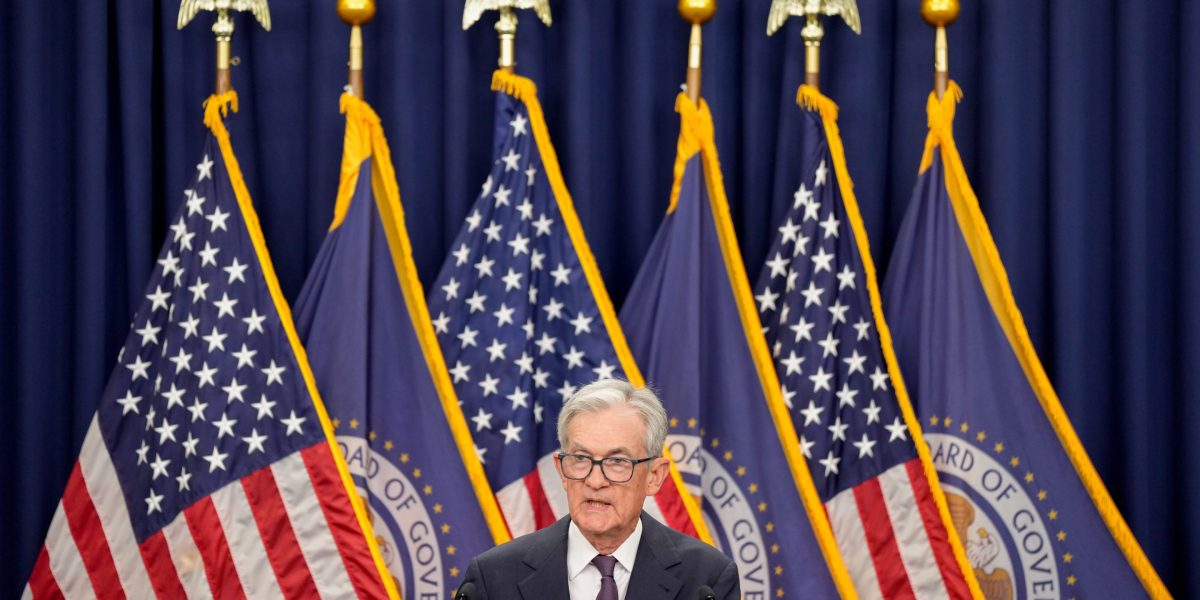
A housing crisis is the stick the White House has selected to beat Fed chairman Jerome Powell with. “Could somebody please inform Jerome ‘Too Late’ Powell that he is hurting the housing industry, very badly?” the president wrote on Truth Social earlier this year. “People can’t get a mortgage because of him.”
Elsewhere, Trump’s housing chief called Powell a “maniac,” and Treasury Secretary Scott Bessent placed the blame for a property squeeze at the Fed’s feet. He argued: “The biggest hindrance for housing is mortgage rates. If the Fed brings down mortgage rates, then they can end this housing recession.”
If only it were that simple.
While the Fed is in control of the short-term interest rate—which can influence mortgages in the longer run to some extent—the market is demonstrating that lenders have rarely cared less about what the Federal Open Market Committee (FOMC) is doing.
“Despite 125 basis points of Fed cuts since September 2024, the spread between mortgage rates outstanding and new mortgage rates is over 2%, the highest in 40 years, indicating that more cuts may be necessary to spur housing activity,” Morgan Stanley wrote in a note at the end of October, before Powell delivered another cut.
Even then, mortgage rates have barely wobbled and still sit stubbornly at around 6.2%.
Powell’s—or indeed his successor’s—influence over the property market won’t return any time soon, warned economists. While the outcome of the FOMC’s cutting regime could spur spending, for savers desperately stockpiling for that all-important deposit, lower rates are only adding salt to the wound.
Housing has been the Fed’s fault—but not right now
The Fed’s policy at present can’t be blamed for the state of the housing market, argues Dr David Kelly, chief global strategist and head of the global market insights strategy team for JP Morgan Asset Management. It’s the Fed’s actions in the past that are the problem.
“The Fed can be faulted for its behavior with regard to the housing market for many years, but the real fault is not that they are keeping rates too high today, it is that they kept rates way too low, for way too long, after the great financial crisis,” Kelly tells Fortune in an exclusive interview.
Between the end of 2008 and late 2015 the U.S. base rate was effectively zero, before climbing to approximately 2.4% in 2019, before being dramatically axed again because of the COVID pandemic. This resulted in “abnormally low mortgage rates” which were maintained for a sustained period of time, Kelly added, “it encouraged everybody to buy a house and to bid up prices.”
He explained: “The question was never how much is this house worth, but how much can you afford? If mortgage rates are 3%, people could afford a lot. When the Federal Reserve normalized rates, they sort of snapped the trap shut.”
Buying a home has become increasingly unaffordable for first-time buyers, even in the past few years. Per data from the National Association of Realtors, in 2022 its housing affordability index stood at 108, with a value of 100 representing a family with the median income having exactly enough income to qualify for a mortgage on a median-priced home. By 2025, this had dropped to 97.4, meaning the average family doesn’t have the income to be eligible for a mortgage on a median-priced home.
Moreover, the problem for many buyers isn’t necessarily paying the debt off over time; it’s gathering the all-important deposit needed to secure a mortgage in the first place. While zero-down-payment mortgages are widely offered in markets like the U.K., they are more exclusive in the U.S., typically reserved for buyers such as veterans and those purchasing in specific rural areas. For consumers who don’t qualify, it’s a big ask: A November study from Empower reported one in three Americans have around $500 in emergency savings, a key barrier to stockpiling more was the current cost of living.
Can the Fed help at all?
Under “normal” economic circumstances, a lower Fed rate should trickle through to lower mortgage lending, Morgan Stanley’s head of U.S. policy, Monica Guerra, tells Fortune. But we are not in normal economic circumstances.
Current tightness in the property market stems from limited housing stock, those lower rates, and the altered appetite of buyers during the pandemic, she explained: “My belief behind all this is that we have a significant impact from the Millennials who ended up buying during COVID and picking up the last of that supply that was available at really low interest rates.”
While current cuts aren’t having a meaningful impact on mortgages, she added, when a reduction of a further 50bps is reached, then lenders may begin to take notice, though “it may not be an immediate, full return to normal.”
Guerra authored the note highlighting the decades-high spread between the Fed funds rate and current mortgage offers, signalling the weak influence the FOMC currently has over the property market. But this could change, she added: “I think the spread is going to come down, it’s going to compress, meaning that the Fed will have—over time—more control. Even with tariffs we’re going to get more certainty as we close out this year of what that’s going to look like and what that could mean to term premiums.” (Tariffs could prove a reason for rates to stay high as the FOMC wrangles with their inflationary effects.)
Is there a silver bullet?
Guerra argues that while the Fed controls a key lever in the mechanics of the property market, Washington policy isn’t the only factor at play. Particularly in a K-shaped economy, where the fortunes of the wealthy and those on the lower end of the income spectrum diverge markedly, it’s essential to maintain focus on factors that drive the real economy.
Income inequality is an “incredibly important issue,” Guerra began, and “the have-nots in this scenario … may feel the greatest pressure.”
The federal government has limited sway over state and local policy when it comes to housing red tape, be it zoning, affordable home quotas, code issues, tax frameworks and so on, all of which “drastically impact” where people can live, she said. “It’s important when we’re thinking about affordability to acknowledge that it’s not just the federal government… yes, they play a primary role in people’s access to leverage to getting that mortgage and to lever up to buy a home, but in order to make it affordable, it’s also what’s happening at the local level right from a zoning, tax, and policy angle,” she added.
The umbrella issue with America’s property market is affordability, argues Liam Bailey, global head of research at real estate consultancy Knight Frank, with Gen Z and Millennials suffering the sharpest end: “Anyone who’s entering the market for the first time is probably most affected,” he said.
The underlying factors impacting house prices aren’t in the Fed’s power to fix, he adds in an exclusive interview with Fortune. The first problem is that all-important down payment, the savings rate on which is swiftly dropping every time the FOMC cuts. Another is the tight supply of housing stock, and the third is the increase in household income over the past 50 years, as societal shifts saw more women working and as a result, families had more money to escalate prices.
A factor that could ease a great deal of friction in the market is also increasing the motivation to move: Rather, ensuring homeowners don’t lose their 30-year low mortgage deals.
“The problem comes when you have an interest rate shock like we’ve had recently. The market just basically closes down because why would anyone move off their 3% fixed to a 7% mortgage by moving house?” Bailey explained. “They just wouldn’t, so they don’t move and then the whole thing just grinds to a halt.”