

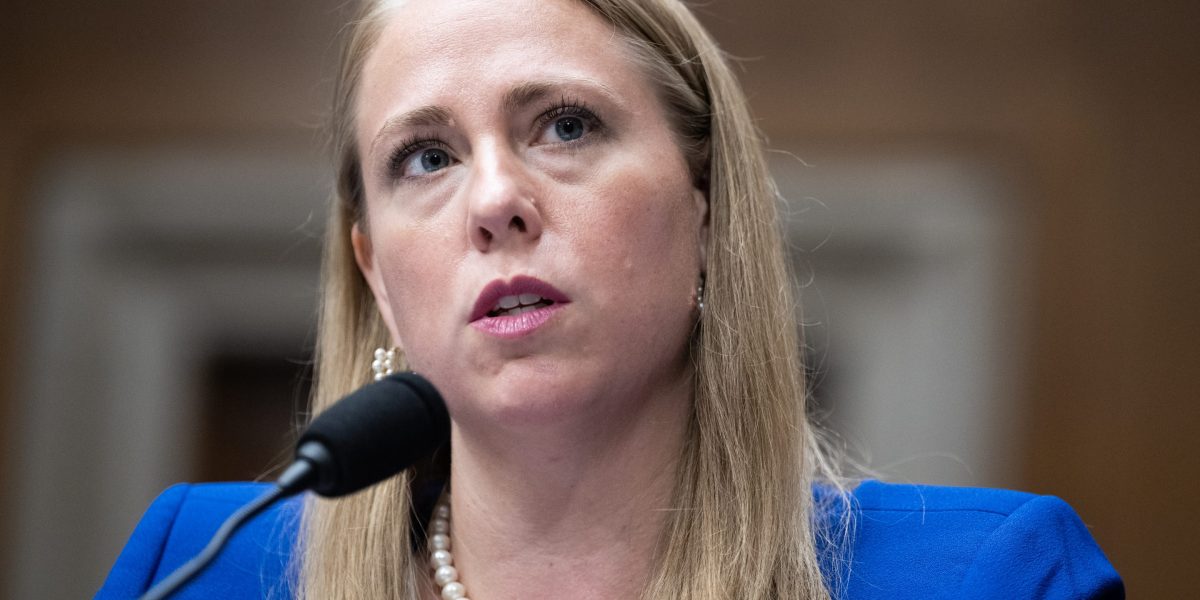
The Equal Employment Opportunity Commission—the federal agency born from the Civil Rights Act of 1964 to shield the nation’s most historically marginalized workers—filed suit earlier this month against The New York Times, alleging the paper illegally discriminated against a white male editor who was passed over for a promotion in favor of a less-qualified candidate. EEOC Chair Andrea Lucas thinks it’s the first race and sex discrimination case the agency has brought on behalf of a white man in at least a decade.
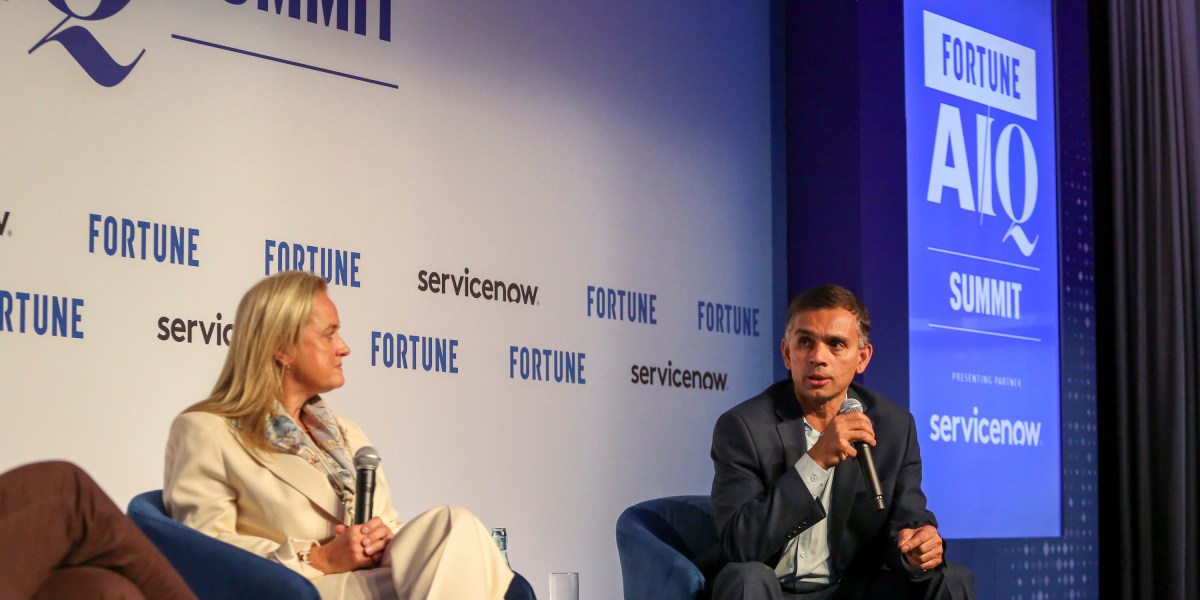
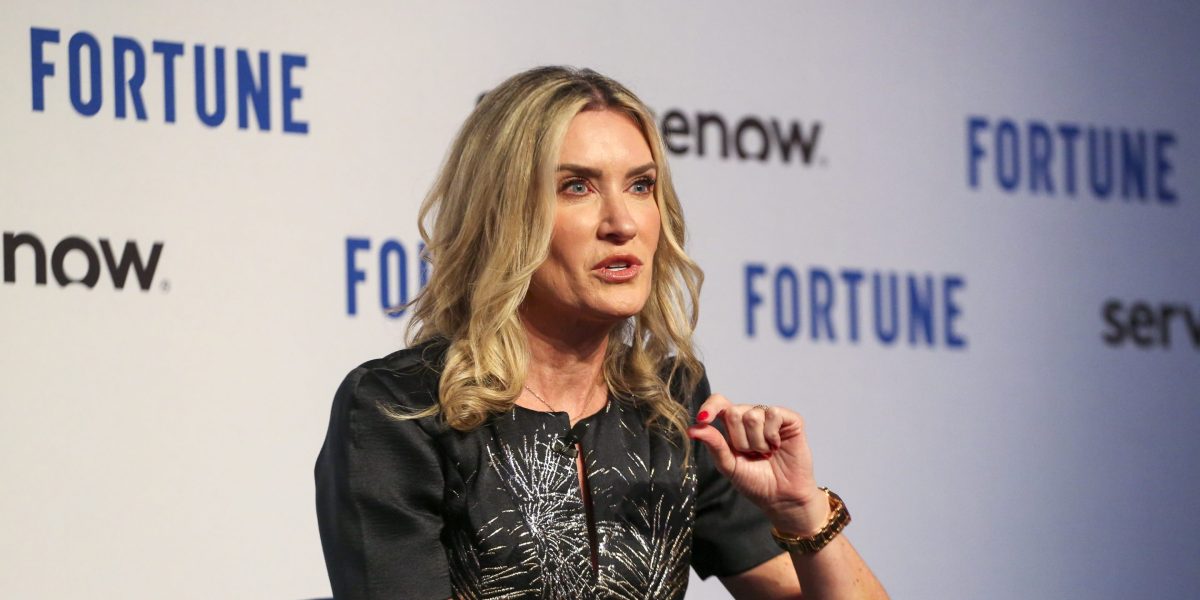
“We should bring it on behalf of black workers, but we should bring it on behalf of white workers too,” Lucas said Wednesday at Fortune‘s Workplace Innovation Summit in Atlanta. “That’s mixed messaging that says to white men you don’t need to apply — and that is not fair.”
The New York Times has called the lawsuit politically motivated. The fight over what it means has only just begun. Lucas offered a defense of a perspective that is proving perhaps surprisingly unstraightforward in this day and age: the concept that civil rights apply equally to everyone.
The case
The complaint, filed May 4 in the U.S. District Court for the Southern District of New York, centers on a 2025 hiring decision in the Times‘ Real Estate section. According to the EEOC, a white male Times employee—a nine-year veteran of the paper’s International Desk with more than 25 digital journalism awards and direct real-estate journalism experience—applied for an open deputy real estate editor position. He was never called back for the final interview round.
The four candidates who did advance: a white woman, a Black man, an Asian woman and a multiracial woman. The multiracial woman got the job. Per the EEOC complaint, she had no experience covering real estate, which had been listed as a basic qualification in the public posting. Interview panel notes described her as “a bit green overall.” Internal communications showed the editor overseeing the hire had effectively pre-selected her before the first interview was conducted.
The suit also cites internal Slack messages showing Times leadership expressing concern that the pace of racial diversification at the company was slowing, with notes about needing to make “targeted efforts” to accelerate it and worries about how CEO Joe Kahn would look if they didn’t. The EEOC alleges those involved in the hiring decision were “influenced by NYT’s stated race and sex-based hiring and promotion goals”—goals spelled out in the company’s own annual Diversity and Inclusion Reports, which tracked progress in increasing the share of “people of color” and women in staff and leadership.
The Times has denied wrongdoing, and Lucas was careful to say she wasn’t going to “prejudice that litigation” by commenting on the back and forth. She zeroed in on the contradiction at the heart of the matter instead.
The contradiction at the center
The tension lies between aggressive, publicly celebrated demographic change on one hand, and categorical denials of race-conscious decision-making on the other, and Lucas said that is precisely what the EEOC is asking a federal court to examine. The agency’s legal theory relies on the pretext framework used in conventional discrimination cases: whether an employer’s stated business reason for a personnel decision holds up under scrutiny, whether standard procedures were bypassed, and whether a candidate was pre-selected.
Lucas made the argument plainly at the Atlanta summit: “We are the Equal Employment Opportunity Commission,” she told the audience of HR leaders and executives. “We’re not the Equitable Outcomes Commission.” Title VII, she argued, does not protect specific groups—it protects against discrimination on the basis of any race, any sex. “The way to stop discriminating based on race,” she said, “is to stop discriminating based on race.”
“I think it’s important for us to bring cases on behalf of the full rainbow of workers that come before us,” she said, with a clear implication: even a white shade of that rainbow.
A broader mandate—or a political one?
Under Lucas, the EEOC has filed a string of cases targeting DEI-aligned employment practices. In February, the agency sued a Coca-Cola distributor for hosting a women’s-only retreat. In March, Planned Parenthood of Illinois settled an EEOC investigation into discrimination against white employees, paying $500,000. The NYT lawsuit is the most high-profile action yet.
Critics, including a significant faction inside the agency itself, argue the enforcement shift has less to do with equal protection than political targeting. A New York Times investigation published in April cited more than a dozen current and former EEOC employees—Republicans and Democrats alike—who said they faced institutional pressure to pursue politically sensitive reverse-discrimination cases even when evidence was thin.
At the Fortune summit, Lucas did not address these specific internal allegations. She pointed instead to a headline performance figure: The agency recovered $528 million for discrimination victims in the most recent fiscal year, she said—the highest total in the agency’s 60-year history. “If we had narrowed the aperture,” she asked the audience, “how would we recover that?”
She also offered a potential compliance path at the summit. Companies that want to support underrepresented talent without legal exposure should pivot to socioeconomic proxies—programs aimed at first-generation college graduates or first-generation professionals—rather than race- or sex-targeted pipelines. “You could broaden an opportunity and do it in a race- and sex-neutral manner that I think would achieve some of the good-faith desires of employers without running afoul of the law.” Lucas did not say as much, but she is fighting a widespread assumption of bad faith on the part of the EEOC in particular and the Trump White House in general as she leads this litigation.
Meta-media scandal
For companies watching the case, the EEOC’s legal theory carries a direct warning: public DEI commitments, diversity reports, demographic targets, and internal communications about representation goals could all surface as evidence in discrimination suits—brought not by the groups those programs were designed to benefit, but by white and male employees who weren’t promoted.
The EEOC lawsuit against the New York Times has quietly become a meta-media story, folding in years of accumulated grievance between elite liberal outlets and the writers they shed during the identity politics wars of the early 2020s. New York Magazine—which covered the suit with the dismissively headlined “The White Man Crying Discrimination at the New York Times” — is the same outlet that pushed out the heterodox Andrew Sullivan in July 2020 amid staff pressure over his views on race. Sullivan departed with pointed understatement, calling the reasons for his exit as “self-evident,” and went on to build The Weekly Dish on Substack around precisely the argument that institutions like NY Mag and the Times had become ideologically captured.
When the EEOC suit dropped, Sullivan responded within days with a piece titled “Why The New York Times Is Post-Liberal,” treating the lawsuit as confirmation of a thesis he’d been arguing since before he was shown the door. The question remains: Is it discrimination?
The Times case is pending in federal court in Manhattan. Case No. 1:26-cv-03704.