




Fannie Mae and Freddie Mac, two giant mortgage finance firms, have been controlled by the federal government for nearly 17 years, but a long-dormant idea of making them private businesses is starting to make the rounds in Washington again.
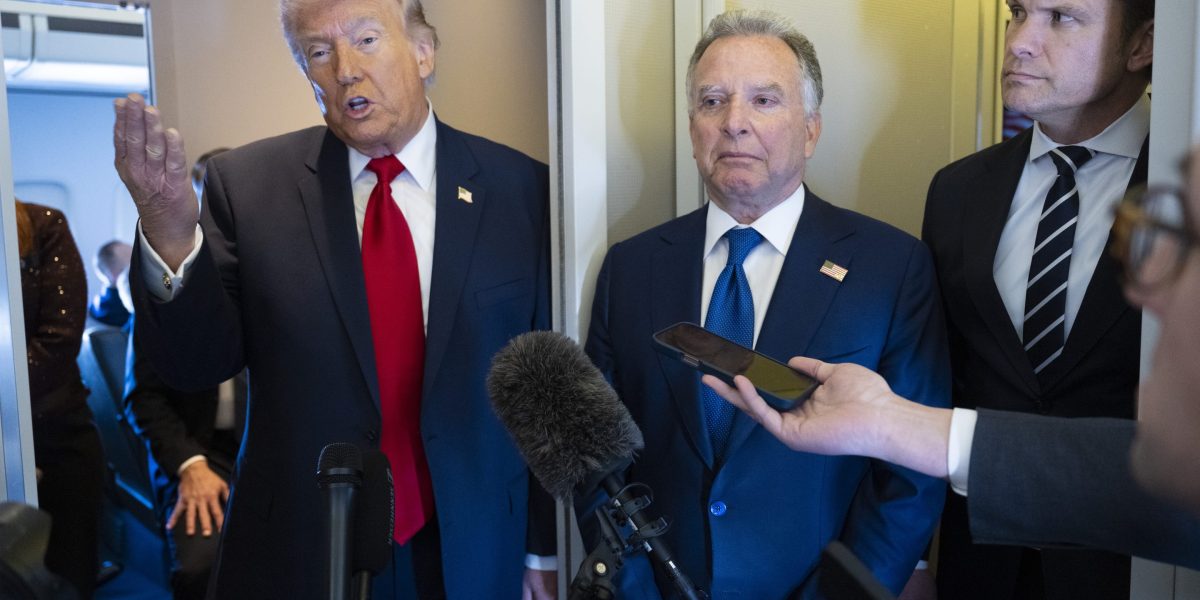
Scott Turner, the secretary of Housing and Urban Development, said in an interview this week that coordinating the effort to privatize the two firms would be his priority. One of President Trump’s backers, the hedge fund investor William A. Ackman, is calling on the president to quickly move forward on the privatization.
But Fannie and Freddie underpin the nation’s $12 trillion mortgage market, so they need to be handled with care. Scott Bessent, the Treasury secretary, said last month that any plan for ending the so-called conservatorship of the two firms “should be carefully designed and executed.”
The last time Mr. Trump was president, a number of his advisers took steps toward coming up with a plan for releasing Fannie Mae and Freddie Mac from government control. In the end, the first Trump administration took no action, and the Biden administration put the issue on the back burner.
Here is a quick primer on why Fannie and Freddie are so critical to the mortgage market and some of the issues likely to come up in the debate over how to end the conservatorship.
What do Fannie and Freddie do?
Formally known as the Federal National Mortgage Association (Fannie) and Federal Home Loan Mortgage Corporation (Freddie), the two finance giants do not actually make any home loans. They buy mortgages from banks and package them into securities that are sold to big investors. In creating those mortgage-backed securities, Fannie and Freddie guarantee bond investors that they will be made whole if too many borrowers default.
The guarantee makes those bonds more attractive to investors and helps keep mortgage rates relatively low. It also encourages banks to keep writing home loans. In theory, it is easier for potential home buyers to qualify for a mortgage when banks write more mortgages.
Why did the government have to bail out Fannie and Freddie?
Fannie was created in 1938 by the federal government to promote homeownership, and Freddie was created 32 years later to do the same. Historically both companies operated as independent public businesses — answering to shareholders just like any other publicly traded business.
For decades the hybrid system worked well. But over time the government-sponsored entities, as they are known, began to guarantee bonds stuffed not only with plain vanilla 30-year mortgages, but also with ones backed by riskier home loans. In 2007, as housing prices across the country started to crumble and homeowners began to fall behind on their mortgage payments, Fannie and Freddie ran into trouble because they had insured too many iffy home loans.
As the housing crisis worsened in 2008, bond investors and investors in shares of Fannie and Freddie panicked. Eventually, the federal government had to step in with a $187 billion bailout to prevent the firms from filing for bankruptcy, which might have led to a full-fledged depression.
Laurie Goodman, founder of the Housing Finance Policy Center at the Urban Institute, a Washington think tank, said that though the conservatorship might be unpopular, the current arrangement was largely working. She said a rushed decision could make mortgages more expensive and bring about other unintended consequences.
“Do you want the current system, which isn’t broken, or what is behind door No. 2 and we don’t know what it is?” she said in an interview.
What’s the argument for ending the conservatorship?
Some of the most vocal proponents of putting Fannie and Freddie back in private control are hedge fund managers and wealthy investors, who still own shares of the companies even though they’re government controlled. That’s because shares of Fannie and Freddie have continued to trade largely in anticipation that the government will eventually release the companies. Shares of both companies most recently traded around $5.
These investors — many of whom snapped up shares and related securities at deeply discounted prices — are hoping to cash in and make billions if Fannie and Freddie are allowed to become independent, publicly traded companies. One of the more outspoken is Mr. Ackman, the hedge fund manager, who has argued for years that the conservatorship should be ended. Last month, he prepared a 104-page presentation called The Art of the Deal that lays out his case for ending the conservatorship. (The presentation’s title is an allusion to Mr. Trump’s book of the same name.)
Others say that keeping Fannie and Freddie under government control stifles competition and has deterred rivals from emerging. They contend that releasing Fannie and Freddie would make it easier for other mortgage finance firms to gain market share. They also say that the status quo — two giant firms dominating the market — makes another government bailout more likely.
Some say that privatizing Fannie and Freddie could potentially also be a quick fix to the federal government’s budget woes. Both companies long ago paid back the $187 billion in rescue money provided by the government, but the Treasury still owns equity stakes in the companies that could be worth more than $190 billion. The potential for the government to tap that pile of money by selling the companies could be tempting to politicians.
What could go wrong in setting Fannie and Freddie free?
The most immediate risk is that it could upset the mortgage market and cause the rate on the 30-year mortgage, now at an average of 7 percent, to rise. Doing anything that might make homeownership more expensive could be politically unpalatable.
Back in 2019, when the first Trump administration was giving serious thought to privatizing Fannie and Freddie, the average rate on a 30-year mortgage was just over 4 percent, and concern about housing affordability wasn’t driving voters the way it did in 2024.
Another risk is the potential harm to the market for mortgage-backed securities, which is dominated by Fannie and Freddie. Investors in bonds sold by Fannie and Freddie have long operated under the assumption that the federal government would never let the companies fail. On Wall Street, it was called an implied guarantee, and it’s one reason Fannie and Freddie bonds often carried the highest of credit ratings.
If they somehow lost that implicit guarantee in the process of privatization, it might make those bonds less attractive to investors and potentially increase the company’s own borrowing costs.
A functioning mortgage-backed securities market is important not only to the housing market but also to the overall financial system. The Federal Reserve has from time to time bought mortgage-backed securities to help stabilize the financial markets.
Are Freddie and Fannie capable of operating as independent entities?
The short answer is yes. But as with everything with Fannie and Freddie, getting there is complicated.
A recent report by the Congressional Budget Office found that if Fannie and Freddie were put on a path of becoming independent in 2027, the companies would have about $208 billion in combined capital — a huge cushion to help cover losses in a crisis. But Fannie and Freddie would need to raise tens of billions more through a sale of stock to be adequately capitalized to cover any losses, and also pay back investors and the federal government on the equity stakes they still hold.


