

Close Menu
Alpha Leaders
  • Home
  • News
  • Leadership
  • Entrepreneurs
  • Business
  • Living
  • Innovation
  • More
    • Money & Finance
    • Web Stories
    • Global
    • Press Release
What's On
The Truth About AI Data Centers And Why It Matters

The Truth About AI Data Centers And Why It Matters

12 June 2026
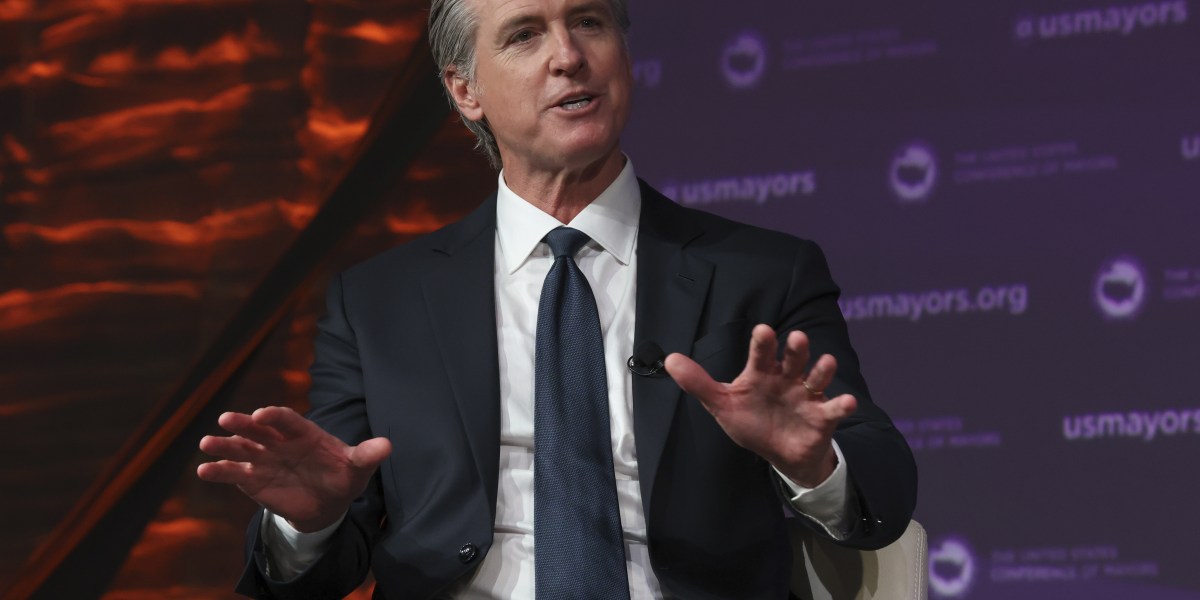
Newsom called homelessness California’s calling in 2020. His budget still spends less than 0.5% on it

Newsom called homelessness California’s calling in 2020. His budget still spends less than 0.5% on it

12 June 2026
Cisco Live 2026 Fits Collaboration Into Cisco’s AI Platform Strategy

Cisco Live 2026 Fits Collaboration Into Cisco’s AI Platform Strategy

12 June 2026
Facebook X (Twitter) Instagram
Alpha Leaders
newsletter
  • Home
  • News
  • Leadership
  • Entrepreneurs
  • Business
  • Living
  • Innovation
  • More
    • Money & Finance
    • Web Stories
    • Global
    • Press Release
Alpha Leaders
Home » You probably think you’re a really open-minded person, but the real thing raises your death anxiety
News

You probably think you’re a really open-minded person, but the real thing raises your death anxiety

Press RoomBy Press Room12 June 20266 Mins Read
Facebook Twitter Copy Link Pinterest LinkedIn Tumblr Email WhatsApp
You probably think you’re a really open-minded person, but the real thing raises your death anxiety

Most people think they are open-minded and would like others to perceive them as such. But for the things that matter most – religious beliefs, for example, or the meaning of life – few of us are genuinely willing to consider that we might be wrong, let alone do the hard work of revising beliefs. At a fundamental level, we humans are somewhat closed-minded.

As a social psychologist, I research big questions, such as what makes life meaningful and the nature of humility. I’ve had a long-standing interest in why people are so resistant to changing their cherished core beliefs. After all, isn’t it better to remain open-minded when you may be wrong or can’t know for certain?

As decades of research has revealed, it turns out that our deepest convictions serve important psychological functions that make them hard to change. It’s unsettling to admit that our core beliefs about how the world works may be wrong.

I call that openness “existential humility”: a willingness to change our minds about our deepest convictions when presented with new evidence. And though holding beliefs in this way can be difficult, it can also be a bridge to creating stronger relationships and more inclusive communities.

Power of worldview

All of us hold myriad beliefs that range from the mundane to the magnificent. “Is pineapple a legitimate pizza topping?” is very different from “Is there life after death?” Yet these seemingly disparate beliefs are connected through an interlocking set of ideas and principles that help us make sense of ourselves and the world around us.

Psychologists call these sets of beliefs “worldviews,” and they provide people with a sense of meaning in an otherwise confusing and chaotic world. They are a constellation of beliefs that shape what people value, view as important and perceive as morally right and wrong.

It’s natural to take worldviews for granted, assuming that other intelligent people see the world the same way.

At the core of these worldviews reside your most cherished beliefs: who you are, what the meaning of life is, what constitutes right and wrong. Ask yourself how willing you are to revise those beliefs. How sure are you that you are right? What would it take to alter those convictions?

Probably a lot.

Cost of questioning

By answering these big, existential questions, worldviews can help manage anxiety. Strong convictions help people get through the day. For example, belief in an afterlife can thwart fear of mortality, because it denies that death is the end of existence.

A lack of certainty, on the other hand, can allow existential anxiety to creep in.

In 2022, my colleagues and I presented research participants with a list of existential topics and asked them to reflect on what they believed. We also asked them to rate how committed they were to their belief and how open they were to change.

Coptic Orthodox worshippers attend Christmas prayers at Archangel Michael Church in Cairo, Egypt, on Jan. 6, 2026. AP Photo/Amr Nabil

Next, the participants assessed their anxiety and well-being. For example, they rated how much of a sense of meaning and purpose they had in their own lives, and how much peace, if any, they drew from religion.

Across several studies, including college students, adults and people who were significantly revising their religious beliefs, we found that being open to changing core convictions often comes at a cost to their well-being. For example, higher existential humility was associated with higher anxiety about death and a lower sense of meaning in life.

2 core needs

This research speaks to a broader paradox between two of humanity’s deepest, and seemingly competing, motivations: certainty and curiosity. Both involve trade-offs.

On one hand, people desire conviction, which provides security. It feels good to believe that you have the answer to deep and consequential questions.

The downside of conviction, however, is that it often breeds intolerance: People can become so convinced they are right that they leave no room for other people’s perspectives. Belief becomes a zero-sum game.

Even the mere existence of alternative viewpoints can feel threatening to some people with firm beliefs. To regain confidence in our own opinions, we might try to convince other people to change their mind, simply discount their perspective or try to eliminate their worldview altogether. Sadly, violence often stems from the desire to protect ideological convictions.

On the other hand, humans also desire growth. Curiosity drives people toward new discoveries and helps them stay open to changing their minds, should they encounter sufficiently strong evidence to do so.

But while this openness makes people tolerant, it also can make them prone to anxiety.

In other words, clinging to security about important beliefs provides intrapersonal benefits: The person who holds those beliefs feels a strong sense of meaning and safety. But it comes at an interpersonal cost: less tolerance for other people’s viewpoints.

Conversely, a growth-focused openness makes people more tolerant and generous but can come with psychological costs.

Why and how

My research exploring existential humility offers critical insights about why it is so hard for people to change their minds.

A brunette woman writes in a journal and looks pensive, with her face partially reflected in several thin panes of glass.

Existential humility benefits society but sometimes comes at a cost. Johner Images/Getty Images

Because people’s worldviews comprise interlocking beliefs, admitting that they were wrong about something small means that they could also be wrong about something big. Rather than face that anxiety, people often double down on defensiveness.

Existential humility benefits other people in someone’s life, from friends and neighbors to strangers. But it can take a psychological toll, and many people see these costs as too steep.

Given the benefits, though, I believe those costs are worth bearing.

Friedrich Nietzsche can offer wisdom here. In “Twilight of the Idols,” the philosopher asserted, “He who has a why to live can bear almost any how.” The “why” of existential humility, I’d argue, is to become better neighbors, active participants in making this world a more loving place.

As for the how? Practice.

There’s no quick fix to become more open-minded. It requires developing tolerance for the feelings of distress that can come with not being sure. Over time, people adjust, becoming more comfortable with holding beliefs despite the possibility they might be wrong. We make peace with uncertainty – we befriend this tension.

Existential humility is hard to live out, but I believe that society needs it more than ever. Committing to practice this virtue may transform us and our communities. And that seems worth it to me.

Daryl Van Tongeren, Professor of Psychology, Hope College

This article is republished from The Conversation under a Creative Commons license. Read the original article.

The Conversation

Psychology
Share. Facebook Twitter Pinterest LinkedIn Tumblr Email Copy Link

Related Articles

Newsom called homelessness California’s calling in 2020. His budget still spends less than 0.5% on it

Newsom called homelessness California’s calling in 2020. His budget still spends less than 0.5% on it

12 June 2026
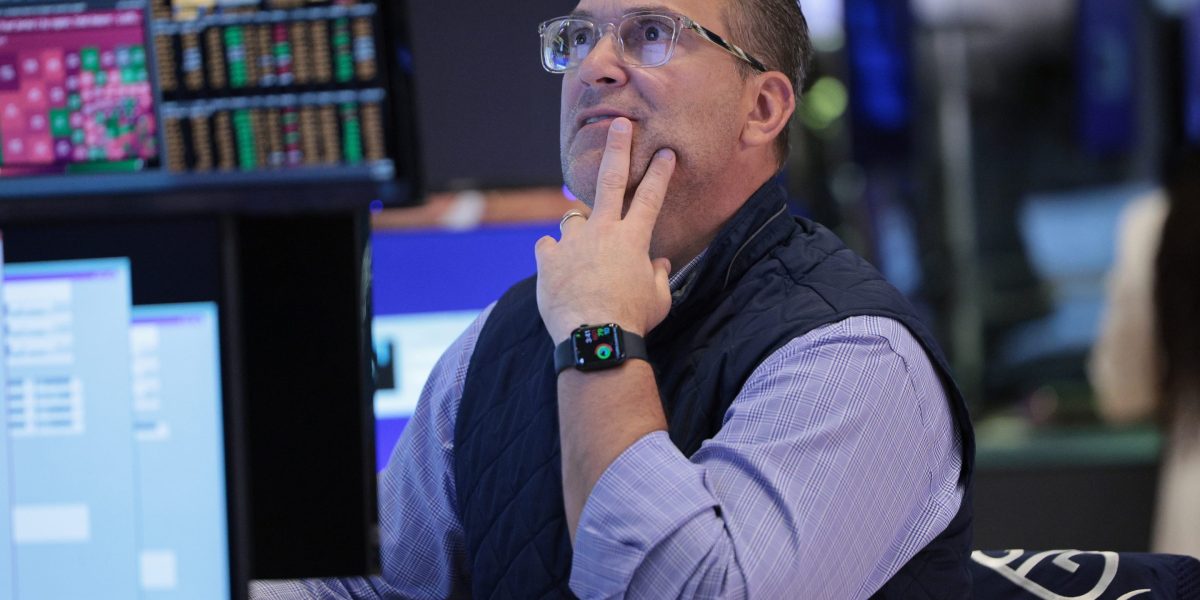
The economist who said ‘no bubble’ just sounded the alarm: ‘The season of chaos is at hand’

The economist who said ‘no bubble’ just sounded the alarm: ‘The season of chaos is at hand’

12 June 2026
Mortgage rate rises to 6.52% from 6.48%, near yearlong high

Mortgage rate rises to 6.52% from 6.48%, near yearlong high

12 June 2026
Elon Musk’s wealth is now double the GDP of his native South Africa as a trillionaire

Elon Musk’s wealth is now double the GDP of his native South Africa as a trillionaire

12 June 2026
Roche and Nestlé fear talent crunch as Switzerland puts population cap to the polls

Roche and Nestlé fear talent crunch as Switzerland puts population cap to the polls

12 June 2026
Current price of oil as of June 12, 2026

Current price of oil as of June 12, 2026

12 June 2026
Don't Miss
Unwrap Christmas Sustainably: How To Handle Gifts You Don’t Want

Unwrap Christmas Sustainably: How To Handle Gifts You Don’t Want

By Press Room27 December 2024

Every year, millions of people unwrap Christmas gifts that they do not love, need, or…

Exclusive: DeFi platform Azura launches after raising .9 million from Initialized

Exclusive: DeFi platform Azura launches after raising $6.9 million from Initialized

22 October 2024
Sam Altman’s World Wants To Scan Your Eyes To Prove You’re Human

Sam Altman’s World Wants To Scan Your Eyes To Prove You’re Human

22 October 2024
Stay In Touch
  • Facebook
  • Twitter
  • Pinterest
  • Instagram
  • YouTube
  • Vimeo
Latest Articles
Video: Elon Musk Is the World’s First Trillionaire After SpaceX’s Historic Debut

Video: Elon Musk Is the World’s First Trillionaire After SpaceX’s Historic Debut

12 June 20262 Views
What’s Behind Mandatory Hydration Breaks At The World Cup?

What’s Behind Mandatory Hydration Breaks At The World Cup?

12 June 20263 Views
The economist who said ‘no bubble’ just sounded the alarm: ‘The season of chaos is at hand’

The economist who said ‘no bubble’ just sounded the alarm: ‘The season of chaos is at hand’

12 June 20262 Views
Video: Elon Musk’s Big Bet for SpaceX

Video: Elon Musk’s Big Bet for SpaceX

12 June 20262 Views

Recent Posts

  • The Truth About AI Data Centers And Why It Matters
  • Newsom called homelessness California’s calling in 2020. His budget still spends less than 0.5% on it
  • Cisco Live 2026 Fits Collaboration Into Cisco’s AI Platform Strategy
  • You probably think you’re a really open-minded person, but the real thing raises your death anxiety
  • Video: Elon Musk Is the World’s First Trillionaire After SpaceX’s Historic Debut

Recent Comments

No comments to show.
About Us
About Us

Alpha Leaders is your one-stop website for the latest Entrepreneurs and Leaders news and updates, follow us now to get the news that matters to you.

Facebook X (Twitter) Pinterest YouTube WhatsApp
Our Picks
The Truth About AI Data Centers And Why It Matters

The Truth About AI Data Centers And Why It Matters

12 June 2026
Newsom called homelessness California’s calling in 2020. His budget still spends less than 0.5% on it

Newsom called homelessness California’s calling in 2020. His budget still spends less than 0.5% on it

12 June 2026
Cisco Live 2026 Fits Collaboration Into Cisco’s AI Platform Strategy

Cisco Live 2026 Fits Collaboration Into Cisco’s AI Platform Strategy

12 June 2026
Most Popular
You probably think you’re a really open-minded person, but the real thing raises your death anxiety

You probably think you’re a really open-minded person, but the real thing raises your death anxiety

12 June 20262 Views
Video: Elon Musk Is the World’s First Trillionaire After SpaceX’s Historic Debut

Video: Elon Musk Is the World’s First Trillionaire After SpaceX’s Historic Debut

12 June 20262 Views
What’s Behind Mandatory Hydration Breaks At The World Cup?

What’s Behind Mandatory Hydration Breaks At The World Cup?

12 June 20263 Views

Archives

  • June 2026
  • May 2026
  • April 2026
  • March 2026
  • February 2026
  • January 2026
  • December 2025
  • November 2025
  • October 2025
  • September 2025
  • August 2025
  • July 2025
  • June 2025
  • May 2025
  • April 2025
  • March 2025
  • February 2025
  • January 2025
  • December 2024
  • November 2024
  • October 2024
  • September 2024
  • August 2024
  • July 2024
  • June 2024
  • May 2024
  • April 2024
  • March 2024
  • February 2024
  • January 2024
  • December 2023
  • March 2022
  • January 2021
  • March 2020
  • January 2020

Categories

  • Blog
  • Business
  • Entrepreneurs
  • Global
  • Innovation
  • Leadership
  • Living
  • Money & Finance
  • News
  • Press Release
© 2026 Alpha Leaders. All Rights Reserved.
  • Privacy Policy
  • Terms of use
  • Advertise
  • Contact

Type above and press Enter to search. Press Esc to cancel.