Mickey Mouse just became an AI product feature.
That sentence would’ve sounded absurd a few years ago. This week, it became reality. Disney’s $1B investment in OpenAI and its decision to license hundreds of characters into Sora marks a turning point that goes far beyond entertainment or media.
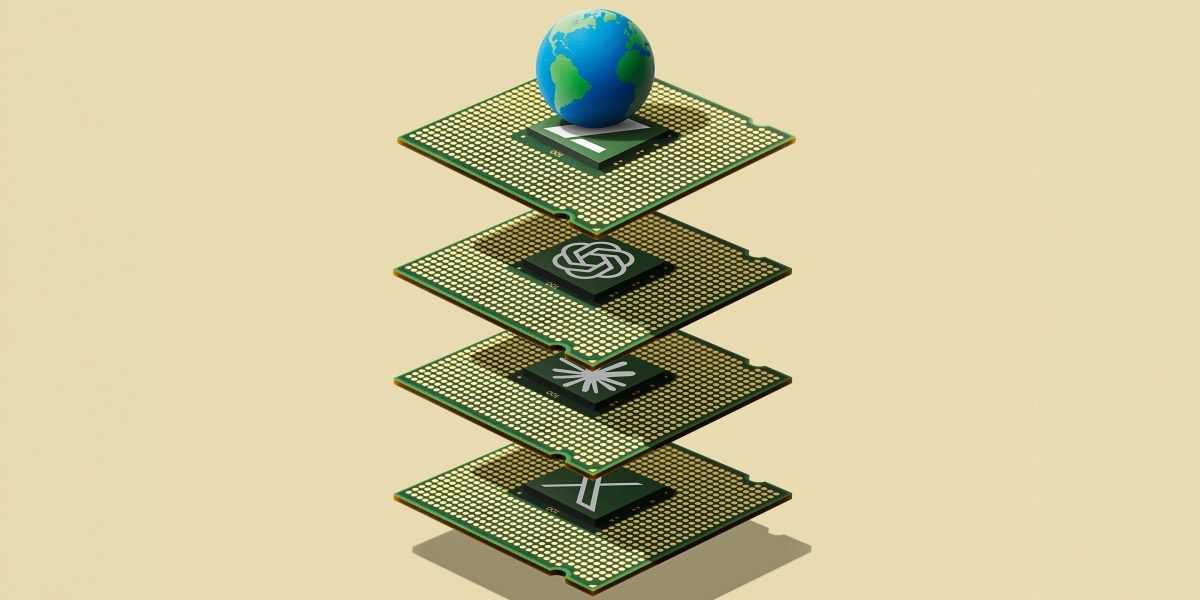
We’re entering a moment where brands are quietly losing visibility. Not because they stopped investing in marketing but because the internet itself is closing. Feeds are changing. Clicks are collapsing into conversation. AI agents are choosing for us. Discovery is getting intermediated.
Brands are being excluded.
And Disney just spotlighted the most credible path back in.
The Attention Economy Is Changing
For the last two decades, brand growth relied on open distribution: search results, social feeds, clicks, pages, impressions. It’s taken an era to optimize traditional SEO, SEM, social and websites. That era, as we know it, is ending.
In a world of AI-driven interfaces, users don’t click across websites anymore. They start in AI and ask questions instead of searching. Browsing is replaced with conversation. There is no homepage and media is created with hyper-relevance based on your interests. What’s more, transactions now remain within the platform. There’s no scroll.
This is what the attention economy looks like in a closed internet. If a brand doesn’t exist inside the system someone is using, it may as well not exist at all.
Participation Is the New Distribution
The genius of this deal lies in Disney choosing to exist as a capability inside a closed ecosystem. This is more than just the IP training deals that we’ve seen in the past. This creates relevance and resonance rather than letting fans generate Disney content.
When your IP can be called via a prompt, your brand stops behaving like a message and starts behaving like a function. Something people can use.
Participation matters as infrastructure. If people can create with your brand inside the environments where behavior happens (AI tools, platforms, agents), you don’t need to fight for attention. You’re already there. Participation becomes distribution.
Control Doesn’t Scale. Use Does
Historically, brands treated IP like a vault. Lock it down. Protect it. Defend it. Scarcity created value.
In an AI-driven culture, scarcity creates irrelevance. Control limits how far your brand can travel. Use lets it compound. Every interaction reinforces memory. Every creation deepens familiarity. Every sanctioned use strengthens meaning.
This is the Holy Grail for brands: relevance that grows through behavior, not exposure.
Disney isn’t giving up control. They’re relocating it. Guardrails move upstream into datasets, prompts, constraints and curation, so participation can happen without dilution.
Licensing Becomes a Growth Strategy
Most companies think about licensing as a legal line item. Disney treats it like a platform strategy.
By setting the usage parameters upfront, Disney defines what’s possible and what’s off-limits. They can prevent explicit content, protect brand integrity and maintain quality standards at the model level. The best defense against AI misuse is AI itself, but only when you’re inside the system helping set the guardrails.
Disney isn’t just licensing characters. They’re encoding brand rules into the infrastructure where creation happens. The questions become: Where do we show up? Under what rules? With what protections? How do we participate in the upside?
The alternative is bleak: Stay outside and litigate after someone else has already trained on your IP without permission, guardrails or input into what gets built.
The Disney Playbook Is the New Brand Playbook
The Sora deal clarifies what brands are actually competing for. Not visibility, but permission. Permission to exist inside AI platforms and creator tools. Permission to be used, not just seen. Permission to participate in culture as it is being made.
This is no longer about storytelling or brand expression alone. It’s about how your product, IP or campaign shows up inside the next-generation creator economy. Disney has taken a firm step forward. Mickey Mouse is not just referenced or remixed. He’s part of the creative workflow itself.
That is the standard brands now have to measure themselves against. How does your brand participate when creation happens inside AI systems? How does it show up as something people can build with, not just look at? If your IP cannot be meaningfully used inside these environments, relevance becomes fragile.
The brands that win will not be the loudest but the most usable. The ones willing to open their IP enough to invite participation, while being disciplined about protecting identity and meaning. In this environment, resonance is created through use, not exposure. Participation is no longer optional. It’s how brands stay visible at all.
For brands staring down a closed internet, participation is a distribution strategy hiding in plain sight.