


From gas to housing to groceries, consumers can’t escape inflation in their everyday lives. So why can’t policymakers agree on what the data is telling them – and if prices are falling fast enough?
With tariffs pushing up prices of goods and energy markets swinging on geopolitical news, the Federal Reserve’s policymaking committee concluded its July 2026 meeting with a contentious 9-3 vote to hold interest rates steady. But three dissents signaled unease by pushing for a rate hike – the most in nearly a decade.
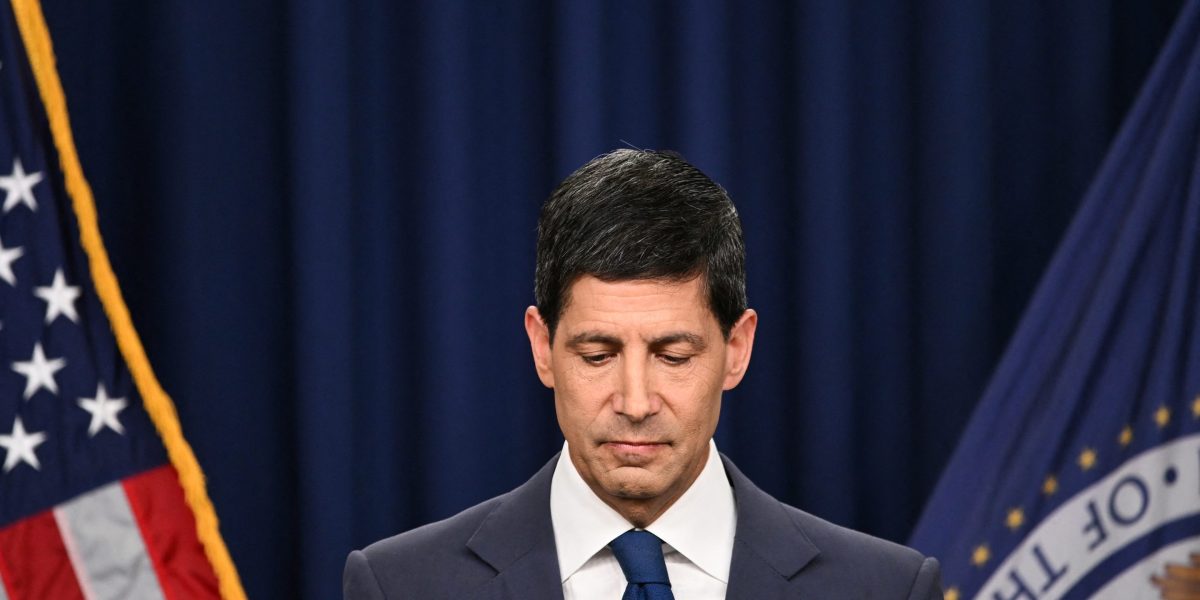
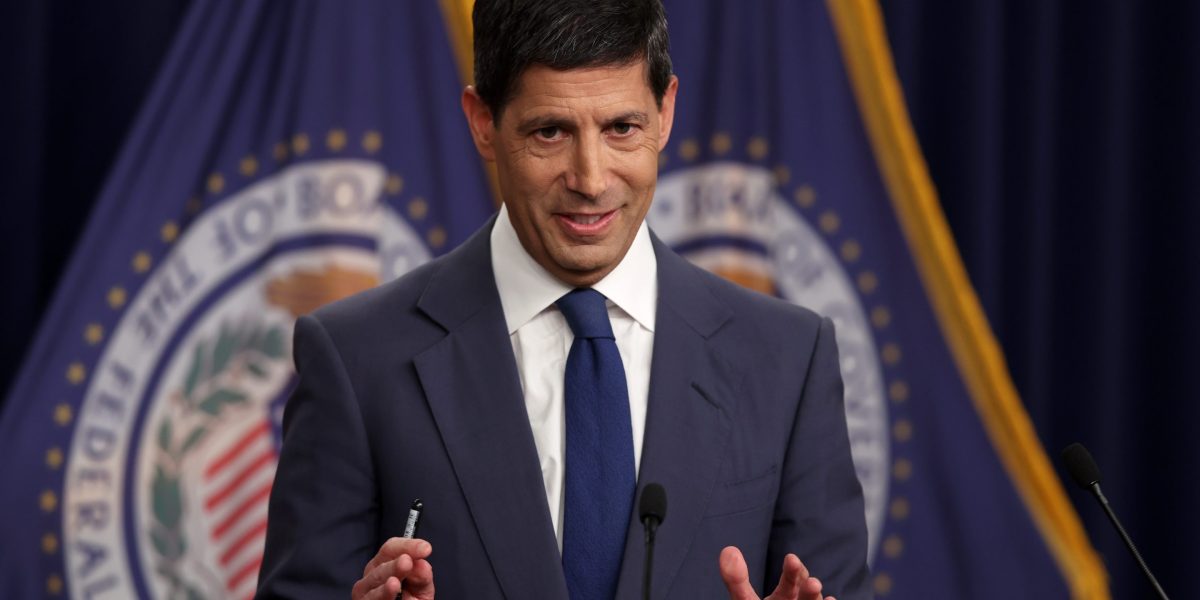
Fed Chair Kevin Warsh tried to thread the needle, emphasizing that inflation still must fall without tipping his hand on where rates would go in the future. He emphasized that the central bank won’t loosen its standards, declaring there’s “no soft inflation target.”
But the Fed’s meeting was followed by mixed news the following day, when its preferred gauge showed that inflation is still well above its 2% target, even though it dipped from 4.1% in May to 3.7% in June.
This confusion is a big reason why the once-obscure argument over the best inflation speedometer is heating up. And the outcome of this debate could change how the Fed thinks about where it sets interest rates. It isn’t just an academic debate: These discussions can dictate mortgage rates, wage growth and daily household budgets, a chief concern for inflation-weary Americans.
We’re scholars who study corporate finance and business decision-making amid uncertainty. As we previously wrote for The Conversation U.S., the effect of high energy prices has seeped into the broader economy.
The latest data suggests that the path to relief for inflation-weary Americans remains uncertain. In fact, despite the Fed leaving rates unchanged, U.S. borrowing costs hit a 19-year high this week.
What’s the actual inflation rate?
Inflation is often discussed as if it’s a simple math problem: How much did prices go up?
But it’s not easy to measure because economists first need to think about which prices to consider. Then they need to calculate how much of those goods and services Americans buy in the month in question. Once they incorporate all of these moving parts, the goal – assessing the change in prices – is even more difficult to measure.
That’s why there are different answers to that seemingly basic question.
Is inflation 3.7%, the government’s year-on-year headline reading for June 2026 under the Fed’s preferred inflation index, the personal consumption expenditures price index? Or is it 3.3%, from the same report but with the more volatile components of food and energy removed? Then again, it could be 2.2%, a less volatile metric calculated by the Dallas Federal Reserve and favored by Warsh.
Meanwhile, the Atlanta Federal Reserve issues “sticky” and “flexible” inflation readings, which are based on another inflation gauge and meant to capture prices that move more slowly and more quickly, respectively. Those clocked in at 2.8% and 5.1% in June 2026.
All of those numbers describe the same U.S. economy during the same period. None is necessarily wrong.
But these variations matter a great deal to the Fed right now, because its policymakers are rethinking how to weigh them. And that review matters because it will shape the Fed’s interest rate decisions, inform government benefit increases and set tax brackets as well as wages.
In short, this reassessment will affect how households manage money day to day as well as understand their long-term financial security. Businesses, meanwhile, will look for more certainty, since heeding different inflation estimates can lead to different decisions about pricing, inventories and investment.
How is inflation measured?
Government statisticians first decide what a typical household buys and in what proportions. They then make a series of assessments: Should a laptop that costs the same as last year’s but runs twice as fast count as a price cut? Official statistics say yes, which is an adjustment that’s based on the good’s improved quality. But the shopper will almost certainly see the price as flat.
Then there’s housing. It’s especially hard to capture price changes because almost two-thirds of American households own their home rather than rent. And since a homeowner’s mortgage rate was likely set when they bought the property, they typically pay the same each month, aside from rising insurance costs and property taxes.
But the government estimates housing inflation with a hypothetical calculation of what homeowners would have to pay in rent for the same property – which, of course, no one does.
People also often swap pricey items for cheaper ones when they can. When steak gets expensive and shoppers switch to chicken, should the index reflect the higher price of steak or the fact that consumers avoided some of that increase by changing what they bought?
Each choice may be reasonable on its own. But together, millions of these decisions can create an inflation rate that’s at odds with what Americans experience. And the range of answers, all of which are reasonable, mean that there are different estimates. The widely cited consumer price index estimates inflation one way, while the Fed’s preferred personal consumption expenditures index takes a broader approach that incorporates producer prices. These readings offer both a comprehensive headline figure as well as a “core” number that strips out volatile components such as food and energy. Economists also use a measure called the “trimmed mean,” which discards the biggest price swings in both directions and averages the rest. The reasoning is that extreme changes may result from noisy, unpredictable events – such as geopolitical turbulence in the Middle East – so they should count less. Warsh has argued for this approach on those grounds. Consumer price index and personal consumption expenditures readings can sometimes yield different outcomes – and provoke disagreement – regarding the direction that prices are heading. And headline inflation captures lived experience in a way core measures do not, roughly speaking. Trimmed and core measures, meanwhile, have the better forecasting record on where inflation is heading. But this metric comes with its own caveats: The Dallas Fed president has warned the trimming may discard the wrong prices and err on the side of being too low. All of this means the inflation rate can read 3.7% and 2.2% at once – with both being correct. The first captures what people actually paid, while the second tries to identify the underlying trend after the largest price swings are removed. That distinction matters because the Fed isn’t only asking what happened to prices last month. It’s asking which price changes are likely to persist. Many central banks, including the Fed, have long used an inflation “target” as a way to explain policy to the public and anchor expectations of price stability. In the Fed’s case, that target is an annualized 2%. Warsh reaffirmed the Fed’s commitment to that target on July 29, 2026. While the 2% target itself is not under review, the way the Fed measures inflation is. Warsh, who dismissed the personal consumption expenditures gauge as “rough swag” at his confirmation hearing, has named task forces to reevaluate how the Fed measures inflation. Changes could be coming soon. The Harvard economist co-leading the inflation-framework group, Greg Mankiw, has argued that central bankers should admit how imprecise their control over prices is and treat anything from 1.6% to 2.5% as on target and “good enough for government work.” But that flexibility would also raise a practical question: If inflation can only be measured imperfectly, how much precision should the Fed claim to have when setting policy? There’s a crucial reason why no official number feels like the right inflation rate: Households experience real-time prices, not the rate those prices change. Even if inflation fell to 2% tomorrow, groceries would still nominally cost close to 25% more than they did in 2020. And prices that jump rarely come back down. There are other sources of this disconnect, too. The prices most likely to be trimmed, excluded or averaged away – such as gasoline, groceries and airfares – are the ones we see every day. And inflation isn’t uniform: A homeowner who locked in a 3% mortgage in 2021 has seen their housing expenses sit steady while their income rises. But a renter has probably absorbed years of increases, while new homebuyers face the double whammy of steep prices and high borrowing costs. Remember the improved laptop that counts as a price cut? For decades, that adjustment made computers a textbook case of falling prices, until the artificial intelligence buildout pushed prices up. The government is taking note of AI’s impact, and in September it will revise how the core personal consumption expenditures price index accounts for AI-related goods. That could lower inflation by up to 0.3 percentage points without a single price tag moving downward. When the Fed met in late July, officials effectively had to choose between the 3.7% economy and the 2.2% economy to decide whether inflation risks merited an interest rate hike. While the committee voted against one, the high number of dissents underscored the underlying debate, which Warsh has called a “family fight.” Unlike most family fights, though, this one matters for mortgage rates, car loans, business debt and other borrowing costs, which hit the highest level since 2007. So the broader question remains: Which inflation measure should guide policy? And it’s not just Fed rate decisions that matter. The choice of index moves money every year through Social Security’s annual cost-of-living adjustment, which follows a version of the consumer price index, while tax brackets follow another. Union contracts often use their own when they make wage demands. So if you want to find out whether your benefits will keep up, you should find the specific index your check is tied to, because that’s the only inflation rate that directly governs it. For businesses, the same logic applies: Pricing, hiring, wage negotiations and investment decisions all depend on which version of inflation business leaders follow. In other words, the “real” inflation rate depends on the question being asked and on who has the power to choose the answer. That must be why Warsh and the Fed task force are looking at “a broader set of inflation” that may change the game for the first time in decades. Brandy Hadley, Professor of Finance and Distinguished Professor of Applied Investments, Appalachian State University and D. Brian Blank, Associate Professor of Finance, Mississippi State University This article is republished from The Conversation under a Creative Commons license. Read the original article.Will the Fed change its inflation target?
Why your inflation rate differs from the official ones
Inflation may change, even if prices do not