


Europe’s stock market is firing on all cylinders and drawing money managers who say this rally will be more durable than just another short-term trade.
Whether it’s earnings, economic growth, sentiment surveys or fund flows, market metrics across the board show a major shift is underway in European stocks. The price action reflects that. The Stoxx Europe 600 Index gained every day last week in its longest streak since June.
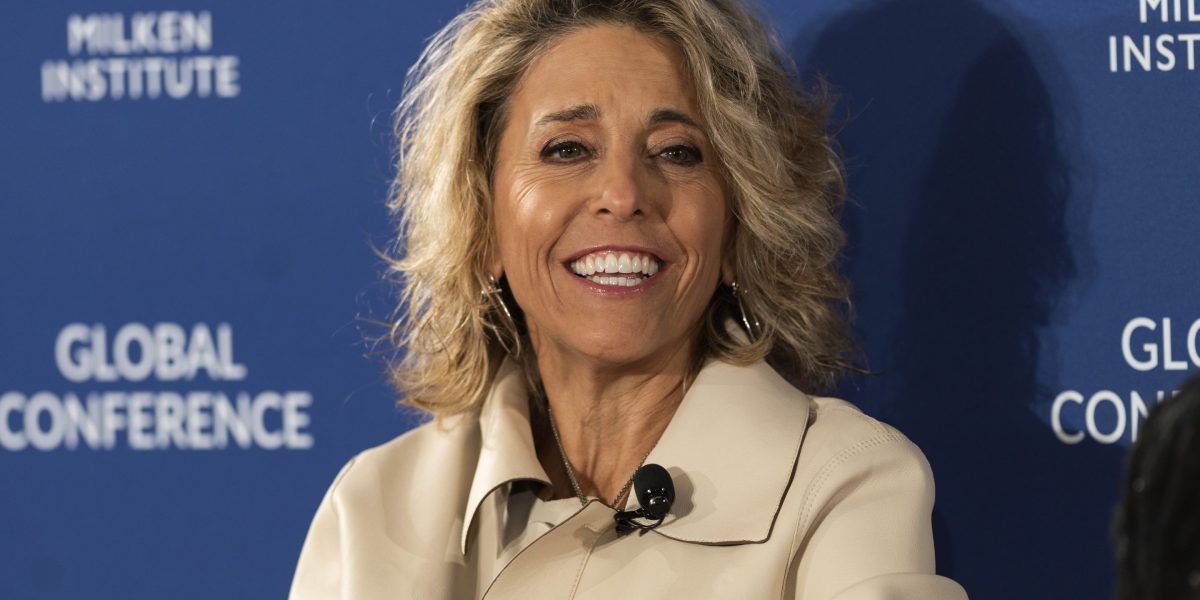
“There is definite excitement about Europe,” said Helen Jewell, international chief investment officer for fundamental equities at BlackRock Inc. “The region’s resilience has surprised the market and demand remains a lot firmer than had been expected.”
For a long time, one of the big draws of European stocks was that they were extremely cheap compared with the US. But with Europe Inc. reporting its best earnings growth in four years at 17%, and the strongest economic momentum since March 2023, more strategists see improved fundamentals underpinning this rally.
“With the balance of risks tilted to earnings beating expectations for this quarter, we think now is the time to review and potentially add to European equities,” said Mark Haefele, chief investment officer at UBS Global Wealth Management.
The latest Bank of America Corp. survey showed a net 2% of fund managers are now overweight European equities, compared with 15% who were underweight in June. A Citigroup Inc. analysis found Europe was the only major region to enjoy a meaningful improvement in risk appetite in the final week of July.
That sets up equity indexes to extend a record-breaking run in the second half of 2026. The Stoxx 600 has rallied 11% this year, with regional benchmarks including the German DAX, French CAC 40 and Italian FTSE MIB hitting all-time peaks.
The gains are also being driven by a broader swath of stocks. About 75% of the Stoxx 600’s constituents are trading above their 200-day moving average, near the top of the range of the past decade.
Signs of cooling hostilities between Washington and Tehran have boosted sentiment, although concerns linger about a full reopening of the Strait of Hormuz. Oil prices have declined from their July peak, easing inflation worries.
“Investor sentiment was being hampered by geopolitics, but as that clears up, it will unlock more demand for regional stocks,” said Beata Manthey, head of European equity strategy at Citigroup.
AI Appeal
Another driver is the shifting attitude toward all things AI.
After rewarding massive spending on the technology in the first leg of the rally, investors are now hunting for sectors that are poised to benefit from that expenditure as well as companies that will enjoy stronger profit margins by adopting AI platforms.
European semiconductor-related firms such as ASML Holding NV and Infineon Technologies AG have jumped more than 60% in 2026 and are among the biggest drivers of the Stoxx 600.
A Bank of America basket of European AI adopters, which comprises the likes of industrial group ABB Ltd., lender Standard Chartered Plc and power company E.On SE, has gained 14% this year, outperforming a 3% advance in the US hyperscalers.
Meanwhile, Europe’s economy-focused sectors including banks and industrial goods are proving a haven for investors looking for tech alternatives during wild swings in the AI trade. The Stoxx 600 Banks index is among the biggest gainers this year with a rally of 22%.
“Even if the AI momentum picks up again, investors are well aware of lingering volatility in the sector, which means tech is now a complementary rather than contradictory trade,” Citi’s Manthey said. “Investors will continue to own tech but also add diversification through cyclical sectors, and that benefits European stocks.”
The Stoxx 600 now trades at a valuation of 15 times forward earnings, the smallest discount to the S&P 500 in four years. And yet, some market participants are still skeptical about Europe’s longer-term growth potential compared with the US.
Any Federal Reserve rate hikes, for instance, could upset the trajectory for European stocks, according to Ariane Hayate, a fund manager at Edmond de Rothschild Asset Management. But, she added “the direction of travel remains broadly positive.”
For Daniel Murray, deputy chief investment officer at EFG Asset Management, investor skepticism on European stocks had gone too far given the outlook for strong macro growth and solid earnings.
“You’re starting from a place where there’s negative positioning, but the sentiment is improving,” Murray said. “That’s quite a nice combination.”