

Close Menu
Alpha Leaders
  • Home
  • News
  • Leadership
  • Entrepreneurs
  • Business
  • Living
  • Innovation
  • More
    • Money & Finance
    • Web Stories
    • Global
    • Press Release
What's On
Why Physical AI Needs Its Own Product Management Discipline

Why Physical AI Needs Its Own Product Management Discipline

25 September 2026
Fed’s Tom Barkin, a former McKinsey CFO, says the ‘AI Apocalypse’ hasn’t arrived

Fed’s Tom Barkin, a former McKinsey CFO, says the ‘AI Apocalypse’ hasn’t arrived

25 September 2026
How The Capital Markets Stack Is Being Rebuilt

How The Capital Markets Stack Is Being Rebuilt

25 September 2026
Facebook X (Twitter) Instagram
Alpha Leaders
newsletter
  • Home
  • News
  • Leadership
  • Entrepreneurs
  • Business
  • Living
  • Innovation
  • More
    • Money & Finance
    • Web Stories
    • Global
    • Press Release
Alpha Leaders
Home » I helped invent the smartphone camera. It could have died in the lab
News

I helped invent the smartphone camera. It could have died in the lab

Press RoomBy Press Room25 September 20264 Mins Read
Facebook Twitter Copy Link Pinterest LinkedIn Tumblr Email WhatsApp
I helped invent the smartphone camera. It could have died in the lab

Every time you snap a photo with your smartphone, you’re using technology that almost didn’t make it out of the laboratory.

While working at NASA’s Jet Propulsion Laboratory (JPL) in the 1990s, I led the development of the “camera-on-a-chip” — a breakthrough that replaced bulky camera components with a tiny semiconductor image sensor. Today, the technology my team and I pioneered — known as the complementary metal-oxide-semiconductor (CMOS) image sensor — powers the cameras in smartphones, laptops, autonomous vehicles, and countless other products. Roughly seven billion CMOS image sensors are now produced each year.

But inventing the camera-on-a-chip was only the beginning. Turning a government-funded technical advance into a product used by billions required something just as important — a way to move that technology from the laboratory into the marketplace.

That’s what Congress sought to provide when it passed the Bayh-Dole Act in 1980. By allowing universities, research laboratories, nonprofit organizations, and small businesses to retain patent rights to inventions arising from federally funded research, the law created a framework for technology transfer that has helped turn countless discoveries into commercial products.

But today, that system faces new uncertainty. Several federal agencies are considering reforms to the rules governing research grants and intellectual property. If enacted, those proposals could make the path from early-stage research to commercialization harder to navigate successfully. Before policymakers make such changes, they should consider what the current approach has made possible.

My own experience shows why caution is warranted. Before Bayh-Dole took effect, the government generally owned taxpayer-funded inventions developed in university laboratories. Yet, by 1980, fewer than 5% of the roughly 28,000 patents the government owned had been licensed for commercial use. As a result, many promising inventions never became products that could benefit the public.

The Bayh-Dole Act changed that. And the results have been remarkable. Since Bayh-Dole became law, university technology transfer has helped launch more than 21,000 technology startup companies, developed over 200 new drugs and vaccines and contributed nearly $2 trillion to the U.S. economy.

After our team developed the camera-on-a-chip at JPL, Dr. Sabrina Kemeny and I founded Photobit Corporation to bring the technology to market. We received an exclusive license to our invention from the California Institute of Technology, which operates JPL and owned the patent rights under the Bayh-Dole Act.

That exclusive license gave us the assurance we needed to attract investment and move the technology beyond the research lab. From there, our company worked to refine the sensor and persuade electronics companies to adopt an unfamiliar alternative to the dominant imaging technology.

Photobit wasn’t the end of the story for me. As a professor at Dartmouth and later as co-founder of Gigajot Technology Inc., I’ve continued developing new imaging technologies and working to bring those innovations to market. I have helped dozens of faculty and PhD students commercialize their own inventions for the benefit of society. Successful startups benefit taxpayers and our government through employment, improved health outcomes, and public safety. Larger companies often acquire these startups once the underlying technology and market have been derisked, adding further value to our economy.

None of this can happen without Bayh-Dole.

That success demonstrates what’s possible when public research, entrepreneurial initiative, and strong intellectual property protections work together. Bayh-Dole helped give researchers, universities, startups, investors, and established companies a shared interest in transforming scientific discoveries into practical technologies.

Yet proposed changes to federal research policy could make this system less predictable. For instance, one agency has proposed revisions to its financial assistance guidance that would give the agency a greater role in licensing patented inventions that benefit from its funding, rather than leaving those decisions to the institutions, as under Bayh-Dole. And a detailee at a federal research agency went even further, proposing that the Bayh-Dole framework be abandoned altogether. 

Changes like these may sound procedural. But successful technology transfer depends on predictable rules. Researchers, universities, investors, and companies need confidence that the terms governing funding and intellectual property will remain stable throughout the long process of bringing an invention to market.

Before policymakers change those rules, they should be confident they aren’t obstructing early-stage discoveries from becoming real-world products.

When my team and I developed the camera-on-a-chip, none of us could have predicted all the ways it would eventually be used. That’s often true of breakthrough innovations. And one of the Bayh-Dole Act’s greatest strengths is that it gives discoveries the opportunity to surprise us. 

Policymakers would do well to protect that system proven to work, instead of trying to fix something that isn’t broken.

The opinions expressed in Fortune.com commentary pieces are solely the views of their authors and do not necessarily reflect the opinions and beliefs of Fortune.


smartphones and mobile devices
Share. Facebook Twitter Pinterest LinkedIn Tumblr Email Copy Link

Related Articles

Fed’s Tom Barkin, a former McKinsey CFO, says the ‘AI Apocalypse’ hasn’t arrived

Fed’s Tom Barkin, a former McKinsey CFO, says the ‘AI Apocalypse’ hasn’t arrived

25 September 2026
US-Iran conflict: American employees searching for roles to avoid gas prices

US-Iran conflict: American employees searching for roles to avoid gas prices

25 September 2026
The S&P 500’s ‘biggest risk’ is companies’ ‘debt refi wall’ as bond yields top 5%

The S&P 500’s ‘biggest risk’ is companies’ ‘debt refi wall’ as bond yields top 5%

25 September 2026
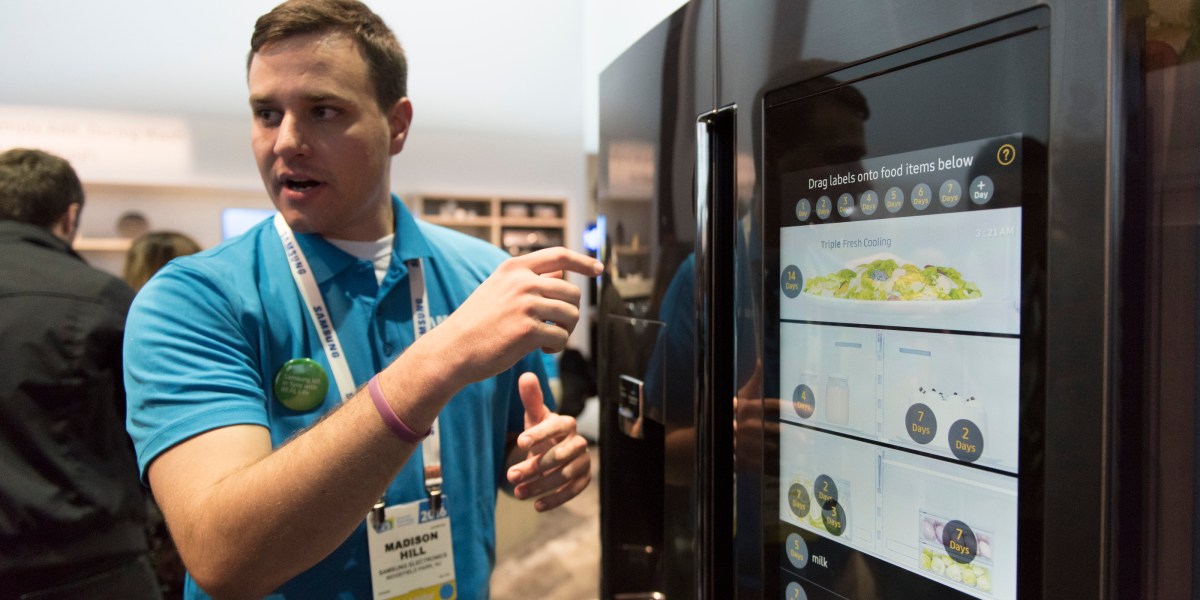
Samsung customers are complaining over spoiled food after an update bricked AI smart fridges

Samsung customers are complaining over spoiled food after an update bricked AI smart fridges

25 September 2026
Temu axed its  billion network of fake accounts on Meta

Temu axed its $1 billion network of fake accounts on Meta

25 September 2026
Trump made more stock trades in July than Treasury Secretary Scott Bessent made all of last year

Trump made more stock trades in July than Treasury Secretary Scott Bessent made all of last year

25 September 2026
Don't Miss
Trump’s Tariffs Will Make AI Data Centers More Expensive

Trump’s Tariffs Will Make AI Data Centers More Expensive

By Press Room4 April 2025

Donald Trump’s administration has gone all-in on AI: A day after his inauguration, the newly-elected…

Unwrap Christmas Sustainably: How To Handle Gifts You Don’t Want

Unwrap Christmas Sustainably: How To Handle Gifts You Don’t Want

27 December 2024
Sam Altman’s World Wants To Scan Your Eyes To Prove You’re Human

Sam Altman’s World Wants To Scan Your Eyes To Prove You’re Human

22 October 2024
Stay In Touch
  • Facebook
  • Twitter
  • Pinterest
  • Instagram
  • YouTube
  • Vimeo
Latest Articles
The New Frontier For Operational Excellence

The New Frontier For Operational Excellence

25 September 20260 Views
US-Iran conflict: American employees searching for roles to avoid gas prices

US-Iran conflict: American employees searching for roles to avoid gas prices

25 September 20261 Views
​Before Scaling AI Coding Tools, Find Your Engineering Bottleneck

​Before Scaling AI Coding Tools, Find Your Engineering Bottleneck

25 September 20260 Views
The S&P 500’s ‘biggest risk’ is companies’ ‘debt refi wall’ as bond yields top 5%

The S&P 500’s ‘biggest risk’ is companies’ ‘debt refi wall’ as bond yields top 5%

25 September 20262 Views

Recent Posts

  • Why Physical AI Needs Its Own Product Management Discipline
  • Fed’s Tom Barkin, a former McKinsey CFO, says the ‘AI Apocalypse’ hasn’t arrived
  • How The Capital Markets Stack Is Being Rebuilt
  • I helped invent the smartphone camera. It could have died in the lab
  • The New Frontier For Operational Excellence

Recent Comments

No comments to show.
About Us
About Us

Alpha Leaders is your one-stop website for the latest Entrepreneurs and Leaders news and updates, follow us now to get the news that matters to you.

Facebook X (Twitter) Pinterest YouTube WhatsApp
Our Picks
Why Physical AI Needs Its Own Product Management Discipline

Why Physical AI Needs Its Own Product Management Discipline

25 September 2026
Fed’s Tom Barkin, a former McKinsey CFO, says the ‘AI Apocalypse’ hasn’t arrived

Fed’s Tom Barkin, a former McKinsey CFO, says the ‘AI Apocalypse’ hasn’t arrived

25 September 2026
How The Capital Markets Stack Is Being Rebuilt

How The Capital Markets Stack Is Being Rebuilt

25 September 2026
Most Popular
I helped invent the smartphone camera. It could have died in the lab

I helped invent the smartphone camera. It could have died in the lab

25 September 20260 Views
The New Frontier For Operational Excellence

The New Frontier For Operational Excellence

25 September 20260 Views
US-Iran conflict: American employees searching for roles to avoid gas prices

US-Iran conflict: American employees searching for roles to avoid gas prices

25 September 20261 Views

Archives

  • September 2026
  • July 2026
  • June 2026
  • May 2026
  • April 2026
  • March 2026
  • February 2026
  • January 2026
  • December 2025
  • November 2025
  • October 2025
  • September 2025
  • August 2025
  • July 2025
  • June 2025
  • May 2025
  • April 2025
  • March 2025
  • February 2025
  • January 2025
  • December 2024
  • November 2024
  • October 2024
  • September 2024
  • August 2024
  • July 2024
  • June 2024
  • May 2024
  • April 2024
  • March 2024
  • February 2024
  • January 2024
  • December 2023
  • March 2022
  • January 2021
  • March 2020
  • January 2020

Categories

  • Blog
  • Business
  • Entrepreneurs
  • Global
  • Innovation
  • Leadership
  • Living
  • Money & Finance
  • News
  • Press Release
© 2026 Alpha Leaders. All Rights Reserved.
  • Privacy Policy
  • Terms of use
  • Advertise
  • Contact

Type above and press Enter to search. Press Esc to cancel.