

The successive statements about AI’s transformative impact on labor may help justify the booming valuation of some AI companies. But this rhetoric in part is also behind some backlash to the technology. A recent NBC News poll found just 26% of U.S. voters have a positive view of the technology, while 46% have a negative view. Now, OpenAI chief global affairs officer Chris Lehane is warning people to relent on messaging around AI.
“Some of the conversation out there is not necessarily responsible,” he told The San Francisco Standard. “And when you put some of those thoughts and ideas out there, they do have consequences.”
“This is not fun and games,” he added. “This is really serious s–t.”
The constant drumbeat of promises of AI’s labor market impact, as well as the threat of raising electricity bills and the danger it poses to kids, has a growing number of Americans rejecting the technology. And in recent weeks, backlash to the technology has turned violent.
Last week, a 20-year-old man named Daniel Moreno-Gama traveled from his home in Texas to San Francisco and allegedly lobbed a Molotov cocktail at the gate of OpenAI CEO Sam Altman’s home. Authorities then found a manifesto from Moreno-Gama warning of humanity’s extinction at the hands of AI, which included a threat of murder. Reactions to the attack across social platforms like Instagram and TikTok suggest the sentiment runs deep. Comments like “He’s not scared enough” and “FREE THAT MAN HE DID NOTHING WRONG” or “Finally some good news on my feed” reveal a widespread fear of the technology, at least across the internet.
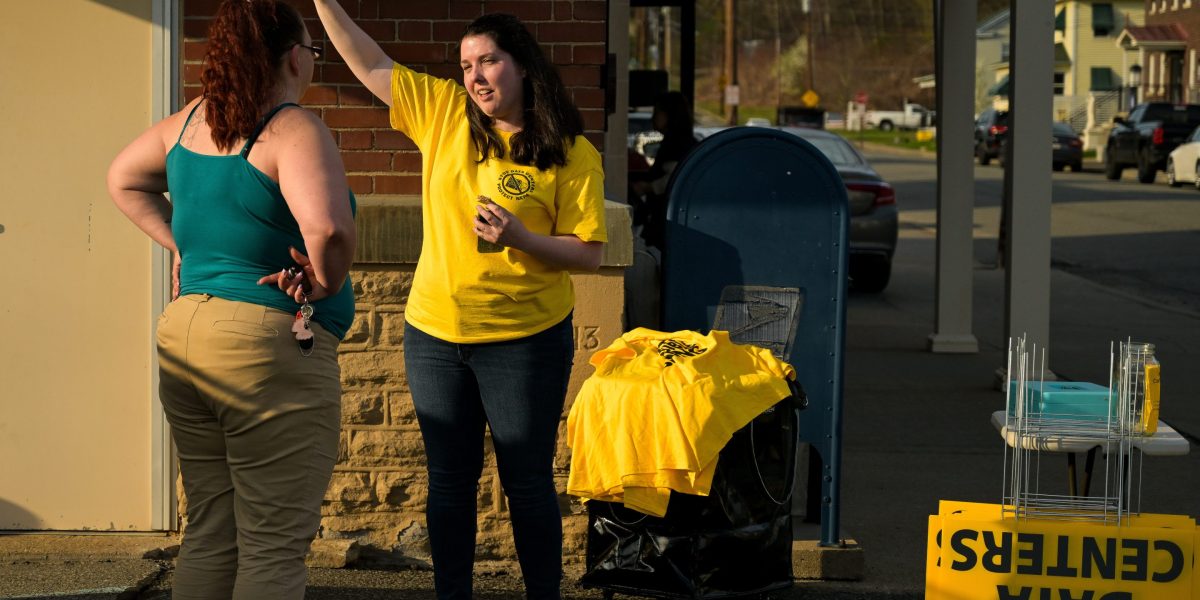
The incident follows a separate shooting at an Indiana city councilman’s house after the councilman expressed support for a data center project in his district. The councilman said the perpetrator shot 13 bullets into the home and left a “no data centers” sign at the doorstep.
What to do about the current discourse surrounding AI
For Lehane, it’s about emphasizing the positives of the technology. “Our job at OpenAI and in the AI space—and we need to do a much better job—is to explain to people why…this is going to be really good for them, for their families and for society writ large,” he said.
Of course, the AI optimists are already singing the praises of the technology. Some have that in just a few years, we’ll be working a three-day work week and lounging at the beach as AI agents do our work for us.
“You have one group that effectively says, ‘This is going to be the greatest thing ever, everyone’s going to be living in beachside homes, painting in watercolors as they while away their days,’” Lehane said. “And then you have another extreme, which I would call the Doomers, who have a very, very negative and dark view of humanity.”
The data so far supports some of Lehane’s skepticism about the extreme predictions. A study published in February by the National Bureau of Economic Research found that out of 6,000 CEOs and other executives, the vast majority have seen little impact from AI on their operations. That’s even as about two-thirds of executives reported using AI. And while some tech companies have initiated mass layoffs due to AI automation, including Jack Dorsey’s Block, and most recently, Snap, the technology’s impact on the labor market has yet to appear in macro data. In March, employers posted 178,000 job gains and the unemployment rate ticked down to 4.3%, suggesting job gains, at least in the short term, have outweighed AI-related layoffs.
“You’ve had a series of things that have been put out there—but haven’t come to fruition—about extreme things that are going to happen,” Lehane said.