


Close Menu
Alpha Leaders
  • Home
  • News
  • Leadership
  • Entrepreneurs
  • Business
  • Living
  • Innovation
  • More
    • Money & Finance
    • Web Stories
    • Global
    • Press Release
What's On
‘Trust in government is at an all-time low,’: even South Bend’s award-winning AI-friendly mayor admits the truth

‘Trust in government is at an all-time low,’: even South Bend’s award-winning AI-friendly mayor admits the truth

24 February 2026
Why the exploding secondaries market is hard to pin down

Why the exploding secondaries market is hard to pin down

24 February 2026
With tariff plan in tatters, Trump vows ‘to do absolutely terrible things to foreign countries’

With tariff plan in tatters, Trump vows ‘to do absolutely terrible things to foreign countries’

24 February 2026
Facebook X (Twitter) Instagram
Alpha Leaders
newsletter
  • Home
  • News
  • Leadership
  • Entrepreneurs
  • Business
  • Living
  • Innovation
  • More
    • Money & Finance
    • Web Stories
    • Global
    • Press Release
Alpha Leaders
Home » Scientists are pushing back on the health damage microplastics may cause, saying people are obese
News

Scientists are pushing back on the health damage microplastics may cause, saying people are obese

Press RoomBy Press Room24 February 20264 Mins Read
Facebook Twitter Copy Link Pinterest LinkedIn Tumblr Email WhatsApp
Scientists are pushing back on the health damage microplastics may cause, saying people are obese

Don’t toss that scratched-up, questionably stained, borderline EPA Superfund site, 12-year-old cutting board just yet! Your vintage fermentation lab with knife marks might not be so dangerous after all.

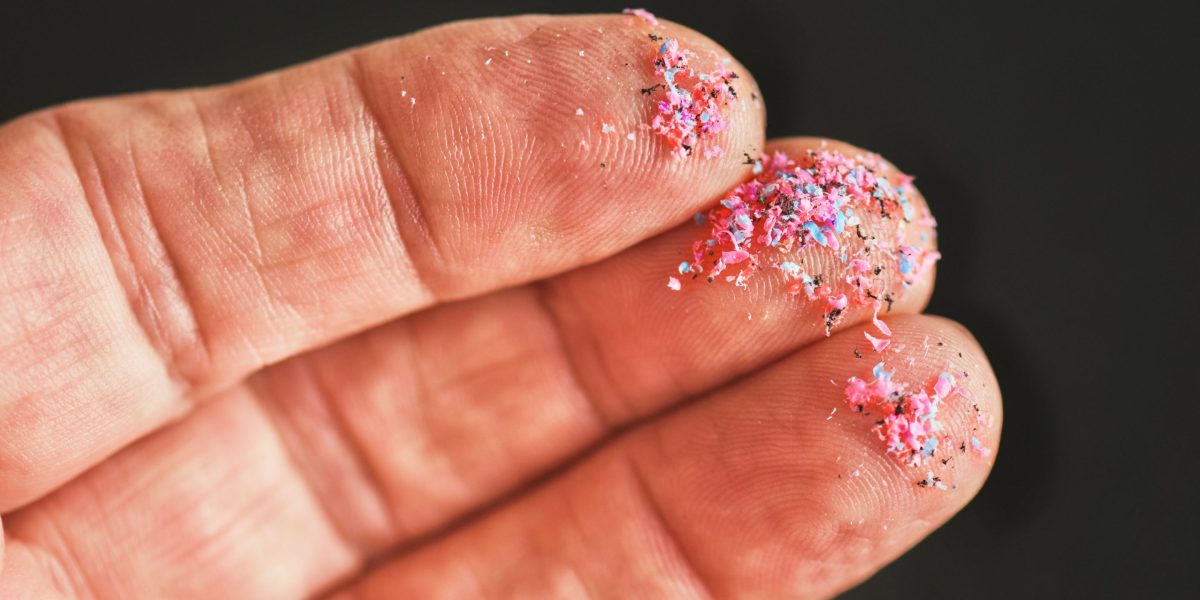
Scientists have warned for years that microplastics are found in everything: from the food and drinks we consume to the clothes we wear and cleaning supplies we use. These microplastics are building up in our bodies and pose a new risk to our health—or so we’ve been told.

But some scientists are now scrubbing off that idea, with one researcher even calling studies sounding the alarms as “a joke.”

Recent high-profile reports claiming micro- and nanoplastics (MNPs) have infiltrated the human brain, arteries, and testes are facing a major scientific backlash. Experts are warning that many of these widely publicized findings may be the result of methodological errors, contamination, and false positives rather than actual plastic ingestion.

“The brain microplastic paper is a joke,” wrote Dusan Materic, head of research at Helmholtz Center for Environmental Research (UFZ). Materic is one of several scientists proclaiming that previous studies regarding the damage microplastics cause the human body are exaggerated.

Chemist Roger Kuhlman said the evidence presented in previous studies had more holes than your cutting board, amounting to a “bombshell,” he told The Guardian.  

“This is really forcing us to re-evaluate everything we think we know about microplastics in the body,” Kuhlman, a former chemist at the Dow Chemical Company, told the publication. “Which, it turns out, is really not very much. Many researchers are making extraordinary claims, but not providing even ordinary evidence.”

The controversy centers on a surge of research that has captured global headlines, including a study suggesting the average human brain might contain the equivalent weight of a plastic spoon in MNPs. By November, however, a team of scientists formally challenged this study in a “Matters arising” letter, citing limited contamination controls and a lack of validation steps.

The technical heart of the dispute lies in Py-GC-MS, a process where samples are vaporized to identify molecules by weight. Environmental chemist Cassandra Rauert noted that this technique is currently unsuitable for identifying polyethylene or PVC in human tissue because molecules from human fat can mimic the signal of these plastics. Her research listed 18 studies that failed to account for these false positives. Furthermore, Rauert argued it is “biologically implausible” that the mass of plastic reported could end up in internal organs, as particles between 3 and 30 micrometers are unlikely to cross biological barriers.

Instead, the scientists suggested that rising obesity levels might explain health problems better than an increase in plastic accumulation.

Adding to the skepticism, Fazel Monikh, an expert in nanomaterials at the University of Padua, noted that particulate materials undergo biotransformation once they enter a living organism. He explained that even in the “highly unlikely scenario” that an intact particle reached a protected organ like the brain, it would not “retain the appearance shown in most of the reported data.” Consequently, many experts find the results and interpretations of these studies to be scientifically unconvincing.

Experts like Frederic Béen describe the study of microplastics in humans as a “super-immature field” where the race to publish has led to shortcuts and the overlooking of routine scientific checks.

These methodological shortcomings have real-world consequences, including “scaremongering” and the rise of expensive, unscientific treatments claiming to “clean” blood of plastics for fees as high as £10,000 (about $13,500). While the presence of plastics in the body remains a “safe assumption” for most researchers, they emphasize the need for robust, standardized techniques to accurately inform public health policy. In the meantime, experts recommend precautionary measures, such as using charcoal water filters and avoiding heating food in plastic containers.

For this story, Fortune journalists used generative AI as a research tool. An editor verified the accuracy of the information before publishing.


Environment Health Science
Share. Facebook Twitter Pinterest LinkedIn Tumblr Email Copy Link

Related Articles

‘Trust in government is at an all-time low,’: even South Bend’s award-winning AI-friendly mayor admits the truth

‘Trust in government is at an all-time low,’: even South Bend’s award-winning AI-friendly mayor admits the truth

24 February 2026
Why the exploding secondaries market is hard to pin down

Why the exploding secondaries market is hard to pin down

24 February 2026
With tariff plan in tatters, Trump vows ‘to do absolutely terrible things to foreign countries’

With tariff plan in tatters, Trump vows ‘to do absolutely terrible things to foreign countries’

24 February 2026
Discord cuts ties with Peter Thiel-backed verification software after code found in US surveillance

Discord cuts ties with Peter Thiel-backed verification software after code found in US surveillance

24 February 2026
Olympic runner, Mo Farah has a message for struggling Gen Z

Olympic runner, Mo Farah has a message for struggling Gen Z

24 February 2026
Sam Altman gets defensive about AI’s power usage: ‘It also takes a lot of energy to train a human’

Sam Altman gets defensive about AI’s power usage: ‘It also takes a lot of energy to train a human’

24 February 2026
Don't Miss
Unwrap Christmas Sustainably: How To Handle Gifts You Don’t Want

Unwrap Christmas Sustainably: How To Handle Gifts You Don’t Want

By Press Room27 December 2024

Every year, millions of people unwrap Christmas gifts that they do not love, need, or…

Walmart dominated, while Target spiraled: the winners and losers of retail in 2024

Walmart dominated, while Target spiraled: the winners and losers of retail in 2024

30 December 2024
Moltbook is the talk of Silicon Valley. But the furor is eerily reminiscent of a 2017 Facebook research experiment

Moltbook is the talk of Silicon Valley. But the furor is eerily reminiscent of a 2017 Facebook research experiment

6 February 2026
Stay In Touch
  • Facebook
  • Twitter
  • Pinterest
  • Instagram
  • YouTube
  • Vimeo
Latest Articles
Video: Why the I.R.S. Wants  Billion From Meta

Video: Why the I.R.S. Wants $15 Billion From Meta

24 February 20260 Views
Discord cuts ties with Peter Thiel-backed verification software after code found in US surveillance

Discord cuts ties with Peter Thiel-backed verification software after code found in US surveillance

24 February 20264 Views
Olympic runner, Mo Farah has a message for struggling Gen Z

Olympic runner, Mo Farah has a message for struggling Gen Z

24 February 20263 Views
Sam Altman gets defensive about AI’s power usage: ‘It also takes a lot of energy to train a human’

Sam Altman gets defensive about AI’s power usage: ‘It also takes a lot of energy to train a human’

24 February 20267 Views
About Us
About Us

Alpha Leaders is your one-stop website for the latest Entrepreneurs and Leaders news and updates, follow us now to get the news that matters to you.

Facebook X (Twitter) Pinterest YouTube WhatsApp
Our Picks
‘Trust in government is at an all-time low,’: even South Bend’s award-winning AI-friendly mayor admits the truth

‘Trust in government is at an all-time low,’: even South Bend’s award-winning AI-friendly mayor admits the truth

24 February 2026
Why the exploding secondaries market is hard to pin down

Why the exploding secondaries market is hard to pin down

24 February 2026
With tariff plan in tatters, Trump vows ‘to do absolutely terrible things to foreign countries’

With tariff plan in tatters, Trump vows ‘to do absolutely terrible things to foreign countries’

24 February 2026
Most Popular
Scientists are pushing back on the health damage microplastics may cause, saying people are obese

Scientists are pushing back on the health damage microplastics may cause, saying people are obese

24 February 20260 Views
Video: Why the I.R.S. Wants  Billion From Meta

Video: Why the I.R.S. Wants $15 Billion From Meta

24 February 20260 Views
Discord cuts ties with Peter Thiel-backed verification software after code found in US surveillance

Discord cuts ties with Peter Thiel-backed verification software after code found in US surveillance

24 February 20264 Views
© 2026 Alpha Leaders. All Rights Reserved.
  • Privacy Policy
  • Terms of use
  • Advertise
  • Contact

Type above and press Enter to search. Press Esc to cancel.