
Close Menu
Alpha Leaders
  • Home
  • News
  • Leadership
  • Entrepreneurs
  • Business
  • Living
  • Innovation
  • More
    • Money & Finance
    • Web Stories
    • Global
    • Press Release
What's On
Darren Elkins Retires After 35-Second KO Loss to Yadier del Valle

Darren Elkins Retires After 35-Second KO Loss to Yadier del Valle

10 August 2026
How Historic Sawfish Collections Changed Conservation

How Historic Sawfish Collections Changed Conservation

10 August 2026
Trump’s new White House counsel headed the commission that secured his 0 million ballroom project

Trump’s new White House counsel headed the commission that secured his $400 million ballroom project

10 August 2026
Facebook X (Twitter) Instagram
Alpha Leaders
newsletter
  • Home
  • News
  • Leadership
  • Entrepreneurs
  • Business
  • Living
  • Innovation
  • More
    • Money & Finance
    • Web Stories
    • Global
    • Press Release
Alpha Leaders
Home » The AI boom is built on the backs of the world’s poorest, most exploited people, UN researchers find
News

The AI boom is built on the backs of the world’s poorest, most exploited people, UN researchers find

Press RoomBy Press Room29 April 20265 Mins Read
Facebook Twitter Copy Link Pinterest LinkedIn Tumblr Email WhatsApp
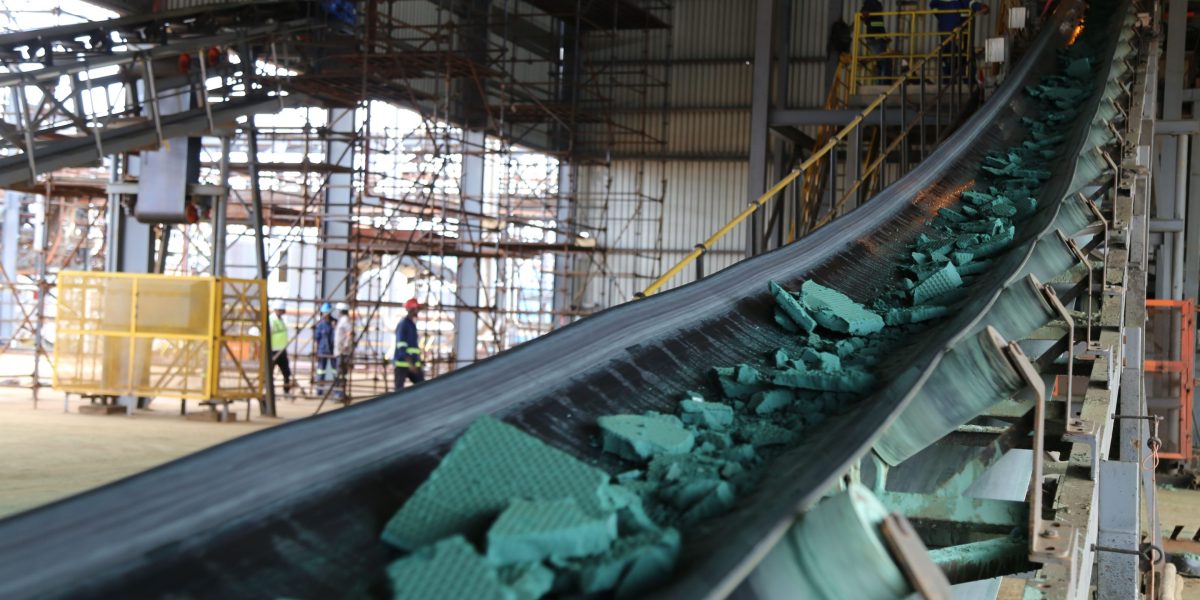
The AI boom is built on the backs of the world’s poorest, most exploited people, UN researchers find

In arid regions such as Chile’s Salar de Atacama, mining activities account for up to 65% of total regional water use, competing with agriculture and ecosystems. Groundwater levels have dropped, salt lagoons have shrunk, and freshwater aquifers are increasingly at risk of being depleted and contaminated.

Water pollution compounds problems like this. Mining generates large quantities of toxic waste and wastewater containing heavy metals, acids and radioactive residues.

Source: United Nations University Institute for Water, Environment and Health

Rare earth mineral production, for example, generates up to 2,000 metric tons of waste for every metric ton of usable material. Rare earth minerals are often extracted by creating leaching ponds and adding chemicals to separate the metals. When the effluent isn’t treated or is improperly stored, the chemicals can seep into groundwater and waterways, contaminating aquifers and rivers.

In some parts of the world, rivers near cobalt and copper mines have become so acidic that communities can no longer drink water from them. Fish stocks have collapsed, and farmlands have been poisoned. Water insecurity is no longer a side effect of mining; it is a systemic cost.

Health crises hidden in supply chains

Communities living near these extraction sites report people suffering from skin diseases, gastrointestinal illnesses, reproductive health problems and chronic health conditions associated with long‑term exposure to heavy metals in polluted water and soil.

Evidence from mining regions in the Democratic Republic of the Congo is particularly stark.

Studies document high rates of miscarriages, congenital malformations and infant mortality among populations exposed to environments contaminated with cobalt and other metals. Maternity wards in southern Democratic Republic of the Congo that are close to mining operations report significantly more birth defects than those farther away.

In communities near mining operations, residents talk about how women and girls living near cobalt and copper mining sites have been experiencing gynecological health problems, including infections, menstrual irregularities, miscarriages and infertility. These risks are linked to prolonged contact with contaminated water, compounded by limited access to sanitation and healthcare.

In Chile’s Antofagasta region, cancer mortality is the highest in the country. Lung cancer rates there are nearly three times the national average. Physicians in the region also report rising cases of neurological and developmental disorders, which they link to early exposure to contaminated water and air.

Thousands of children are estimated to be employed in artisanal cobalt mines in the Democratic Republic of the Congo. In the informal mines, they may be exposed to cobalt dust and other hazardous materials without protective gear.

These health risks are heightened by weak systems for water, sanitation and healthcare. As of 2024, only about one-third of people in the Democratic Republic of the Congo had at least basic drinking water services.

Food costs of the energy transition

The water problems caused by critical minerals extraction also pose a major threat to local food systems. In Peru, zinc mining has contaminated the Cunas watershed. Runoff pollutes water used to irrigate crops and provide water for livestock.

In Bolivia’s Uyuni region, lithium mining has led to persistent water shortages that are making it increasingly difficult to grow quinoa, a staple crop central to local diets and economies. Across the wider “lithium triangle” of Argentina, Chile and Bolivia, mining has reduced water availability for crops and farm animals.

Similar patterns are evident in parts of the Democratic Republic of the Congo and Zambia. In both countries, polluted rivers have contributed to declining fish stocks and livestock illnesses, harming households that are already struggling to feed themselves.

Ways to protect mining communities

Innovation and technological advances have the potential to do good. But we believe a fair and sustainable energy and digital transition requires deliberate actions to avoid creating “sacrifice zones,” places where human and ecological well-being are traded away for technological breakthroughs.

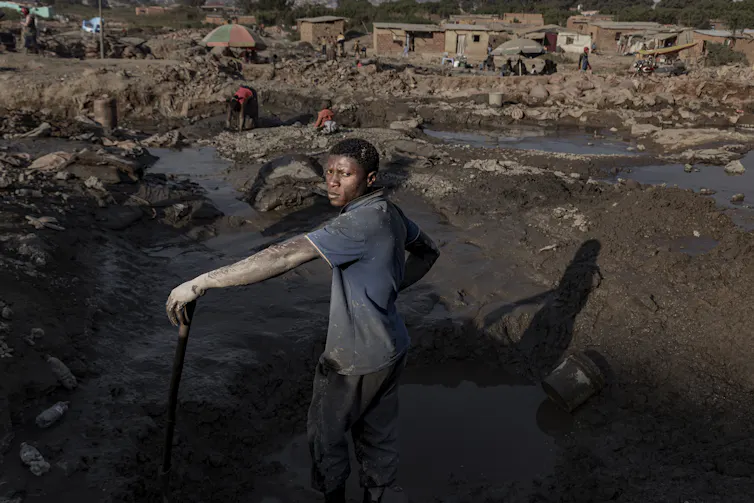
A man with dried mud on his bare arms stand near a water-filled mine where a child and woman are searching for minerals.

A family works at an artisanal cobalt and copper mine site in 2025 in Kolwezi, Democratic Republic of the Congo. These mines are often unregulated. Michel Lunanga/Getty Images

One option is to create stronger international governance. Moving beyond voluntary guidelines toward binding international rules, such as treaties, enforceable supply chain due-diligence laws, mandatory environmental and human rights standards for mining operations, and potentially establishing a global mineral trust that would manage critical minerals as shared planetary assets, could improve water protection, pollution control and human rights across mineral supply chains.

Companies can also invest in less water-intensive mining technologies. Countries can tighten their wastewater controls and expand independent environmental monitoring and reporting.

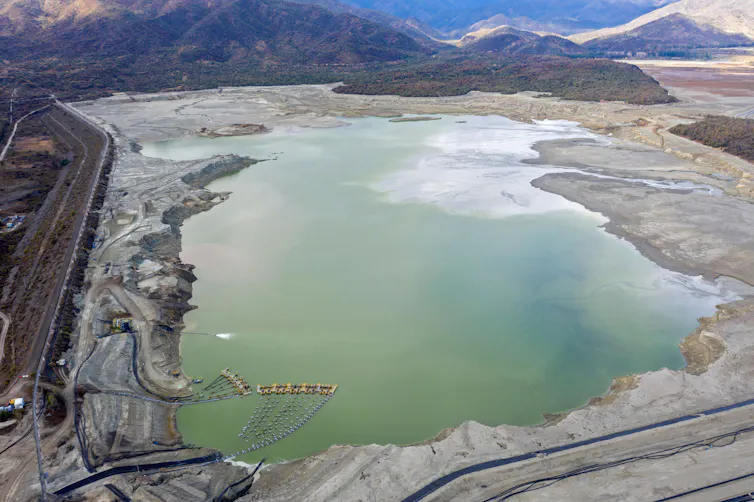
A large retaining pond with ragged edges, roads along its sides and mountains in the background.

Copper-mining companies create huge tailings ponds, like this one in Chile in 2019, to store toxic byproducts of mining. Hundreds of these waste ponds exist across the country and carry the risk of leaking acidic water and heavy metals such as arsenic, copper and mercury into groundwater. Martin Bernetti/AFP via Getty Images

Governance arrangements that give local and Indigenous communities a stronger voice, a fair share in the benefits and genuine co-governance of resources could further rebalance who has power and who bears risk.

On the consumption side, extending product lifespans, expanding recycling and encouraging less reliance on newly mined minerals would ease pressure on water‑stressed regions.

For the people who use these technologies, the social and environmental costs embedded in critical minerals supply chains are often out of sight and out of mind. Making these impacts visible can enable consumers to make informed choices and engage in greater scrutiny of corporate practices.

Critical minerals are essential to advancing sustainability. But if cleaner technologies are built in ways that result in polluted rivers, sick children and dispossessed communities, the transition will fall short of its promise.

Abraham Nunbogu, Researcher, Institute for Water, Environment and Health (UNU-INWa, United Nations University and Kaveh Madani, Director of the Institute for Water, Environment and Health (UNU-INWEH), United Nations University

This article is republished from The Conversation under a Creative Commons license. Read the original article.
The Conversation

data centers United Nations
Share. Facebook Twitter Pinterest LinkedIn Tumblr Email Copy Link

Related Articles

Trump’s new White House counsel headed the commission that secured his 0 million ballroom project

Trump’s new White House counsel headed the commission that secured his $400 million ballroom project

10 August 2026
An airline canceled a flight and rebooked passengers because a child wouldn’t sit down and buckle up

An airline canceled a flight and rebooked passengers because a child wouldn’t sit down and buckle up

10 August 2026
By propping up the yen, the US and Japan are admitting dollar dominance isn’t what it used to be

By propping up the yen, the US and Japan are admitting dollar dominance isn’t what it used to be

10 August 2026
More GOP senators call for Miller to quit over abuse allegations

More GOP senators call for Miller to quit over abuse allegations

9 August 2026
Flesh-eating bacteria infections surge along the Gulf Coast with five deaths reported in Louisiana

Flesh-eating bacteria infections surge along the Gulf Coast with five deaths reported in Louisiana

9 August 2026
Trump is betting that the US naval blockade choking Iran’s economy can do what missiles couldn’t

Trump is betting that the US naval blockade choking Iran’s economy can do what missiles couldn’t

9 August 2026
Don't Miss
Trump’s Tariffs Will Make AI Data Centers More Expensive

Trump’s Tariffs Will Make AI Data Centers More Expensive

By Press Room4 April 2025

Donald Trump’s administration has gone all-in on AI: A day after his inauguration, the newly-elected…

Unwrap Christmas Sustainably: How To Handle Gifts You Don’t Want

Unwrap Christmas Sustainably: How To Handle Gifts You Don’t Want

27 December 2024
Sam Altman’s World Wants To Scan Your Eyes To Prove You’re Human

Sam Altman’s World Wants To Scan Your Eyes To Prove You’re Human

22 October 2024
Stay In Touch
  • Facebook
  • Twitter
  • Pinterest
  • Instagram
  • YouTube
  • Vimeo
Latest Articles
An airline canceled a flight and rebooked passengers because a child wouldn’t sit down and buckle up

An airline canceled a flight and rebooked passengers because a child wouldn’t sit down and buckle up

10 August 20261 Views
Start A Business? There’s An AI Agent For That! Y Combinator Head Explains How

Start A Business? There’s An AI Agent For That! Y Combinator Head Explains How

10 August 20262 Views
By propping up the yen, the US and Japan are admitting dollar dominance isn’t what it used to be

By propping up the yen, the US and Japan are admitting dollar dominance isn’t what it used to be

10 August 20261 Views
Why Foodborne Illnesses Keep Occurring

Why Foodborne Illnesses Keep Occurring

10 August 20262 Views

Recent Posts

  • Darren Elkins Retires After 35-Second KO Loss to Yadier del Valle
  • How Historic Sawfish Collections Changed Conservation
  • Trump’s new White House counsel headed the commission that secured his $400 million ballroom project
  • iPhone 18 Pro Release Date: Demand Drives September Launch
  • An airline canceled a flight and rebooked passengers because a child wouldn’t sit down and buckle up

Recent Comments

No comments to show.
About Us
About Us

Alpha Leaders is your one-stop website for the latest Entrepreneurs and Leaders news and updates, follow us now to get the news that matters to you.

Facebook X (Twitter) Pinterest YouTube WhatsApp
Our Picks
Darren Elkins Retires After 35-Second KO Loss to Yadier del Valle

Darren Elkins Retires After 35-Second KO Loss to Yadier del Valle

10 August 2026
How Historic Sawfish Collections Changed Conservation

How Historic Sawfish Collections Changed Conservation

10 August 2026
Trump’s new White House counsel headed the commission that secured his 0 million ballroom project

Trump’s new White House counsel headed the commission that secured his $400 million ballroom project

10 August 2026
Most Popular
iPhone 18 Pro Release Date: Demand Drives September Launch

iPhone 18 Pro Release Date: Demand Drives September Launch

10 August 20261 Views
An airline canceled a flight and rebooked passengers because a child wouldn’t sit down and buckle up

An airline canceled a flight and rebooked passengers because a child wouldn’t sit down and buckle up

10 August 20261 Views
Start A Business? There’s An AI Agent For That! Y Combinator Head Explains How

Start A Business? There’s An AI Agent For That! Y Combinator Head Explains How

10 August 20262 Views

Archives

  • August 2026
  • July 2026
  • June 2026
  • May 2026
  • April 2026
  • March 2026
  • February 2026
  • January 2026
  • December 2025
  • November 2025
  • October 2025
  • September 2025
  • August 2025
  • July 2025
  • June 2025
  • May 2025
  • April 2025
  • March 2025
  • February 2025
  • January 2025
  • December 2024
  • November 2024
  • October 2024
  • September 2024
  • August 2024
  • July 2024
  • June 2024
  • May 2024
  • April 2024
  • March 2024
  • February 2024
  • January 2024
  • December 2023
  • March 2022
  • January 2021
  • March 2020
  • January 2020

Categories

  • Blog
  • Business
  • Entrepreneurs
  • Global
  • Innovation
  • Leadership
  • Living
  • Money & Finance
  • News
  • Press Release
© 2026 Alpha Leaders. All Rights Reserved.
  • Privacy Policy
  • Terms of use
  • Advertise
  • Contact

Type above and press Enter to search. Press Esc to cancel.