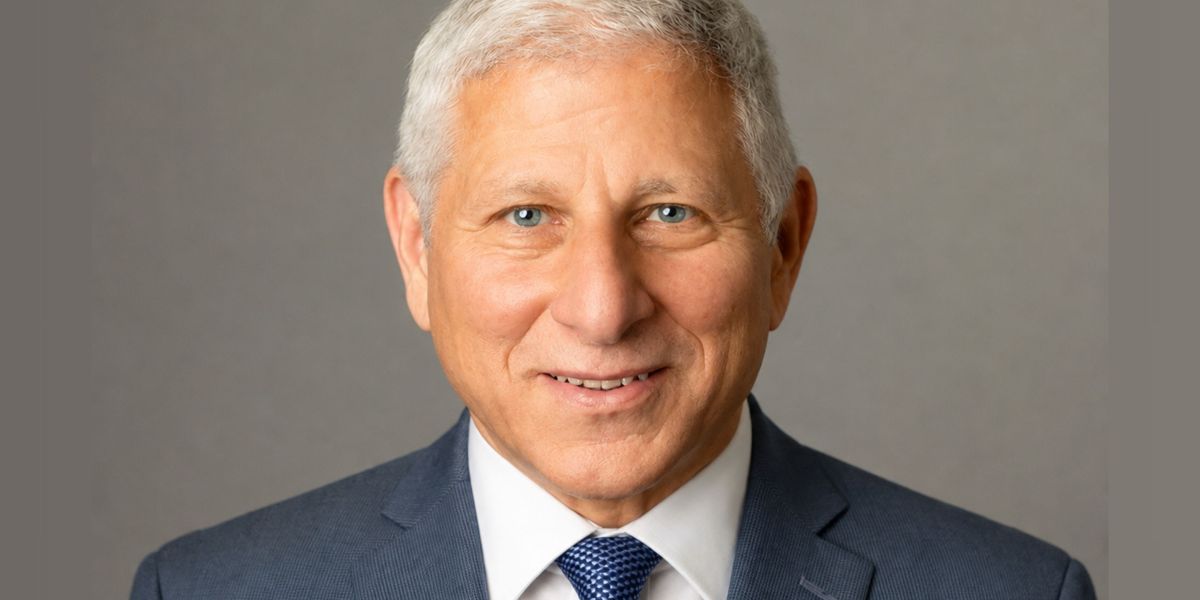




Brody Franzen is showing me his missiles and his comically large American flag. His company Furientis, operates out of Lenny Kravitz’s old studio in Los Angeles. He puts his head next to two mach three (three times the speed of light) nose cones that are browned like toasted marshmallows. “That’s from the supersonic flow hitting the nose,” he says.
Franzen is the cofounder and CEO of Furientis, a defense startup that emerged from stealth with $5 million in pre-seed funding, Fortune learned exclusively. Silent Ventures led the round with participation from Bessemer Venture Partners, SV Angel, Vanderbilt University, Channel 39 Ventures, and the founders of companies including Anduril and Armada.
Furientis’ pitch is expectedly intertwined with geopolitics. The U.S. has depleted its stockpile of seven major types of missiles, according to the Center for Strategic and International Studies—including using more than 150 THAAD interceptors—missiles that Lockheed Martin typically produces about 96 of per year. The U.S. military was also firing multi-million-dollar interceptors at drones that cost as little as $5,000 in Iran. “This mismatch is what pushed us to start Furientis,” Franzen told Fortune. “We’re spending millions to stop threats that cost thousands, and it doesn’t scale.”
But it’s production, not price, that’s the real problem. In the 1990s, there were more than 50 defense “primes”—the manufacturers that build complete weapons systems. Today, there are five. In ship-borne interceptors, there’s one. “Our adversaries, like China, are claiming the capacity of building thousands of anti-ship cruise missiles per week,” he says. “The math just doesn’t make sense from a production standpoint.”
His answer is to build ship-based interceptor missiles like cars, or better yet, IKEA furniture. Furientis uses automotive-style materials, automotive-style assembly processes, and commercial off-the-shelf components—rather than the “exquisite” bespoke hardware that’s made legacy interceptors expensive and slow to produce. The cost comparison is $250,000 per Furientis missile compared to the $1 to $5 million missiles built by most primes. Franzen’s target: 1,000 missiles per year, per factory, starting with a 9,000-square-foot facility in Los Angeles.
And while traditional primes spend a year or more doing computer modeling before their first hardware test, Furientis runs four-week design cycles with monthly flight tests. The company also makes its own solid rocket motors in-house, a capability that most primes outsource, and one that Franzen argues is where the whole supply chain bottleneck actually lives.
Leadership at Furientis has a combined résumé that reads like the greatest hits of the new aerospace industrial base. Franzen spent years as deputy chief engineer at Virgin Galactic and helped send Sir Richard Branson to space. He then joined Castelion—a hypersonics startup that closed a $350 million Series B in 2025—as a senior engineer. His cofounder, Aris Simsarian, ran rocket engine testing at Virgin Orbit.
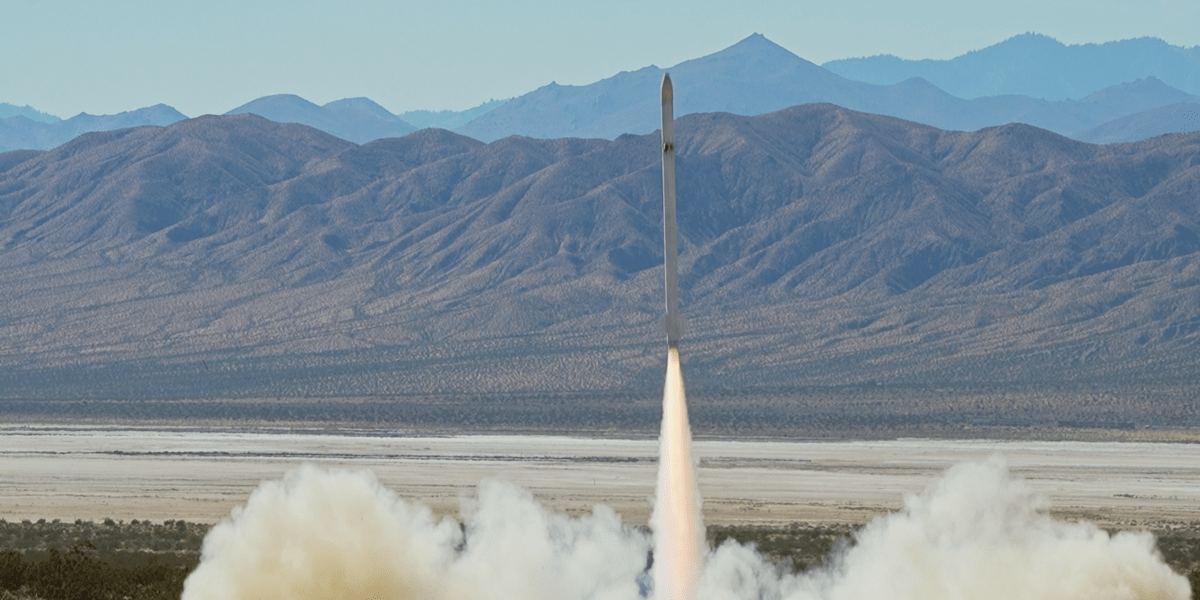
Franzen told me to look for “some really significant demonstrations” of their product later this year. He sent me a sneak peek of their most recent test of Furientis’ F 1.0 (the missile’s working name). The first seconds of the aerial video were eerily still before a line of white smoke erupted from the ground and sliced through the sky.
See you tomorrow,
Lily Mae Lazarus
X: @LilyMaeLazarus
Email: [email protected]
Submit a deal for the Term Sheet newsletter here.
Joey Abrams curated the deals section of today’s newsletter. Subscribe here.
VENTURE DEALS
– Recursive, a San Francisco and London, U.K.-based self-improving AI platform, raised $650 million in funding. GV and Greycroft led the round and were joined by AMD Ventures, Nvidia, and others.
– Fractile, a London, U.K.-based AI inference chipmaker, raised $220 million in Series B funding. Accel, Factorial Funds, and Founders Fund led the round and were joined by Felicis, Conviction, Gigascale, O1A, Buckley Ventures, and 8VC.
– Star Catcher, a Jacksonville, Fla.-based company building a power grid in space, raised $65 million in Series A funding. B Capital, Shield Capital, and Cerberus Ventures led the round and were joined by GreatPoint Ventures, Helena, Oceans Ventures, and MVP Ventures.
– NVision, an Ulm, Germany-based quantum technology company, raised $55 million in Series B funding from Abbott, Playground Global, and others.
– Outmarket AI, a San Francisco-based AI platform designed for insurance, raised $17 million in Series A funding. Permanent Capital Ventures led the round and was joined by SignalFire, Fika Ventures, TTV Capital, and Dash Fund.
– Casimir, a Houston, Texas-based quantum vacuum energy company, raised $12 million in seed funding. Scout Ventures led the round and was joined by Lavrock Ventures and others.
– Hint, a Charlotte, N.C.-based AI home management startup, raised $10 million in seed funding. Slow Ventures led the round and was joined by Montauk Capital, Tusk Venture Partners, and others.
– Cimento AI, a Salt Lake City, Utah-based human-risk security platform, raised $3 million in pre-seed funding. Bowery Capital and Indie VC led the round and were joined by angel investors.
PRIVATE EQUITY
– Ajax Health Fund invested $60 million in UroMems, a Grenoble, France and Minneapolis, Minn.-based developer of implantable technology for stress urinary incontinence.
– Good Springs Capital acquired a majority stake in Snyder Environmental Services, a Kearneysville, W.V.-based environmental infrastructure services company. Financial terms were not disclosed.
– Visma, backed by Hg Capital, acquired Dootax, a São Paulo, Brazil-based tax automation platform, and Pag Útil, a São Paulo, Brazil-based tax issuance and payment platform. Financial terms were not disclosed.
IPOS
– Fervo Energy, a Houston-based geothermal energy company, raised $1.9 billion in an offering of 70 million shares priced at $27 on the Nasdaq.
– GMR Solutions, a Lewisville, Texas-based emergency medical services provider, raised $479 million in an offering of 31.9 million shares priced at $15 on the New York Stock Exchange.
FUNDS + FUNDS OF FUNDS
– Finback Investment Partners, a Coral Gables, Fla.-based private equity firm, raised $500 million for its second fund focused on health care, digital infrastructure, financial services, technology and software, industrials, and education companies.
PEOPLE
– Washington Harbour Partners, an Arlington, Va.-based private investment firm, hired Brian Smith as a Senior Partner. Previously, he was with In-Q-Tel.