



California implemented its $20 minimum wage law for fast-food workers on Monday, bumping pay up to 25% from the state’s $16 minimum. Impacting over 500,000 workers in the state, the mandate was heralded as a success for labor organizers—but businesses are fearing they’ll have to lay off workers or hike up prices to offset increased operation costs.
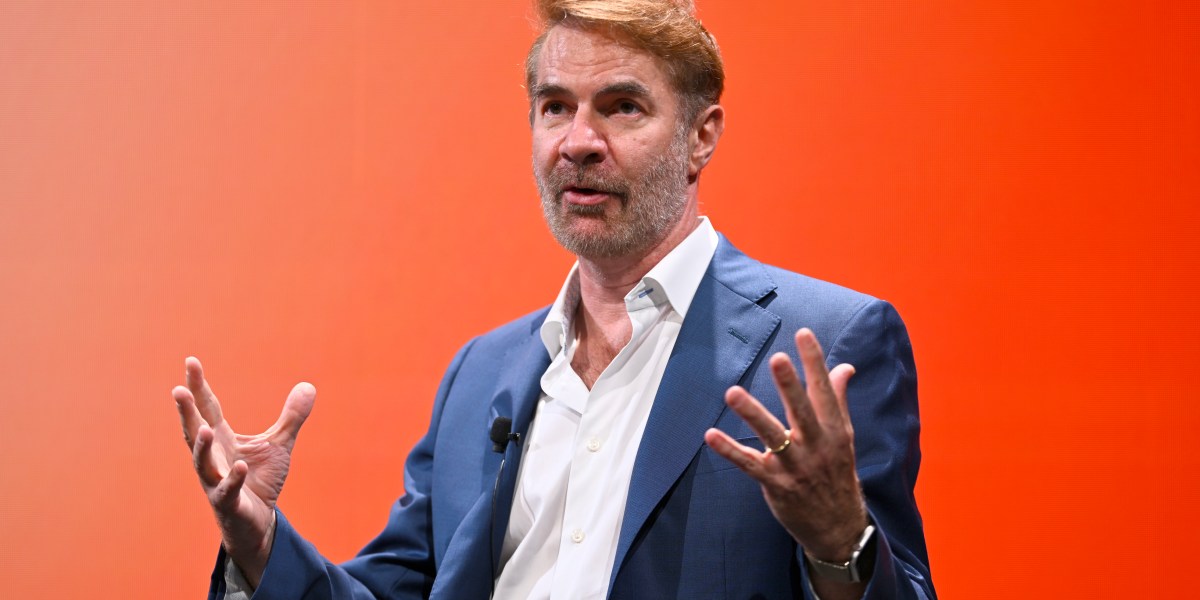
Libertarian economist Scott Sumner, a California resident, believes the new mandate could hobble the economy beyond just the state’s cost of doing business—it could make the state’s unemployment rate higher for the long term.
“If California has more rules that increase costs for businesses—maybe mandating worker benefits or regulations that just make it more costly to do business in California—that could slightly increase the natural rate of unemployment,” Sumner told Fortune.
The “natural rate of unemployment” refers to an economic concept that is often confusing to normal people, to wit: Even an economy at full employment includes a small number of unemployed workers, often new entrants to the workforce or people switching from one job to another. It’s “the rate at which the unemployment rate settles when the economy itself is relatively stable,” as Sumner put it.
Classic economic theory holds that the natural rate of unemployment is related to wages, and that, as wages go up, businesses trying to keep their profit margins may cut employees’ hours or lay them off. Higher wages in theory also means that businesses are going to have a higher bar for their workers. After all, if they’re paying more money, Sumner argued, they should be getting their money’s worth.
“There would be quite a few workers who simply would not be profitable to be hired at $40 an hour,” Sumner speculated. “And so there are obvious limits to what you can do in terms of artificially raising wages.”
With employers more protective of the jobs they offer, the workforce becomes more competitive, Sumner said. Workers once drawn to California’s generous worker protections may find themselves with fewer job opportunities.
Certainly, economists disagree vigorously about the effects of raising the minimum wage, and many studies of municipalities that have raised their minimums have found no negative effect on employment. A recent Congressional Budget Office review on raising the federal minimum to $15 an hour concluded that there was considerable “uncertainty” about its effect on unemployment, and that the raise was equally likely to have zero effect as to put 2.7 million workers out of a job.
Whatever the effects, those tidal shifts are far away, and the impact of California’s $20 minimum wage mandate is just a drop in the bucket, Sumner said: “What we’re really talking about is a relatively low national unemployment rate, and a modestly higher rate in California, not dramatically higher.”
But California is significant because of its sheer size, Sumner noted: It makes up about one-eighth of the U.S. population and also has the country’s highest unemployment rate of 5.3%, pushed up by layoffs from tech companies that overhired during the pandemic. It’s also a hotbed of labor organizing and has wages that skew higher to accommodate its higher cost of living. While one wage mandate is unlikely to make big waves, it represents a growing movement that could make a bigger splash.
A shifting tide
Just one week before the state passed its $20 minimum wage law for fast-food workers, members of Southern California’s Unite Here Local 11 for hospitality workers celebrated the ratification of a contract that would impact employees at 34 hotels, raising wages by $10 per hour for room attendants, cooks, and other non-tipped workers, representing a nearly 50% increase over three years. By 2027, most room attendants will make $35 hourly, and cooks will make about $41.
“We have won a life-changing contract that transforms hotel jobs from low-wage service work to middle-class professional positions,” Kurt Petersen, co-president of the union, said at a downtown Los Angeles rally after the contract ratification.
Workers coming off of months of striking cited the area’s steep cost of living and strenuous workload as reasons necessitating a wage boost.
But Sumner, again calling up classical economics, said those wages are likely above equilibrium for hospitality workers, proving attractive to those looking for work, but unsustainable for creating new jobs in the sector.
“It seems to me it’s high enough where it might draw some people in from other states seeking those jobs,” Sumner said. “And then if they can’t all find the jobs they want, you get some increase in the natural rate of unemployment within California.”
Movements like these, when happening in tandem, can have a lasting impact on a larger scale, Sumner said, not only increasing unemployment rates, but also changing patterns in where people live and find jobs.
To be sure, Americans’ rate of moving for work—or any reason—has been on a slow decline for decades, hitting a record low last year. But if anything could shake up this long-term stasis, it could be the national divergence in pay, as more and more states, and even cities, hike their minimum wage, which has stayed flat at the federal level for a record 17 years.
Lately, California has turned from a destination for workers to a place to leave, as many state residents have looked elsewhere, especially in Texas, where there are more jobs and ample housing opportunities that are more affordable than California’s. Just look at Elon Musk, who moved SpaceX and Tesla operations to the Lone Star State to skirt capital gains taxes, and is now the biggest employer in Austin.
The move isn’t just appealing to billionaires, Sumner posited. Plentiful jobs in Texas could in the future appeal to those in California who thought they were striking gold in high-wage jobs, but were really striking out in finding a job at all.
“I do think these effects are worth watching,” he said.