


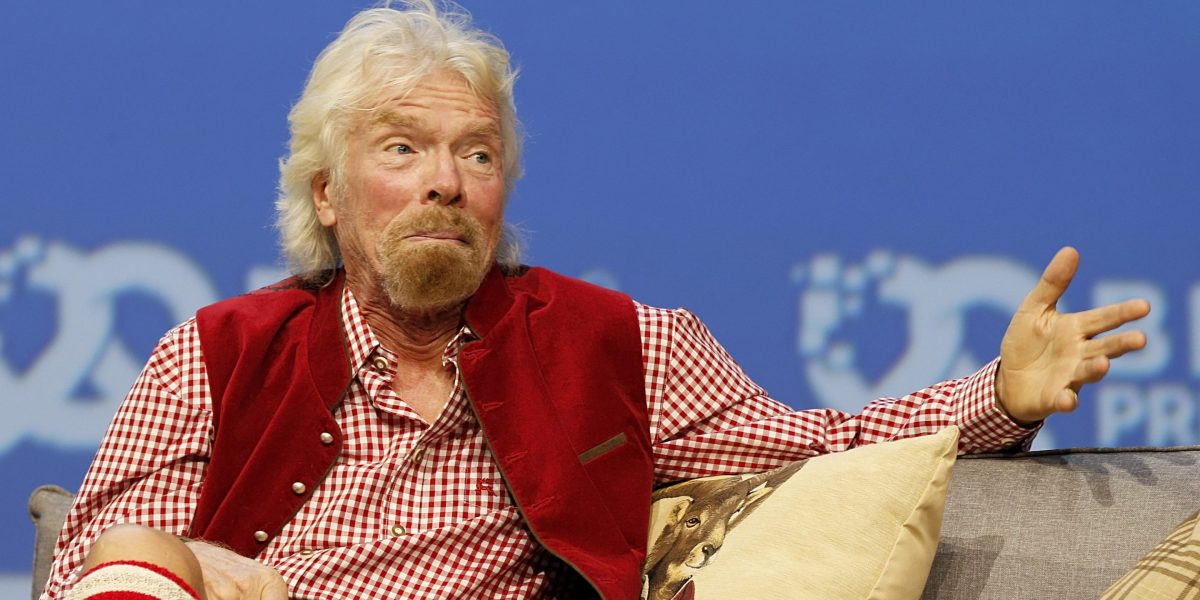
Richard Branson wants you to stop stealing his morning routine. The billionaire Virgin Group founder famously wakes up at 5 a.m., exercises, scrolls on social media, and sits down to a bowl of muesli, fruit and his first of 20 daily cups of tea, before kickstarting his day. But now he’s warning that getting up at the crack of dawn won’t make you more successful—and could actually burn you out.
“The reality is you need to find a routine that works for you and your life,” Branson recently wrote on LinkedIn.
He revealed that he’s “often asked about waking up at 5 a.m.”—nearly a decade after breaking down how he spends his mornings in a Virgin blog post. And now, he’s having regrets. “I sometimes worry that people think it’s the secret to success,” Branson said.
“There’s a lot of noise out there telling people how to live their lives and be successful,” Branson added. “Rigid routines, relentless hustle.” He clarified that he only wakes up early because it comes “very naturally” to him. But in reality, there’s no “one-size-fits-all formula” for success—and following these hustle-culture silver bullets “will more likely lead to burnout than breakthroughs.”
“Work hard, absolutely,” Branson said. “But also work smart, take care of yourself, and create a rhythm that’s sustainable. The best routine is the one that helps you feel your best.”
Richard Branson’s top tip for finding your routine? Stop copying his.
If Branson has one piece of advice for anyone trying to replicate his routine, it’s not to. Instead, the billionaire told Fortune that people should spend less time obsessing over when successful people work, and more time figuring out when they do their best work.
“Firstly, reflect on when you feel at your best during the day,” Branson said. “For me, it’s early in the morning. Other people do their best work late at night.”
That self-reflection goes beyond deciding whether you’re an early bird or a night owl. You might be at your sharpest in the morning but most creative after dinner, Branson explained. Once you understand those patterns, you can start structuring your day around them. “There will always be parts of your schedule you can’t control,” he added. “But even the smallest tweaks can make a big difference.”
Branson said it took years of trial and error to discover his own rhythm. Having worked everywhere from “crypts underneath churches to houseboats and spare bedroom,” he said that he gradually learned what worked best for him and what didn’t, building a routine around those insights rather than forcing himself into someone else’s.
The same philosophy applies to avoiding burnout. “Be wary of anyone who claims to have the ‘key’ to success, and don’t compare yourself to others,” Branson told Fortune. “Everyone is on their own path. Work hard, certainly, but know the difference between working hard and working smart.”
Ultimately, the British billionaire stressed that prioritizing your health, relationships, and time away from the desk to be inspired will get you further than any 5 a.m. alarm.
Richard Branson isn’t the only CEO pushing back on the 5 a.m. club
It often feels like the business world was built for morning people. Most office jobs start at around 9 a.m.—forcing night owls out of their beds hours earlier to shower, commute, and caffeinate.
And more often than not, the people setting the schedules are morning people themselves.
Tim Cook, Michelle Obama, and Jack Dorsey have had their morning coffee, caught up on emails, and squeezed in a workout before the sun has even risen—and research has even shown that the early bird does indeed catch the worm. One study found that while two-thirds of the general population claim to be night owls, their chances of success are much slimmer than those of morning people.
But there’s a growing cohort of executives rejecting the 5 a.m. club.
Scott Mellin, was credited with transforming Salomon from a niche French outdoor performance label to the billion-dollar streetwear brand Rihanna wore for the 2023 Super Bowl halftime stage. And he’s been leisurely waking up at around 8 a.m. for decades. Instead of flipping his day, the branding exec likes to ski in the morning and doesn’t head to the office until noon, preferring to work later in the evening—often over dinner with clients.
“It might be different, but it is a routine I’ve stuck to for over 25 years,” he told Fortune. In that time, he’s held various executive roles, including at Benetton Group and The North Face—proving you don’t need to rise at the crack of dawn to make it to the top.
Other night-owl CEOs echoed that they’re putting in the same hours as early-bird bosses. The only real difference is that they’re working when they’re most productive. In the same way an early riser uses the stillness before everyone’s awake to put in extra hours, they’re logging back on to their work late at night while everyone else is unwinding.
As Todd Wiesel, CEO of whisky marketplace Baxus and self-confessed night owl, put it: “I prefer to go to bed tired and wake up energized than to try and fall asleep while I am full of energy and excitement only to roll out of bed at 4 a.m. in search of calm and quiet.”